What's inside
As an Amazon Associate I earn from qualifying purchases. This post may contain affiliate links at no extra cost to you.
Choosing between Festool 18V and 12V is less about which voltage is stronger and more about how the tool handles the work. For cabinets, built-ins, and finish carpentry, weight and control can matter as much as runtime. But a smaller battery does not make every tool more precise, and an 18V tool is often the better choice when the work involves long screws, thick stock, or sustained cutting.
As an Amazon Associate we earn from qualifying purchases at no extra cost to you.


Voltage is not the whole story
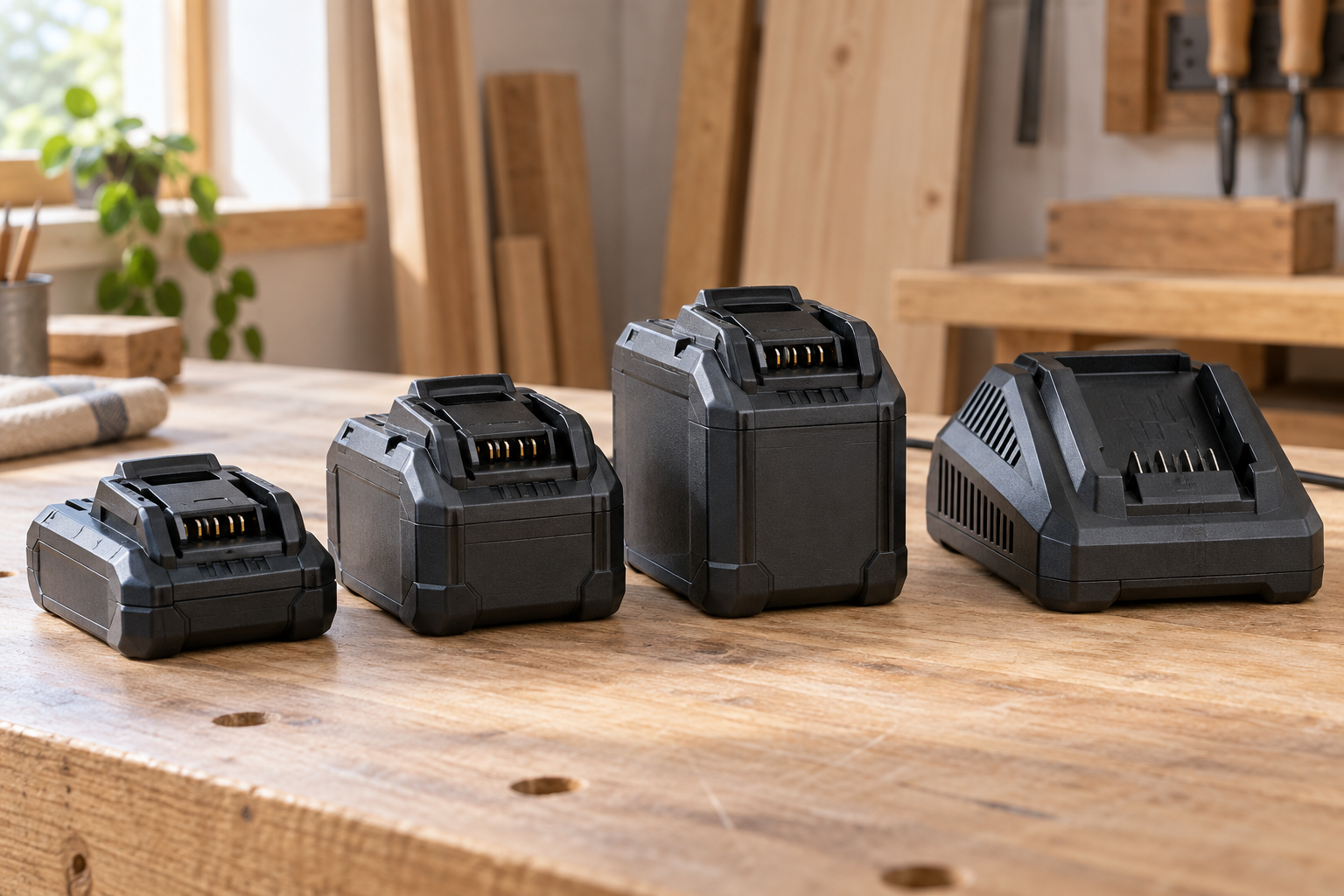
Festool’s 18V and 12V tools belong to separate battery platforms. An 18V battery will not fit a 12V tool, or vice versa, so adding a second voltage means buying compatible batteries and charging equipment too. Check the tool’s included-battery package carefully: bare tools and kits can differ, and existing batteries only help if they match the platform.
Voltage alone does not tell you how much torque, runtime, or precision a tool delivers. Tool design, gearing, motor, battery capacity, and the material all play a part. A compact 18V tool may feel easier to manage than a poorly balanced 12V one. Compare the specific tool’s weight with battery installed, not just the bare-tool figure.
Where 12V earns its place
A 12V drill or driver is a good fit for assembling cabinets, installing hardware, drilling smaller pilot holes, and driving short screws into softer material. Less tool-and-battery weight can make overhead work and repeated positioning less tiring. In tight cabinet interiors, a compact body may also reach places where a larger drill is awkward.
That lighter setup helps with control, but it cannot prevent every mistake. A bit can still wander on a smooth surface; use a center punch where appropriate, a sharp bit, and a pilot hole suited to the screw and wood. On delicate work, set the clutch low and test it on scrap. If the tool stalls or the clutch slips repeatedly, forcing it is a poor substitute for choosing an 18V tool or predrilling more carefully.
For occasional fastening and light drilling, a 12V drill-driver may be enough. It is not automatically the cheaper choice once batteries and a charger are included, so compare kit prices with the batteries you already own before buying.
When 18V is worth the weight
Choose 18V when the job regularly involves larger holes, longer fasteners, dense hardwood, or repeated work through a full day. More available power and greater battery capacity can reduce slowdowns and battery swaps. That matters more on a deck or a long run of cabinetry than on a handful of hinge screws.
Forcing a small tool through a demanding job can bring its own problems: stalled bits, overheated tools, stripped screw heads, and interrupted work to change batteries. A larger tool is not permission to skip pilot holes or use excessive torque. It simply gives more headroom when the task demands it. If your work varies, keeping an 18V drill for demanding jobs and a lighter tool for assembly can make sense, provided the extra batteries and charger are worth the cost.
Quick comparison
| Work pattern | 12V is usually a good fit | 18V is usually a better fit |
|---|---|---|
| Cabinet assembly | Short screws, hardware, frequent hand positioning | Useful if the same tool must handle heavier drilling too |
| Drilling | Small pilot holes and light-duty work | Larger holes, dense material, or repeated drilling |
| Overhead or tight spaces | Lower weight and compact size can help | More capability, but potentially more fatigue |
| Battery investment | Requires compatible 12V batteries and charger | Requires compatible 18V batteries and charger |
| Long work sessions | Fine for light tasks with spare batteries | Often more practical for sustained demanding work |
Precision comes from setup
For clean, repeatable results, the battery platform is only one part of the decision. Use the right bit, keep it sharp, clamp the work, and support the stock to reduce tear-out. When driving screws near an edge, drill a pilot hole and check that its diameter suits the screw core and the wood. On visible surfaces, practice the clutch setting and driving depth on an offcut before working on the finished piece.
For trimming and other controlled cutting, look at the tool’s base, sightlines, blade choice, and ability to adjust the cut—not just voltage. A Festool 18V drill-driver may be the sensible choice for mixed workloads, but it will not make an inaccurate layout accurate. Likewise, a lighter tool can be easier to hold steady, yet it cannot compensate for a dull blade or an unsupported workpiece.
Buy for the work you repeat
List the jobs you do most often, then separate them by load: short fasteners and small holes on one side; larger holes, long screws, and dense material on the other. If most of your work falls in the first group, 12V can be a practical choice, especially if you already own compatible batteries. If demanding tasks are routine, buying into 18V avoids asking a compact tool to work at its limit.
Do not buy a second platform just to cover an occasional task if borrowing or renting a suitable tool is cheaper. If you do want two platforms, account for the complete setup: tool, batteries, charger, and any time spent swapping between systems. The best match is the lightest tool that handles your regular work reliably—with enough reserve that you are not fighting stalls, poor balance, or dead batteries halfway through the job.
Related guides
- Longest Lasting Lawn Mower Battery: AGM vs Lithium vs Flooded Lifespan and Cost per Season
- Duralast Gold Lawn Mower Battery Review: U1 Fit, CCA and When to Pay for AGM
- Greenworks Pro 80V 21-Inch Mower Review: Runtime Math, Push vs Self-Propelled and Yard Fit
- Bosch High Pressure Washer Gun Replacement: Fittings, Adapters and What Fits Your Model