What's inside
As an Amazon Associate I earn from qualifying purchases. This post may contain affiliate links at no extra cost to you.
Choosing one cordless platform for indoor repairs and outdoor upkeep can save money and reduce battery clutter, but only if the range fits both jobs. A drill and impact driver may cover household work; yard care can demand larger batteries, more power, and tools the platform may not offer. Compare the whole system before buying into it, not just the price of the first tool.
List the work you actually do
Write down the tasks you expect to handle over the next few years. Indoors, that might mean drilling pilot holes, driving screws, assembling furniture, and cutting trim. Outdoors, it could mean trimming hedges, clearing leaves, or cutting branches. Separate regular work from occasional jobs: renting or borrowing a specialist tool for one weekend can be cheaper than buying into a platform for it.
Then check whether the platform has suitable tools for those jobs. Battery compatibility within a brand does not guarantee that every tool uses the same battery size, or that a compact battery will perform well in a demanding tool. A small battery may run a drill comfortably but trigger a leaf blower’s low-charge cutoff quickly.
Match battery size to the job
Voltage is a broad category, not a direct measure of runtime or cutting speed. Compare the actual tools and batteries you plan to use. Battery capacity is commonly stated in amp-hours (Ah); at the same voltage, a 4 Ah battery stores roughly twice the energy of a 2 Ah battery. Runtime will not always double, because tool load, battery temperature, and work technique matter.
Compact batteries are lighter and less tiring overhead, which matters for indoor drilling and overhead pruning. Larger packs usually provide more runtime and may deliver more sustained power, but add weight. On a hedge trimmer or blower, that extra weight can make extended use less comfortable. Try the tool with the intended battery if possible; a bare-tool weight alone can be misleading.
Compare the platform, not just the starter kit
Use this checklist to narrow the field. Prices and product ranges change, so verify current compatibility and availability before buying.
| What to compare | Why it matters | What to check |
|---|---|---|
| Tool range | A shared battery is useful only if the brand makes the tools you need. | Current indoor and outdoor tools, including bare-tool options. |
| Battery options | Small packs reduce weight; larger packs can extend runtime. | Compatible capacities and whether demanding tools specify a minimum pack. |
| Charging | A slow charger can leave you waiting between jobs. | Charge time for your battery size, number of charging bays, and whether a second charger is worthwhile. |
| Cost to expand | Starter kits can be good value, but extra batteries and bare tools add up. | Kit price versus buying the tool, battery, and charger separately. |
| Service and storage | Repairs and battery replacement matter over years of use. | Warranty terms, local service access, and safe battery storage guidance. |
Account for indoor and outdoor trade-offs
Indoor work favors control, low weight, and manageable noise. A compact drill-driver is often enough for furniture, fixtures, and smaller holes; occasional masonry work may call for a hammer drill, but it is not a substitute for a rotary hammer on repeated heavy drilling. For trim and repairs, consider whether the platform has a suitable circular saw or oscillating tool rather than buying accessories you may rarely use.
Outdoor tools put more sustained demand on batteries. Grass or hedge conditions, branch thickness, and blower workload can change runtime sharply. A blower clearing a dry patio is a different task from moving wet leaves across a lawn. For larger yards, plan on at least two batteries or a pause for charging. For a small courtyard and occasional trimming, one battery and a modest tool may be perfectly adequate.
Noise and exhaust are also practical differences. Cordless tools avoid fuel mixing and extension cords, but they are not silent; check the manual and use hearing protection where appropriate. Keep batteries out of rain unless the manufacturer specifically rates them for exposure, and bring them indoors for charging. Cold batteries may deliver less runtime, while hot packs should cool before charging.
Buy a starter set that leaves room to adjust
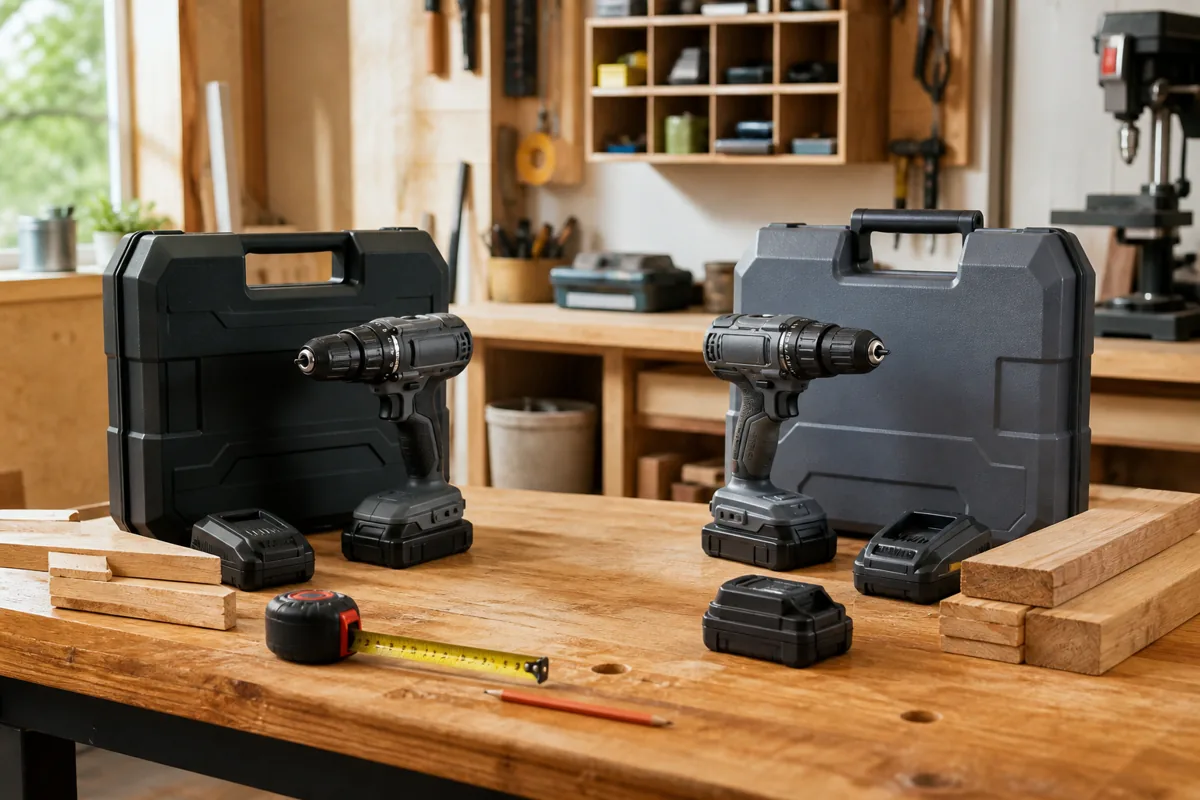
If you own no compatible tools, a kit with a drill, two batteries, and a charger is often a useful starting point. One battery can work while the other charges, and two capacities let you balance weight against runtime. Check the charger’s stated times: some packs may take a few hours, so a single slow charger can interrupt a full day of yard work.
For a mixed-use setup, compare a cordless drill kit with two batteries against buying a tool and charger separately. Add outdoor tools only after checking that the platform offers the right type and that the battery capacity is practical for your yard. A battery-compatible hedge trimmer can be a sensible bare-tool purchase if you already own suitable packs. For a large property, compare a leaf blower kit with battery and charger against the cost of a bare tool plus a larger pack.
Do not assume a discount on a bare tool is a bargain if it requires an expensive battery you do not own. Conversely, if you already have several compatible batteries and chargers, buying bare tools can be the cheaper route. Avoid stocking many batteries “just in case”: packs age, and high-capacity batteries are costly to replace.
When two platforms make more sense
One ecosystem is convenient, but it is not always the best fit. If your chosen indoor platform lacks an outdoor tool you need, or its yard tools are underpowered for the property, compare a second system rather than forcing the match. A separate outdoor platform may also make sense if you already own a reliable lawn-care setup and only need indoor tools.
For occasional, light maintenance, the cheapest compatible tool that meets the job can be enough. For frequent work, choose around tool availability, battery options, and service support—not a promise that one platform will do everything. The right choice is the system that covers your real tasks without leaving you with heavy batteries indoors, short runtimes outdoors, or unused tools bought to justify the battery.
Related guides
- Longest Lasting Lawn Mower Battery: AGM vs Lithium vs Flooded Lifespan and Cost per Season
- Duralast Gold Lawn Mower Battery Review: U1 Fit, CCA and When to Pay for AGM
- Greenworks Pro 80V 21-Inch Mower Review: Runtime Math, Push vs Self-Propelled and Yard Fit
- Bosch High Pressure Washer Gun Replacement: Fittings, Adapters and What Fits Your Model