What's inside
As an Amazon Associate I earn from qualifying purchases. This post may contain affiliate links at no extra cost to you.
Large-diameter wood boring puts more demand on a cordless drill battery than ordinary screwdriving or small twist bits. A 1/2-inch hole through a stud is easy work for most modern tools. A 1-1/2-inch auger, self-feed bit, or ship auger can draw heavy current for several seconds, repeatedly. The right battery is not simply the one with the highest amp-hour number. You need enough voltage, current capability, capacity, and cooling for the drill and bit you are using.
Start With the Drill and Bit
Battery choice cannot compensate for an unsuitable drill. For holes around 1 inch and larger, use a drill with a side handle and a low-speed gear. A compact drill may physically accept a large bit but still lack the gearing, clutch strength, or motor cooling to use it safely.
Large augers and self-feed bits create high torque. Spade bits are cheaper and can cut quickly, but they often bind when the bit breaks through the far side of a board. Ship augers clear chips well and are useful for repeated holes, but they can grab aggressively. Self-feed bits are fast in framing lumber, although their feed screw can pull the tool forward hard enough to twist your wrist.
Check the drill manufacturer’s recommended maximum bit diameter in wood. If the tool has a mechanical clutch, do not rely on the clutch to protect you from a large bit catching. The clutch may slip during normal drilling, waste battery power, and generate heat. Use the side handle, keep both hands on the tool, and release the trigger immediately if the bit binds.
Voltage Determines How Hard the Battery Works
For demanding boring, an 18V or 20V Max platform is generally the practical minimum. The “20V Max” label and an 18V nominal battery usually describe similar voltage classes; the naming reflects how the manufacturers measure the pack. A 12V drill can bore small holes, but it is a poor choice for repeated holes above roughly 1 inch.
Higher voltage lets the tool deliver the same power with less current. That can reduce voltage sag and heat in the battery, contacts, and motor. A 36V or 40V drill may offer more reserve, but it is heavier and commits you to a less common platform. For most framing, plumbing, and general carpentry, a strong 18V/20V system is the better balance.
Voltage alone is not a guarantee of performance. A basic 5Ah pack may deliver less peak current than a newer high-output 4Ah pack. The drill’s motor controller, battery electronics, and cell design all affect how much power reaches the bit.
Amp-Hours Buy Runtime, Not Automatically More Power
Amp-hours indicate stored capacity. In broad terms, a 5Ah battery contains more energy than a 2Ah battery at the same voltage. It does not necessarily produce twice the torque. A larger pack may run longer, but it also adds weight at the bottom of the drill and can make overhead work tiring.
For occasional holes, a 3Ah or 4Ah battery is often enough. For repeated large holes, an advanced 4Ah, 5Ah, or 6Ah pack is a better choice. The best option depends on the drill’s balance and the number of holes, not just the printed capacity.
| Battery choice | Best use | Main advantage | Trade-off |
|---|---|---|---|
| 2Ah compact pack | Small holes and short jobs | Low weight and cost | Short runtime; more voltage sag under heavy load |
| 3Ah–4Ah standard pack | Occasional 1-inch to 1-1/2-inch holes | Good balance of weight and capacity | May heat up during long boring sessions |
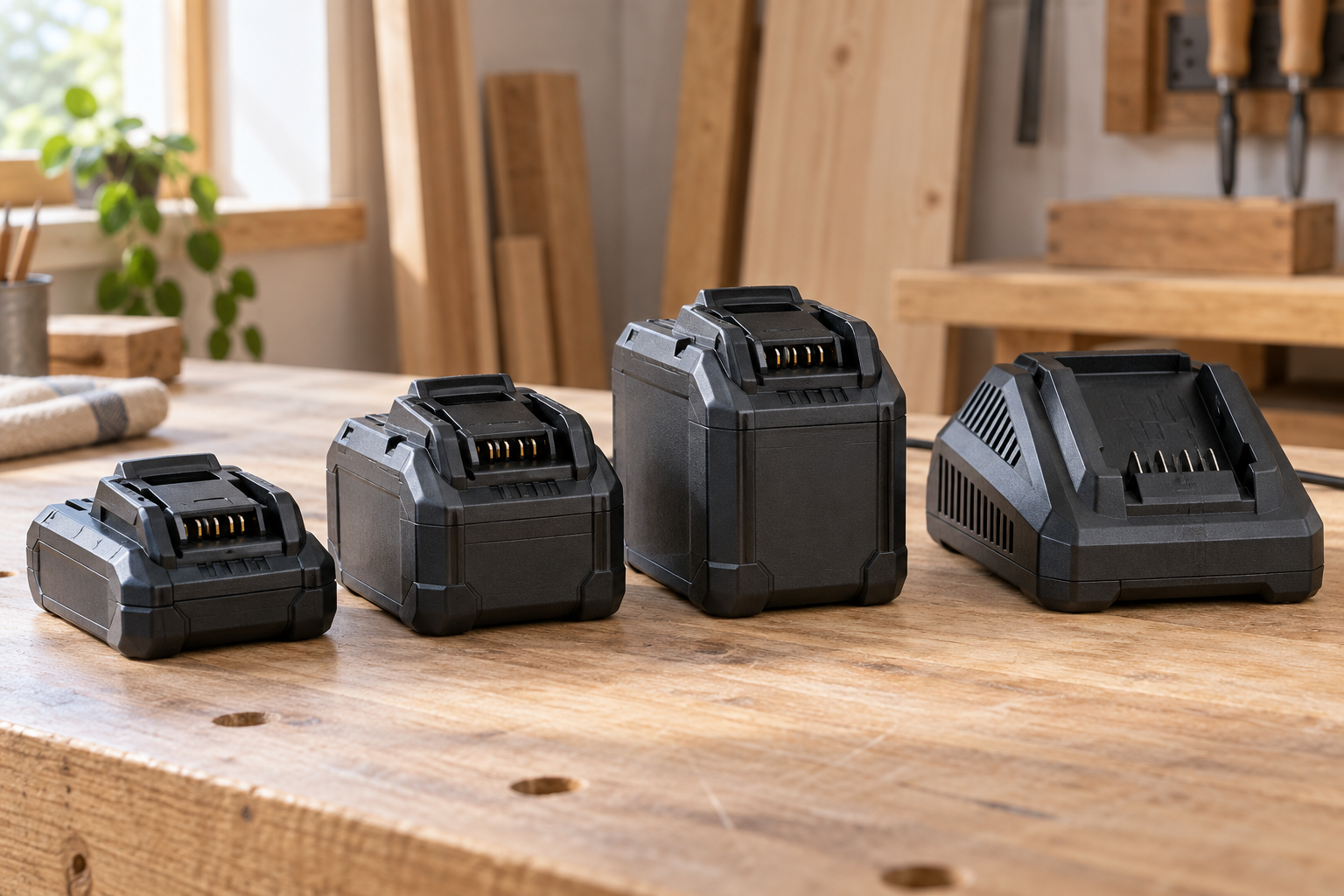
| 4Ah–5Ah high-output pack | Repeated large holes and thick framing | Better current delivery and sustained performance | Higher price and greater weight |
| 6Ah or larger pack | Production work and long drilling sessions | Longest runtime | Heavy; not always stronger than a high-output mid-size pack |
Look for a High-Output Battery
High-output batteries use cells and electronics designed to deliver more current with less heat. Manufacturers use different names, so compare packs within the same brand rather than assuming all 5Ah batteries are equivalent. A high-output pack is particularly useful when the drill slows noticeably in low gear, the battery shuts down under load, or the pack becomes too hot to hold comfortably.
For a new purchase, a high-output 18V or 20V 5Ah drill battery is a sensible general recommendation for large-diameter boring. It gives useful capacity without the extreme weight of the largest packs.
Do not cover the battery with a coat, tool bag, or other material while drilling. Lithium-ion packs need to shed heat. Stop and let the battery cool if its protection circuit cuts power, the casing becomes very hot, or the tool repeatedly loses speed. Continuing to pull hard after a thermal shutdown can shorten battery life.
Match the Charger to the Work Pattern
A large battery is only useful if you can recharge it efficiently. A basic charger may take several hours to refill a 5Ah or 6Ah pack. If you are boring all day, consider a fast charger for your cordless tool battery platform, but check the manufacturer’s temperature controls and charging times.
Fast charging is convenient, but it can add heat and may not be worthwhile for occasional use. Two mid-size batteries and a standard charger are often cheaper and more flexible than one large battery and an expensive rapid charger. Keep a second pack charging while the first is in the drill.
When the Cheaper Battery Is Fine
If you need to drill six holes through 2-by lumber for a one-time plumbing job, the standard 18V or 20V 5Ah battery already included with your drill may be completely adequate. Use a sharp bit, clear chips by backing out periodically, and allow the tool and battery to cool.
Spend more on a high-output pack when you routinely bore large holes, work in dense hardwood, use long self-feed bits, or need maximum speed. Also consider buying a second battery if downtime matters. For occasional work, battery replacement cost can exceed the benefit, making the cheaper standard pack the sensible choice.
Avoid Common Battery and Boring Mistakes
Do not mix batteries between brands using unapproved adapters. The tool may run, but the protection electronics, temperature sensing, and mechanical fit may not work correctly. Avoid old or damaged packs, especially those with cracked housings, swollen cells, corroded contacts, or a history of repeated overheating.
Finally, reduce load before blaming the battery. Sharpen or replace dull bits, use the correct low-speed setting, withdraw the bit to clear chips, and do not force the drill through a bind. A properly sized drill with a healthy high-output mid-capacity battery will usually outperform a less suitable tool carrying the largest battery available.
Related guides
- Longest Lasting Lawn Mower Battery: AGM vs Lithium vs Flooded Lifespan and Cost per Season
- Duralast Gold Lawn Mower Battery Review: U1 Fit, CCA and When to Pay for AGM
- Greenworks Pro 80V 21-Inch Mower Review: Runtime Math, Push vs Self-Propelled and Yard Fit
- Bosch High Pressure Washer Gun Replacement: Fittings, Adapters and What Fits Your Model