What's inside
As an Amazon Associate I earn from qualifying purchases. This post may contain affiliate links at no extra cost to you.
A cordless compact router is convenient, but its small base and high-speed bit make tearout easy to create. The bit can lift fibers as it exits an edge, especially on plywood, veneered panels, cross-grain cuts, and hardwoods with reversing grain. Good results come from controlling the cut, not simply buying a more powerful router.
Why Tearout Happens
Most compact routers use a 1/4-inch collet and spin between roughly 20,000 and 30,000 rpm. At that speed, a router bit removes material aggressively. When the bit cuts with the grain, it can pull unsupported fibers away from the edge. The risk increases when the bit is moving into end grain, when the cut is too deep, or when the router is fed in the wrong direction.
For a normal edge profile, guide the router so the bit rotates against the direction of travel. With the router base facing upward in your work area, this usually means moving left to right for an outside edge and right to left for an inside edge. A climb cut—moving with the bit’s rotation—can grab the tool and pull it forward. It is useful only as a very shallow, controlled cleanup pass, not as the main cut.
The cordless power source matters indirectly. A weak or nearly empty battery may allow the motor to slow under load. That reduces cutting efficiency and can encourage you to push harder, producing a rougher edge. Use a fully charged battery from your existing cordless router battery platform, and keep a spare available for larger jobs.
Choose the Right Router and Bit
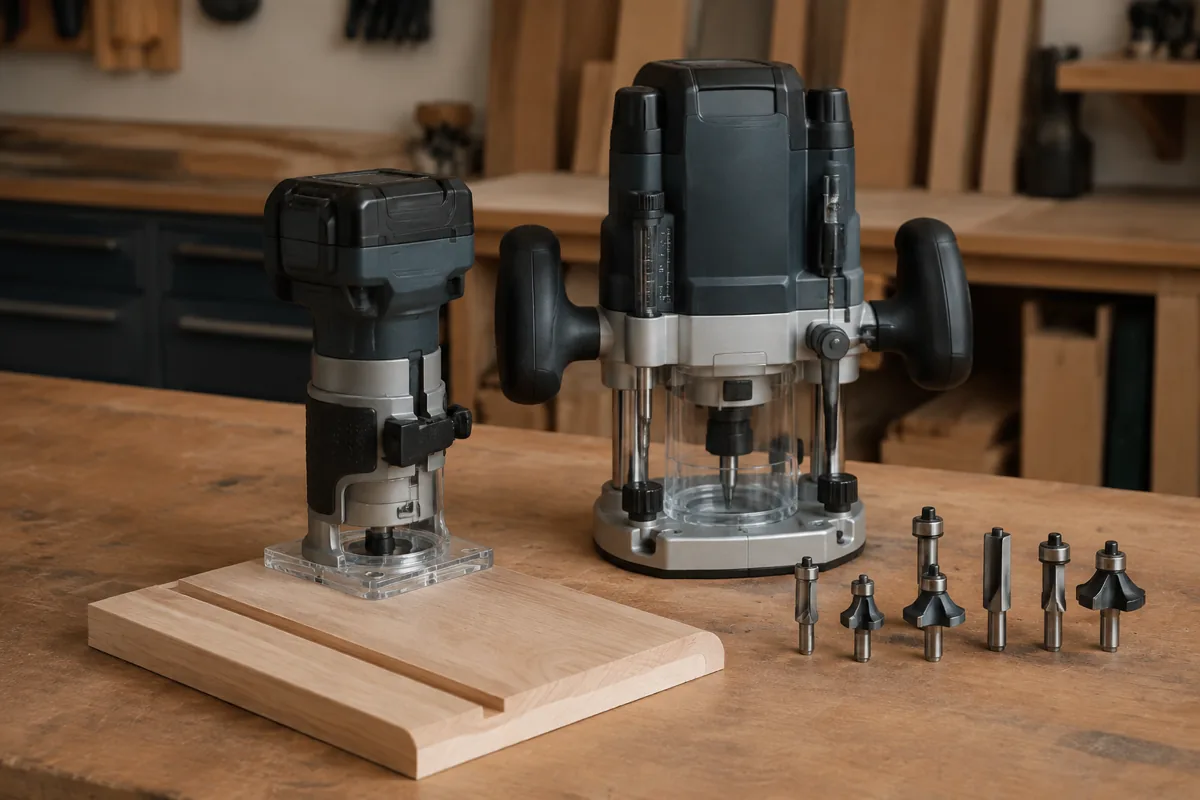
A compact cordless router is a good choice for roundovers, chamfers, hinge mortises, sign work, and trimming laminate or edge banding. It is less suitable for deep dadoes, large raised panels, or prolonged work with large-diameter bits. Those jobs need more motor capacity, a larger base, and often a corded router.
| Choice | Best use | Tearout risk and trade-off |
|---|---|---|
| Upcut spiral bit | Removing waste in mortises and pockets | Pulls chips upward; can damage the top surface |
| Downcut spiral bit | Clean top edges on plywood and veneered panels | Pushes chips down; needs slower feed and good dust removal |
| Straight bit | General grooves, dados, and trimming | Simple and affordable, but more likely to splinter across grain |
| Compression bit | Through-cuts in plywood and laminated sheet goods | Very clean when depth is set correctly; costs more |
| Sharp carbide profile bit | Roundovers and chamfers | Usually cleanest for edge work; dull bits burn and tear fibers |
Use the smallest bit that will do the job. A 1/4-inch roundover generally places less load on a compact router than a 1/2-inch roundover. Keep the bit’s cutting edges clean and inspect them for resin, nicks, or discoloration. If a bit needs noticeably more force than it did previously, replace or clean it rather than increasing pressure.
When buying into a cordless system, compare more than the bare router. Look at battery prices, charger speed, available compact saws and sanders, and whether the platform offers high-capacity batteries without making the tool top-heavy. A cordless compact router kit with battery and charger can be economical if you are starting from zero. If you already own compatible batteries, the bare tool is usually the cheaper option.
Prepare the Workpiece
Support the workpiece close to the cut. A panel that flexes under the router can change the depth and make the bit grab. Clamp it securely, but do not place clamps where the router base will collide with them. Use a sacrificial board under plywood or a thin workpiece when the bit exits the bottom face.
Painter’s tape can reduce small splinters on a cut line, but it is not a substitute for correct feed direction. On a visible edge, score the cut line with a sharp knife or marking knife. A shallow knife wall gives the fibers a defined break point and is especially helpful on cross-grain cuts.
For a roundover or chamfer, make the first pass from the end grain toward the corner on one end, then route the long grain. This removes the fragile corner before the main pass reaches it. On a rectangular board, treat the two end-grain edges as the high-risk areas and check the grain direction before routing.
Set Depth and Feed Rate
Do not remove more than about 1/8 inch of material in one pass with a small cordless router unless the bit is very small and the material cuts easily. For a deep groove or large profile, make several passes. The final pass should remove only 1/32 to 1/16 inch. A light finishing pass produces less leverage on the fibers and leaves a cleaner edge.
Feed steadily. Moving too slowly lets the bit rub, creating heat and burn marks; moving too quickly overloads the motor and can leave a ragged surface. The correct speed produces a consistent cutting sound and small chips rather than fine dust or large torn chunks. If the motor bogs, stop and reduce the depth or increase the feed speed slightly—do not force the router through the cut.
Variable speed is useful when using larger bits, cutting plastic, or working with materials that burn easily. For small bits in solid wood, the highest setting is often appropriate. For a larger profile bit, reduce speed according to the bit maker’s instructions. Never exceed the bit’s rated rpm.
Use a Guide and Test Cut
A straightedge, edge guide, or template keeps the base stable and prevents the router from wandering into the work. A narrow compact router base can tip when only part of it is supported, particularly near a corner. Use an auxiliary base or a wider aftermarket base when the cut is close to an edge or when the template leaves little support.
Test the complete setup on scrap from the same board or sheet. Test both feed direction and depth. The same bit can behave differently in birch plywood, soft pine, MDF, and figured hardwood. A ten-minute test can reveal tearout before it reaches an expensive panel.
For difficult cross-grain cuts, make a shallow scoring pass first—about 1/16 inch—then make the full-depth pass. Another option is to leave a small amount of material at the corner and remove it with a sharp chisel. This is slower than routing straight through, but it is often the most reliable way to protect a visible corner.
Battery and Jobsite Practicalities
Keep the battery clear of the work and check that it does not interfere with the router’s balance. A larger battery can extend runtime but may make a compact tool awkward on narrow edges. For occasional trim work, a standard pack is often sufficient; for repeated routing in hardwood, a higher-capacity pack reduces battery swaps.
Use dust extraction when possible. Packed dust can obscure the cut line, heat the bit, and increase friction around the base. Before each pass, verify that the bit is fully seated in the collet without bottoming out, tighten the collet firmly, and confirm the depth lock is secure. Those checks prevent sudden depth changes—the kind of failure that causes both tearout and damaged work.
Related guides
- Longest Lasting Lawn Mower Battery: AGM vs Lithium vs Flooded Lifespan and Cost per Season
- Duralast Gold Lawn Mower Battery Review: U1 Fit, CCA and When to Pay for AGM
- Greenworks Pro 80V 21-Inch Mower Review: Runtime Math, Push vs Self-Propelled and Yard Fit
- Bosch High Pressure Washer Gun Replacement: Fittings, Adapters and What Fits Your Model