What's inside
- Best Men’s Bracelets for Everyday Style
- Quick comparison: which bracelet material fits your routine?
- Best mens bracelets by situation
- Clasp security: what actually prevents loss?
- How to measure for a secure, comfortable fit
- Water resistance and everyday maintenance
- What wears first—and how to buy around it
- Final buying recommendation
- Best Men’s Bracelets for Everyday Style
- Quick comparison: which bracelet material fits your routine?
- Best mens bracelets by situation
- Clasp security: what actually prevents loss?
- How to measure for a secure, comfortable fit
- Water resistance and everyday maintenance
- What wears first—and how to buy around it
- Final buying recommendation
As an Amazon Associate I earn from qualifying purchases. This post may contain affiliate links at no extra cost to you.
Best Men’s Bracelets for Everyday Style
The best mens bracelets for everyday wear are usually slim, adjustable pieces in stainless steel, leather, or durable cord: choose steel for maximum versatility and water resistance, leather for a warmer casual look, and cord for the lowest cost and easiest fit.
A good everyday bracelet should complement a watch rather than compete with it, stay comfortable through a full workday, and have a closure you can trust. The right choice depends less on decoration than on your routine: how often you remove it, whether it will encounter water, and whether your workplace calls for understated accessories.
As an Amazon Associate we earn from qualifying purchases at no extra cost to you.


Quick comparison: which bracelet material fits your routine?
| Bracelet type | Typical weight | Common size range | Water resistance | Best use | Typical market range |
|---|---|---|---|---|---|
| 316L stainless-steel chain | 15–45 g | 17–23 cm | Good; rinse and dry after salt water | Casual, office, evening | $30–$150 |
| Leather wrap or cuff | 10–30 g | 18–22 cm, often with holes | Low; avoid soaking | Casual and smart-casual outfits | $20–$120 |
| Waxed cord or paracord | 3–15 g | 16–25 cm, usually adjustable | Moderate; dries quickly | Travel, outdoor casual wear | $10–$60 |
| Titanium bracelet | 8–25 g | 18–22 cm | Very good; check the clasp and finish | Daily wear and sensitive-skin preferences | $50–$250 |
| Sterling silver chain or cuff | 12–40 g | 18–23 cm | Good, but tarnishes over time | Formal and refined casual wear | $60–$300 |
These are practical buying ranges rather than fixed specifications. A wide cuff, solid-link chain, or oversized clasp can weigh considerably more than a narrow version of the same material.
Best mens bracelets by situation
For a single bracelet that works almost anywhere
Choose a narrow stainless-steel chain or a simple polished-and-brushed steel bar bracelet. A width of approximately 4–8 mm is substantial enough to look intentional but restrained enough for office clothing. Steel is less affected by sweat and occasional splashes than leather, and it can move from jeans to a suit without looking out of place.
Look for 316L stainless steel, a smooth interior, and a lobster clasp or box clasp with a secondary safety feature. A fully polished finish looks dressier; brushed or bead-blasted surfaces hide small scratches better.
For casual outfits and denim
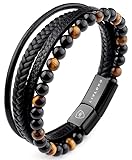
Leather is usually the easiest match for T-shirts, overshirts, denim, and workwear-inspired clothing. A single-wrap bracelet in dark brown or black is versatile, while braided leather gives a more relaxed appearance. Choose a leather piece with a low-profile magnetic closure only when the magnet is reinforced by a mechanical catch; magnetic-only closures can separate when pulled by a bag strap or jacket cuff.
Leather is not the right choice for swimming, showering, or frequent outdoor work. Moisture darkens some finishes, weakens adhesives, and can create odor where the bracelet contacts the skin. If you wear leather daily, alternating two bracelets gives each one time to dry fully.
For travel and active casual wear
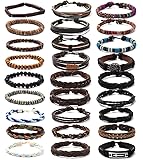
Waxed cord and paracord bracelets are light, inexpensive, and easy to adjust. Their main advantage is fit: a sliding knot or adjustable bead can accommodate modest changes in wrist size and is useful when buying a gift. They are also less likely to make noise against a desk or laptop.
The trade-off is a less polished appearance and faster wear at the knot, braid, or end caps. Inspect the cord regularly. If fibers are fraying or the adjustment knot no longer holds its position, replace the bracelet instead of trusting it near water or while carrying equipment.
For formal clothing
For a suit, select a slim silver-tone chain, a discreet sterling-silver cuff, or a narrow dark steel bracelet. Keep the design simple and avoid stacking several large pieces with a dress watch. A bracelet should normally sit under the shirt cuff without forcing the cuff outward.
Silver offers a softer, traditional appearance but develops tarnish. That is not structural damage: a silver-polishing cloth can restore much of the original surface. Avoid abrasive household cleaners, which may remove intentional oxidation from a textured design.
Clasp security: what actually prevents loss?
The clasp is often the first part to fail, especially on bracelets that catch on sleeves, tool bags, or door handles. Security depends on both the closure and the connection between the clasp and the bracelet.
- Lobster clasp: A strong everyday choice for chains. It is compact and dependable, but small versions can be awkward to operate.
- Box clasp: Neat and dressy, particularly on metal link bracelets. Prefer one with a hinged safety latch or side locks.
- Toggle clasp: Easy to use and visually distinctive, but the bar can slip through the loop if the bracelet is loose.
- Magnetic clasp: Convenient for people who struggle with small closures, but choose a design with a mechanical backup for daily wear.
- Button or screw closure: Common on cord and leather designs. Check that the buttonhole or screw has not stretched or loosened.
- Cuff: No clasp means fewer small parts, but repeated bending can fatigue the metal. Adjust it gradually rather than opening and closing it every day.
Before buying, tug the bracelet gently while holding the clasp closed. The aim is not to force it to failure, but to check for excessive movement, a weak spring, or a connector ring that is visibly open.
How to measure for a secure, comfortable fit
Wrap a flexible tape measure around the wrist where the bracelet will sit. If you do not have one, use a strip of paper, mark the overlap, and measure it with a ruler. Add the following amount to the wrist measurement:
- 6–8 mm for a close fit that moves very little.
- 10–15 mm for a normal everyday fit.
- 16–20 mm for a loose style or a bracelet with large beads and links.
For example, a 180 mm wrist plus 12 mm of allowance produces a 192 mm target bracelet length. If the bracelet has a bulky clasp or wide links, choose the next adjustment position rather than sizing it tightly. A bracelet that is too loose is more likely to catch on clothing and slide over the hand when the clasp opens.
Adjustable cord is the safest gift option. For a fixed metal bracelet, check whether removable links are included or whether the clasp provides several adjustment holes. A listed length can include the clasp, so compare the manufacturer’s measurement method before ordering.
Water resistance and everyday maintenance
No bracelet is automatically waterproof merely because its main material is metal. The clasp spring, plating, glue, leather lining, and decorative stones may be less resistant than the links.
| Exposure | Steel or titanium | Leather | Cord | Recommended action |
|---|---|---|---|---|
| Hand washing | Usually fine | Minimize soaking | Usually fine | Dry the bracelet and skin afterward |
| Rain | Fine | Dry promptly | Fine if dried fully | Do not store while damp |
| Swimming | Usually acceptable, if unplated and well-made | Avoid | Possible, but inspect afterward | Rinse chlorine or salt away |
| Shower and hot tub | Not ideal for finishes and clasps | Avoid | Not recommended | Remove it when possible |
Clean metal bracelets with lukewarm water, a small amount of mild soap, and a soft brush around the clasp. Rinse thoroughly and dry with a lint-free cloth. Keep leather away from direct heat, and condition it sparingly with a product intended for the specific leather finish. Excess conditioner can make the surface greasy and weaken some adhesives.
What wears first—and how to buy around it
On metal bracelets, the likely wear points are the spring bar, clasp spring, jump rings, and plated surface. On leather, expect the fold near the buckle, the hole edges, and the lining to show wear first. On cord, the adjustment knot and end caps usually take the most stress.
Choose replaceable spring bars and standard-size clasps where possible. A bracelet with a slightly higher initial price can cost less to own if a worn strap or connector can be replaced rather than requiring disposal of the entire piece. Avoid very thin plated finishes if the bracelet will rub against a desk every day; solid steel or a thicker coating will generally age more predictably.
Final buying recommendation
For most people, the best mens bracelets choice is a 4–8 mm stainless-steel bracelet with an adjustable length of roughly 18–22 cm, a secure lobster or safety box clasp, and a mostly brushed finish. Choose dark leather when outfit warmth matters more than water resistance, adjustable cord for travel and gifts, titanium for low weight, and a slim silver design for formal wear. Match the bracelet to your actual routine, then prioritize a reliable closure and accurate sizing over extra decoration.