
Our Top Picks
 Westinghouse ePX3500 Electric Pressure Washer2500 Max PSI13.5 x 14 x 16.5 inches19 PoundsCheck on Amazon
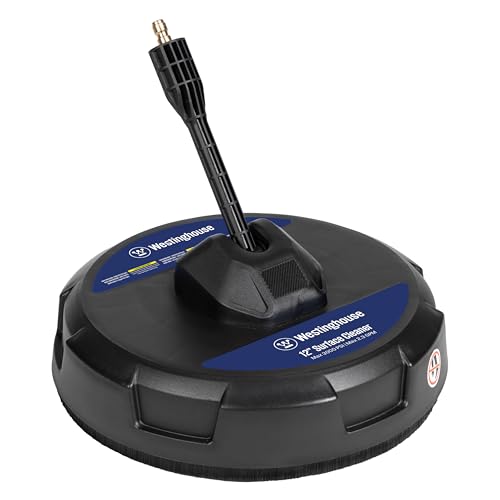 Westinghouse PWSC12 12" Pressure Washer Surface Cleaner Attachment12" Surface Cleaner12 x 12 x 3 inchesCheck on Amazon

What's inside
As an Amazon Associate I earn from qualifying purchases. This post may contain affiliate links at no extra cost to you.
The short answer: for most households, an electric pressure washer in the light-to-medium range is the right call. It is quiet, needs no fuel and handles cars, patio furniture, bins, fences, decks and driveways with the right nozzle. Do not shop on pressure alone. Water flow matters just as much, because cleaning speed comes from pressure and flow together. Choose a compact or cordless unit for small, occasional jobs, a corded mid-range unit for regular cleaning of large surfaces, and spend the saved money on a surface cleaner attachment and a few spare nozzles. Above all, learn the safety rules: a high-pressure jet can break skin, strip paint and gouge wood in a second.
In this guide
- Types of electric pressure washer
- How to choose
- PSI, GPM and cleaning power explained
- Features and accessories
- Nozzles and what each does
- Use cases
- Setup and first run
- Safety
- Maintenance and storage
- Common mistakes
- Who should choose what
- Buying checklist
- FAQ
- Conclusion
Types of electric pressure washer
Compact corded washers
These are the common entry point. A small motor drives a pump, and the whole unit is light enough to carry in one hand. They have enough punch to lift mud from garden furniture, rinse a car or freshen a bin, but they are not built for long, heavy sessions. Many use a universal motor, which is lighter and cheaper but tends to be louder and wear faster than larger designs.
Mid-range corded washers
Stepping up brings a stronger pump and often a more robust motor. This is the sweet spot for people who clean a patio, deck or driveway regularly. They usually run on a standard household circuit while delivering noticeably better cleaning speed than the compact class.
Induction-motor corded washers
Induction motors run cooler and quieter and are generally built for longer life than universal motors. They are usually heavier and cost more, and they suit people who clean often or for hours at a time. Check that your outlet and circuit can support the load stated in the manual.
Cordless battery washers
Battery models trade raw power for freedom. They are convenient for cars, bikes, boats on a trailer, outdoor furniture and spots with no power outlet. Runtime depends on the battery, and most are gentler than corded washers, which can be a benefit on delicate surfaces. Many can draw water from a bucket, which is useful where there is no tap.
Portable handheld and bucket-fed units
The smallest battery units are essentially powered spray guns. They are ideal for quick rinsing jobs and for travel and campsites, but they will not strip a stained driveway.
| Type | Typical use | Strength | Limitation | Noise and weight |
|---|---|---|---|---|
| Compact corded | Cars, furniture, bins | Cheap, light, easy storage | Slower on large areas | Light, moderately loud |
| Mid-range corded | Decks, fences, patios | Good balance of power and cost | Heavier, needs a hose and outlet | Moderate |
| Induction-motor corded | Frequent, long sessions | Quieter, durable | Heavy, higher cost | Heavy, quieter |
| Cordless | Cars, bikes, remote spots | No cord, bucket-fed option | Limited power and runtime | Light, quiet |
| Handheld / bucket-fed | Quick rinses, travel | Very portable | Light-duty only | Very light |
| Job | Suggested type | Why |
|---|---|---|
| Washing the car | Compact corded or cordless | Gentle enough for paint with the right nozzle |
| Cleaning a large driveway | Mid-range or induction corded plus surface cleaner | Flow and attachment speed up the work |
| Wooden deck | Mid-range corded, wide nozzle | Needs control to avoid damaging the grain |
| Garden furniture and tools | Compact corded or cordless | Light work, easy to store |
| House siding | Mid-range corded with soap tank | Gentle rinsing with detergent helps |
| Camping and mobile use | Cordless or handheld | No outlet needed |
How to choose
List what you will clean and how often. A person washing a car once a month and rinsing patio chairs does not need what someone cleaning a large driveway every spring needs. Cleaning large surfaces repeatedly is where flow rate, hose length and surface cleaners earn their keep. Light tasks are better served by a lighter tool that you are happy to get out of the cupboard.
Then consider water and power access. Corded models need an outdoor outlet and a tap; if either is far away, plan for cords and hoses of sufficient length. Cordless washers solve the outlet problem and sometimes the tap problem too. Finally, check storage space: a compact unit hangs on a hook, while a larger one needs floor space and a way to wind up the hose.
PSI, GPM and cleaning power explained
PSI
PSI, pounds per square inch, measures the pressure at the nozzle. Higher pressure lifts stubborn dirt but also increases the risk of damage. Many household surfaces, such as wood, painted siding and car paint, need only moderate pressure. Very high pressure belongs on concrete and similar hard surfaces, and even there, only with the right nozzle and technique.
GPM
GPM, gallons per minute, tells you how much water the machine delivers. Flow carries away loosened dirt, so more flow means faster rinsing and faster cleaning. Two machines with the same PSI but different flow rates will clean at different speeds.
Cleaning units
Multiplying PSI by GPM gives a figure often called cleaning units, which is a rough way to compare machines. It is imperfect, since some manufacturers quote peak or maximum pressure rather than working pressure, but it is better than PSI alone. Treat all specification sheets with a degree of caution, and look for the rated working figures where they are given.
Motor and pump
The motor drives the pump, and the pump creates the pressure. Pump materials vary; metal heads and axial or triplex designs generally last longer than basic plastic ones, but they cost more. For light domestic use, a basic pump is acceptable if you look after it and avoid running it dry.
Electrical load
Electric washers draw significant current. Check the amp rating, and make sure the circuit can carry the load without tripping. Avoid thin or very long extension cords, which cause voltage drop and overheating. If you must use one, choose an outdoor-rated cord of the gauge recommended in the manual.
Features and accessories
- Detergent tank or injector: applies soap at low pressure. Useful for cars and siding. Use only detergents rated for pressure washers.
- Trigger lock: prevents accidental spraying when you put the wand down.
- Hose length and material: a longer, flexible high-pressure hose reduces moving the machine. Kink-resistant hoses are easier to live with.
- Quick-connect fittings: make swapping nozzles and accessories fast.
- Surface cleaner attachment: a round, rotating head that cleans flat surfaces evenly and quickly, avoiding the striped look that a bare wand leaves.
- Extension wands and angled lances: let you clean gutters, undersides and awkward areas without ladders.
Nozzles and what each does
Nozzles control the spray pattern, which changes the effective pressure on the surface. Colours vary by manufacturer, so read the labelling rather than relying on convention.
- Narrow, near-zero degree jet: a pencil-thin stream with maximum impact. It can cut into wood, strip paint and etch concrete. Most households rarely need it, and many should leave it in the drawer.
- Narrow fan (around 15 degrees): for tough dirt on hard surfaces, such as concrete.
- Medium fan (around 25 degrees): a general-purpose choice for many hard surfaces and some decking.
- Wide fan (around 40 degrees): gentle cleaning for cars, siding, furniture and delicate wood.
- Soap nozzle: a wide, low-pressure opening that draws detergent through the injector.
- Rotary or turbo nozzle: spins a narrow jet in a cone, giving some of the cleaning power of a narrow jet over a wider area. It can still damage soft surfaces.
Always start with the widest nozzle and move closer or switch to a narrower one only if needed. Test on a hidden patch first.
Use cases
Cars and vehicles
Use a wide fan nozzle and keep a comfortable distance. Pressure can lift paint chips, damage loose trim and force water into seals and electrical connectors. Keep the jet away from engine bays, door seals and any damaged paint.
Decks and fences
Wood is easy to damage. Use a wide fan, keep the wand moving and work along the grain rather than across it. Raised grain and fuzzy surfaces are the typical result of too much pressure or too little distance. Allow the wood to dry before sealing or staining.
Patios and driveways
Hard surfaces tolerate more pressure, but stone and pavers can be damaged along joints. A surface cleaner makes the work faster and more even. Work in overlapping sections and rinse downhill.
House siding
Spray downward, never up under the laps where water can enter the wall. Use detergent and low pressure, and rinse from top to bottom. Older homes may have lead-based paint; if you suspect it, avoid stripping with a jet and seek guidance, because the chips are hazardous.
Setup and first run
- Read the manual, including the maximum inlet water temperature and any restrictions on detergents.
- Place the unit on a level, stable surface close to the tap, with enough room for the hose.
- Connect the garden hose to the water inlet, and attach the high-pressure hose and wand. Hand-tighten fittings so they seal.
- Turn on the water and squeeze the trigger with the machine off until a steady stream flows. This purges air from the pump and prevents dry running.
- Fit a wide nozzle, engage the trigger lock between uses and plug into a GFCI-protected outlet.
- Turn the machine on. Test on an inconspicuous area before beginning the real job.
- When finished, turn off the machine, close the water, squeeze the trigger to release residual pressure and then disconnect.
Safety
Injection injuries
A high-pressure stream can force water, bacteria and debris under the skin. These injection injuries can look small on the surface but cause serious deep damage and infection, and need urgent medical attention. Never point the wand at yourself, other people or pets. Never test the jet with a finger or foot. Keep hands clear of the nozzle. If the jet touches skin and breaks it, or you suspect injection, seek medical care straight away.
Electrical safety
Water and electricity do not mix. Plug into a GFCI-protected outlet or use a portable GFCI. Keep the plug and any cord connections off wet ground and out of puddles. If an extension cord is needed, use an outdoor-rated one of the recommended gauge, and keep the connection raised and dry. Never handle the plug with wet hands, and unplug the machine before changing nozzles or clearing blockages. Check the cord for damage before every use.
Protective gear
- Safety glasses or goggles, because debris can ricochet at speed.
- Closed shoes with grip, ideally waterproof boots. Never wear sandals.
- Long trousers and gloves.
- Hearing protection if the unit is loud.
Handling the wand
Brace for the trigger recoil by planting your feet firmly. Do not use a pressure washer on a ladder, since the recoil can throw you off balance; use an extension wand instead. Keep the hose from becoming a trip hazard, and do not let children operate it.
Surface damage
The same pressure that cleans can also remove paint, mortar, wood fibres and even skin. Avoid blasting windows, old putty, weathered seals, loose mortar, soft wood and anything with flaking paint. Do not spray electrical fittings, meters or outdoor outlets.
Chemicals and runoff
Use only detergents labelled for pressure washers, and never use bleach or solvents unless the manufacturer allows them. Prevent runoff from entering storm drains where local rules forbid it, particularly when cleaning with detergents.
Maintenance and storage
- Never run the pump dry: always have water flowing before starting.
- Clean the inlet filter: check it regularly, especially with hard or untreated water.
- Clean the nozzles: a blocked nozzle can raise pressure and strain the pump. Clear it with the tool supplied, with the machine off.
- Inspect the hose and seals: replace damaged hoses rather than patching them, and replace worn O-rings.
- Drain after use: release pressure and drain water from the pump and hose.
- Protect from frost: water left in the pump can freeze and crack it. Store in a frost-free place or follow the manual’s winterising instructions.
- Battery models: store the pack indoors, within the temperature range given by the maker.
Common mistakes
- Buying on peak PSI alone and ignoring flow.
- Starting with a narrow nozzle instead of a wide one.
- Holding the wand too close to the surface.
- Using the machine on wood across the grain.
- Skipping the surface cleaner on large flat areas and creating stripes.
- Using long, thin extension cords.
- Running the pump dry or letting it freeze.
- Spraying upward under siding laps and into window frames.
- Using non-approved chemicals in the detergent tank.
- Ignoring the safety basics around the jet and cord.
Who should choose what
Apartment or small garden owner: a compact corded or cordless washer, easy to store. Car enthusiast: a gentle compact or cordless unit with a foam applicator and wide nozzle. Homeowner with a deck and patio: a mid-range corded unit, a set of wide and medium nozzles and a surface cleaner. Frequent, heavy user: an induction-motor unit with a metal pump head. Camper or caravan owner: a bucket-fed cordless unit. Anyone cleaning delicate surfaces: choose lower pressure and rely on detergent and patience rather than force.
To compare current options, see the electric pressure washer range, add a surface cleaner attachment for large flat areas, and check replacement nozzle sets and eye protection.
Buying checklist
- List the surfaces and the size of areas you clean.
- Decide between compact, mid-range, induction and cordless types.
- Compare both PSI and GPM, and look for rated working figures.
- Check the amp draw against your circuit.
- Confirm a trigger lock and quick-connect fittings.
- Look for a detergent tank or injector if you wash cars or siding.
- Check hose length and the power cord length.
- Plan for a GFCI-protected outlet.
- Choose a set of wide and medium nozzles and a surface cleaner.
- Budget for safety glasses, gloves and waterproof boots.
Frequently asked questions
How much PSI do I need?
Less than most people think. Moderate pressure handles cars, furniture and most decks, and higher pressure is mainly useful on hard surfaces like concrete. Pair pressure with a suitable nozzle and distance.
Is GPM more important than PSI?
They work together. Pressure loosens dirt, while flow carries it away, so a machine with decent flow cleans faster than one with the same pressure and low flow. Compare both.
Can I use a pressure washer on my car?
Yes, with a wide fan nozzle, a safe distance and gentle technique. Keep the jet away from damaged paint, trim edges, seals and the engine bay.
Are cordless pressure washers any good?
They are good for light jobs and where convenience matters. They have lower power and limited runtime compared with corded models, so they will struggle with stained driveways but suit cars, furniture and quick rinses.
Can I use an extension cord?
Only if necessary. Use an outdoor-rated cord of the gauge the manual recommends, keep it short, and keep the connection dry and off the ground. A GFCI-protected outlet is essential.
Can I use hot water or detergents?
Most electric washers are designed for cold water only. Check the maximum inlet temperature in the manual. Use detergents labelled for pressure washers, and avoid bleach and solvents unless approved.
Why does my deck look fuzzy or striped after cleaning?
Wood fibres are likely to have been raised by too much pressure or too small a distance. Stripes usually come from uneven passes on hard surfaces. Use a wider nozzle, keep the wand moving and use a surface cleaner on flat areas.
What should I do if the jet hits my skin?
If the skin is broken, or you suspect water went under the skin, seek medical attention promptly even if the wound looks small. Injection injuries can worsen over hours.
Conclusion
The best electric pressure washer is one that matches your chores, your surfaces and your storage space. Compact and cordless units cover cars and furniture, mid-range corded models handle the regular outdoor cleaning that most households need, and induction-motor machines suit heavy users. Judge power by pressure and flow together, start with wide nozzles, and invest in a surface cleaner for big flat areas. Treat the jet with respect, use a GFCI-protected outlet, keep cords and connections dry, and protect the pump from dry running and frost. Do those things, and the machine will earn its place in the shed.
Disclosure: As an Amazon Associate, loapowertools.com earns from qualifying purchases. We may receive a small commission if you buy through links on this page, at no extra cost to you.
Related guides
More from Amazon
Programs that pair well with the guide above. Offers and eligibility are set by Amazon and may change.
A free business account with business pricing and bulk-buying tools for work, shop or home office.
Create a business accountFree shipping on eligible items, Prime Video and more. Eligible new members can start with a free trial.
Start a Prime free trialAudiobooks and podcasts to listen to on the go. Eligible new members can start with a free trial.
Try Audible freeAd-free music streaming. Eligible new subscribers can start with a free trial.
Try Music Unlimited freeAs an Amazon Associate we earn from qualifying purchases.

Write Your Review
No reviews yet. Be the first to share your experience!