What's inside
As an Amazon Associate I earn from qualifying purchases. This post may contain affiliate links at no extra cost to you.
Dust-controlled sanding depends on more than the sander’s dust bag. The tool needs to capture dust at the pad, the hose or extractor must keep up, and the battery must last long enough to finish the work without making the tool awkward. Choose around the material, the size of the job, and the dust-control setup you will actually use.
Start with the dust setup
For occasional touch-ups, a built-in dust box or bag is convenient and may be adequate outdoors or on a small job. It is not a substitute for extraction when sanding indoors, working on fine dust, or handling coatings whose dust should not be inhaled. Many cordless sanders have a dust port designed for a shop vacuum or extractor. Check its diameter and shape before buying: adapters may be needed, and a loose connection can leak dust or pull off while you work.
A vacuum with a suitable filter and adequate airflow usually collects more than the sander’s small bag. Keep the hose from dragging across the workpiece, and check that the vacuum filter is not clogged; reduced airflow means more dust escapes through the pad holes. A cordless random-orbit sander with a dust port is a sensible starting point for general wood sanding. For indoor work, pair it with extraction appropriate to the dust and follow the material and vacuum manufacturers’ guidance.
Choose the sander type for the work
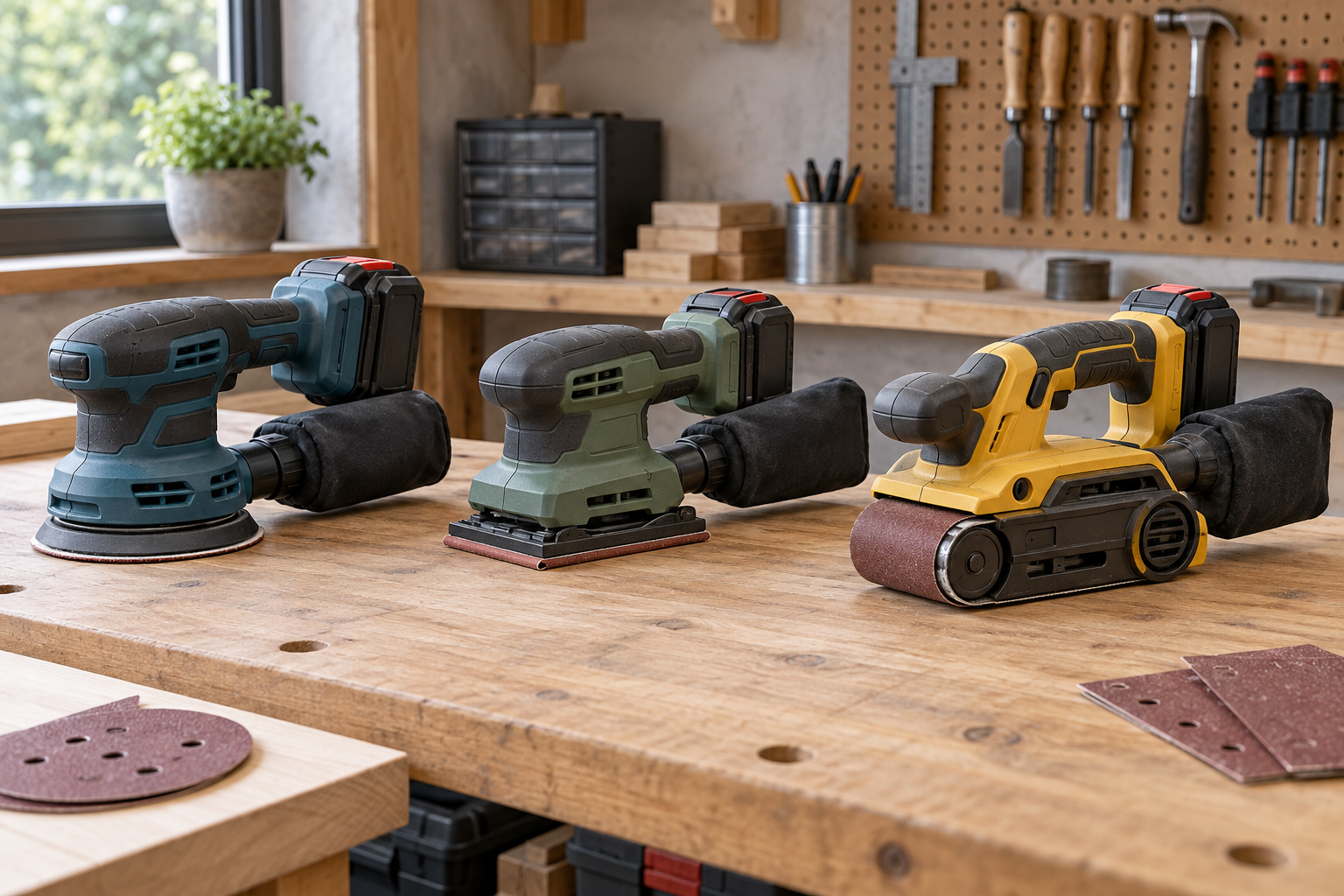
A 5-inch random-orbit sander is the most versatile choice for flat wood surfaces, paint preparation, and general finishing. Its circular pad removes material while reducing the visible scratch pattern compared with a basic orbital sander. It can still leave swirls if you press hard, use a damaged disc, or skip grits. Let the pad do the work and use light, even pressure.
A finishing or sheet sander is useful for corners and edges where a round pad cannot reach. Its rectangular pad may also suit careful, light sanding between coats. For large surfaces, a 6-inch random-orbit model covers more area, but it can be heavier and less comfortable overhead. A compact detail sander reaches tight corners but is slower on broad panels. Do not buy a specialized shape as your only sander unless the job demands it.
Compare common cordless options
| Type | Best use | Dust-control trade-off |
|---|---|---|
| 5-inch random-orbit | General woodwork and paint prep | Common port options; check pad-hole alignment |
| 6-inch random-orbit | Faster coverage on wide panels | More area per pass, but hose and tool weight can tire you sooner |
| Finishing or sheet sander | Edges, corners, and light finishing | May connect to extraction, but dust collection varies by pad design |
| Detail sander | Small, tight areas | Useful in corners, inefficient for large dusty jobs |
Check the battery and runtime
Sanding can use a battery steadily, especially at high speed or under load. Battery runtime depends on the sander, abrasive, pressure, material, and pack condition, so published numbers are not a reliable promise for your project. A larger-capacity battery can extend working time, but it adds weight; that matters when sanding vertically or overhead. If you already own tools in a battery platform, using its compatible sander may save more than switching brands for a small difference in features.
For a short repair, a smaller pack is often the comfortable, cheaper option. For several hours of sanding, plan on spare charged batteries and a charger that fits your work rhythm. A second battery only helps if it is charged before you need it. When buying into a platform, compare battery and charger cost as well as the bare tool. Browse bare-tool cordless sanders in your battery platform if you already have compatible packs; avoid assuming batteries from different voltage lines or generations interchange.
Features worth checking in person
Look for a variable-speed control if you sand delicate finishes, plastics, or edges where aggressive removal can cause damage. A lower setting gives more control, but it does not make the tool safe for every material. Check the pad diameter, the hook-and-loop surface, and whether replacement pads are readily available. Discs must match the pad size and hole pattern; misaligned holes can reduce extraction. Some sanders use multi-hole patterns that accept a wider range of discs.
Grip and balance matter more than a long feature list. Hold the tool with a battery installed, then imagine using it at shoulder height. A tool that feels fine at a workbench may become tiring overhead. Also check how easy it is to connect the hose and empty or clean the dust box. A dust box that is awkward to remove often ends up neglected.
Avoid common dust-control failures
Do not treat the collection system as complete protection. Wear suitable respiratory protection for the material and task, and use eye protection. Follow safety guidance for lead paint, treated wood, and other hazardous materials; ordinary shop-vac setups may not be suitable. Keep bystanders away, ventilate as appropriate, and clean up with a vacuum suited to the dust rather than dry sweeping.
Before sanding, inspect the pad and disc, connect the hose securely, and run the vacuum. Start the sander on the workpiece, keep it moving, and avoid leaning on it. Excess pressure can slow the pad, worsen the finish, overload the battery, and push more dust past the collection holes. If dust is escaping, stop and check for a blocked filter, full container, poor hose fit, worn pad, or mismatched disc holes before increasing speed.
Make the buying decision
For a homeowner doing occasional furniture repairs, a 5-inch random-orbit sander with a dust box can be the cheaper, reasonable choice—especially for outdoor work and small areas. For frequent indoor sanding, prioritize a reliable extraction connection, compatible discs, and a vacuum that can maintain airflow. A 5-inch cordless random-orbit sander with vacuum-adapter compatibility is a practical middle ground for many users. Choose a larger pad only when broad surfaces justify its extra reach and weight, and stay within your battery platform if that keeps the total cost down.
Related guides
- Longest Lasting Lawn Mower Battery: AGM vs Lithium vs Flooded Lifespan and Cost per Season
- Duralast Gold Lawn Mower Battery Review: U1 Fit, CCA and When to Pay for AGM
- Greenworks Pro 80V 21-Inch Mower Review: Runtime Math, Push vs Self-Propelled and Yard Fit
- Bosch High Pressure Washer Gun Replacement: Fittings, Adapters and What Fits Your Model