What's inside
As an Amazon Associate I earn from qualifying purchases. This post may contain affiliate links at no extra cost to you.
The real difference: capacity and weight
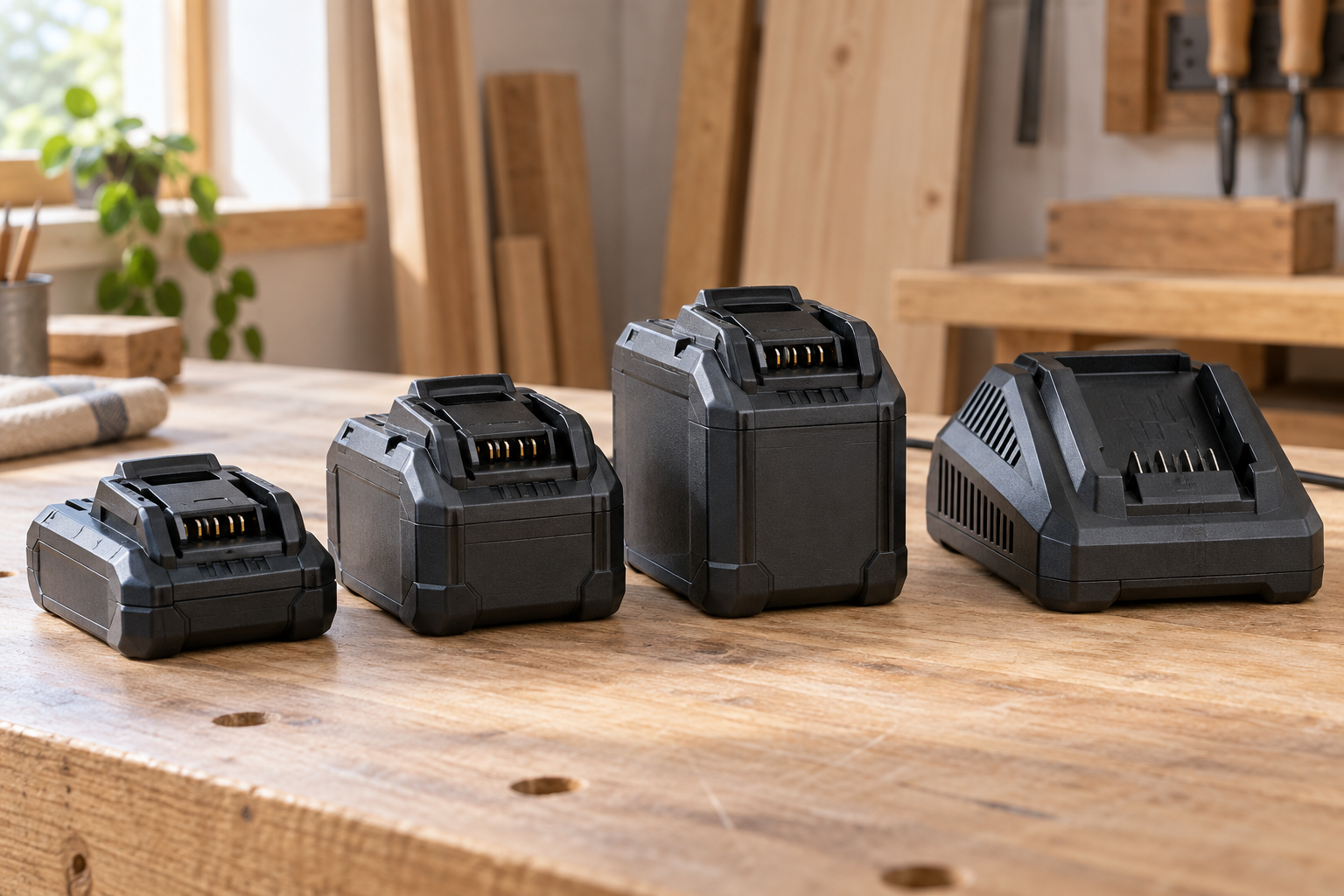
Ryobi ONE+ 18V 2.0Ah and 4.0Ah batteries use the same voltage platform, so either can power compatible ONE+ tools. The main difference is capacity: a 4.0Ah pack stores about twice the energy of a 2.0Ah pack. In practical terms, that usually means more work between charges—not twice the tool’s speed or power.
The larger pack is also heavier and bulkier. That matters less on a mower or shop vacuum than on a drill held overhead or a compact impact driver used all afternoon. For home projects, the better choice depends on the tool, the job, and whether you value longer runtime or a lighter setup.
Quick comparison
| Factor | 2.0Ah pack | 4.0Ah pack |
|---|---|---|
| Nominal capacity | 2 amp-hours | 4 amp-hours |
| Runtime | Shorter; suited to intermittent tasks | Roughly twice the stored energy under comparable conditions |
| Handling | Lighter and less bulky | Heavier; more noticeable on handheld tools |
| Best fit | Occasional drilling, driving, and light trimming | Longer sessions and tools that draw more power |
| Charging | Often quicker to recharge, depending on the charger | Usually takes longer on the same charger |
These are capacity comparisons, not guaranteed job counts. Actual runtime changes with the tool, material, battery condition, temperature, and workload. A drill boring a small pilot hole uses far less energy than a circular saw cutting thick lumber.
When a 2.0Ah battery is enough
A 2.0Ah pack is a sensible choice for short, stop-and-start jobs: hanging shelves, assembling furniture, drilling a handful of holes, or driving screws into ordinary framing. It is also handy as a spare when a larger pack is charging. If your work usually consists of a few minutes at a time, the lower weight can be more useful than extra capacity.
On a drill or impact driver, a lighter battery can reduce fatigue, especially when working overhead or in a tight space. The trade-off is that you may need to swap packs more often. That is a minor inconvenience if you own two batteries and can charge one while using the other; it is frustrating if the job must be finished in one uninterrupted session.
Choose a Ryobi ONE+ 2.0Ah battery when light weight and lower upfront cost matter more than long runtime. Check that the listing is for a compatible ONE+ 18V pack, and compare the price against a kit if you also need a charger.
When a 4.0Ah battery makes sense
A 4.0Ah pack is a better fit for jobs that run longer or put sustained demand on the battery. Think repeated cuts with a circular saw, extended sanding, mowing, or using a shop vacuum to clean up a work area. With twice the nominal capacity, it can reduce interruptions for battery swaps, though it will not guarantee twice as many cuts or minutes in every tool.
Higher-draw tools can empty a small pack quickly. If a 2.0Ah battery repeatedly runs flat before you finish a task, moving to 4.0Ah is a straightforward way to add runtime. It does not make an underpowered tool equivalent to a larger one, and it cannot fix a dull blade, a clogged filter, or a technique that forces the tool to work too hard.
The added weight is a real cost. On a handheld blower or drill, it can make a long session tiring; on equipment supported by the ground or a handle, the extra mass may be less noticeable. Consider a Ryobi ONE+ 4.0Ah battery if fewer charge breaks matter more than minimizing weight.
Runtime, charging, and temperature
Capacity is measured in amp-hours, not minutes. There is no reliable universal rule such as “one 2.0Ah battery equals a fixed number of cuts.” Tool design and load make a major difference, and battery capacity declines with age and use. Cold conditions can also reduce available runtime temporarily, while heat from hard use can prompt a battery or tool to pause for protection.
Charging time depends on the charger, not just the pack size. On the same charger, a 4.0Ah battery generally takes longer to refill than a 2.0Ah battery. If you regularly use a high-draw tool, a second battery or a faster compatible charger may be more practical than relying on one large pack. Let a hot battery cool before charging, and use a charger intended for the ONE+ platform.
Match the pack to the tool
For light drilling and driving, choose based on comfort: a 2.0Ah pack is often enough for household repairs, while a 4.0Ah pack is useful for long fastening sessions. For saws, sanders, and outdoor equipment, prioritize runtime and consider 4.0Ah or larger capacity if compatible with the tool. A larger pack can still feel awkward on a compact tool, so balance the battery in your hand before committing to one setup.
If you are building a battery supply, a mixed pair is often more useful than buying two identical packs: a small battery for overhead work and a larger one for sustained jobs. Compare ONE+ battery-and-charger kits with standalone packs, because bundled pricing can change the value. Verify the included capacity, charger type, and platform compatibility rather than assuming every deal contains the same equipment.
Avoid common buying mistakes
Do not pay extra for 4.0Ah if your jobs are short and the extra weight will sit on the tool all day. Conversely, do not choose 2.0Ah solely because it costs less if frequent cutoffs will stall a project. Battery age matters too: a used pack with reduced capacity may not deliver the runtime expected from its label. Buy from a source with a clear return policy, and stop using a pack that is cracked, swollen, leaking, or unusually hot.
For occasional home repairs, start with 2.0Ah if low weight and price are the priorities. For extended work or energy-hungry tools, 4.0Ah is usually the more convenient pack. If your projects vary, keeping one of each gives you a practical way to choose between runtime and handling without buying capacity you rarely need.
Related guides
- Longest Lasting Lawn Mower Battery: AGM vs Lithium vs Flooded Lifespan and Cost per Season
- Duralast Gold Lawn Mower Battery Review: U1 Fit, CCA and When to Pay for AGM
- Greenworks Pro 80V 21-Inch Mower Review: Runtime Math, Push vs Self-Propelled and Yard Fit
- Bosch High Pressure Washer Gun Replacement: Fittings, Adapters and What Fits Your Model