What's inside
As an Amazon Associate I earn from qualifying purchases. This post may contain affiliate links at no extra cost to you.
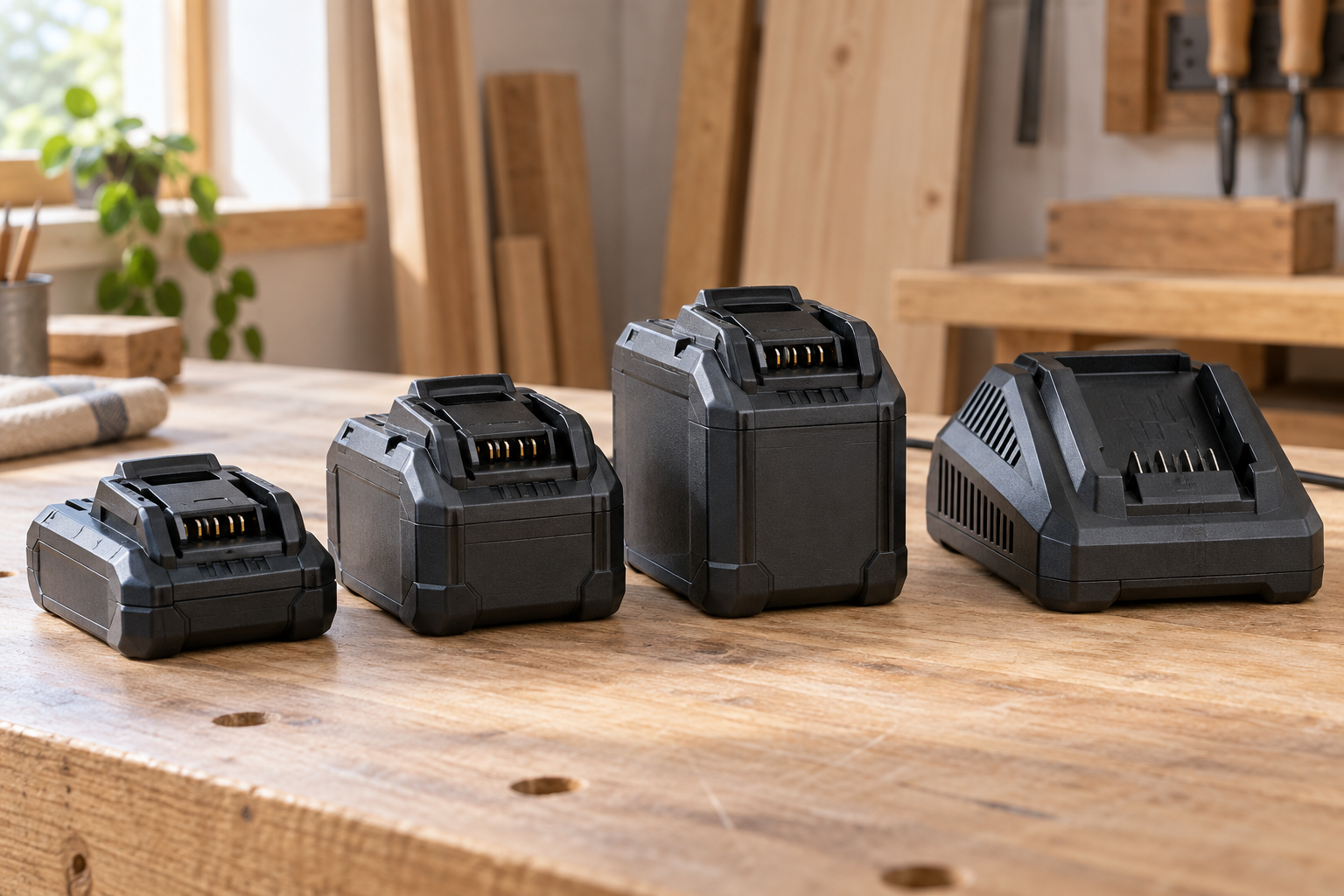
Hilti Nuron is not a drop-in replacement for Hilti’s older 22V battery system. Both are nominally 22-volt platforms, but their batteries, tools and chargers use different interfaces. A Nuron pack will not power an older Hilti 22V tool, and an older 22V pack will not power a Nuron tool. If you’re adding tools to an existing fleet, check the platform before buying—not just the voltage printed on the battery.
The practical choice is usually straightforward: keep buying older 22V tools and packs if they meet your needs and remain available, or move to Nuron when buying into Hilti’s newer cordless lineup. The tricky part is the transition: existing packs and chargers generally can’t be carried over, so the cost of changing platforms includes more than the bare tool.
As an Amazon Associate we earn from qualifying purchases at no extra cost to you.
Compatibility: same voltage, different system
Nuron is Hilti’s newer 22V cordless platform, introduced with a redesigned battery connection and electronics. Older Hilti 22V packs use a different physical interface. There is no general-purpose adapter that turns one system into the other, and adapters should not be treated as a safe workaround for a high-current tool. A tool may draw substantial current under load; an improvised connection can overheat, interrupt power or damage equipment.
Compatibility also applies to chargers. An older 22V charger is not a Nuron charger, and a Nuron charger does not make an older pack compatible with a Nuron tool. Check the battery and charger markings and the tool’s product listing before ordering. If a listing says “bare tool,” it usually excludes both the battery and charger; confirm what is included rather than assuming a pack shown in a photograph comes with it.
| Question | Older Hilti 22V system | Hilti Nuron |
|---|---|---|
| Works with the other system’s tools? | No; uses the older battery interface | No; uses the Nuron interface |
| Uses the other system’s charger? | No; use a compatible older-system charger | No; use a compatible Nuron charger |
| Can existing packs carry over? | Yes, across compatible older 22V tools | No; Nuron tools require Nuron packs |
| Best fit | Extending a working older fleet | Starting or gradually building a Nuron fleet |
Work out the real cost of upgrading
A platform change can mean replacing three things: batteries, chargers and tools. If you already own several healthy 22V packs, moving to Nuron may make sense for new capabilities or future tool availability, but it is rarely the cheapest way to replace one working drill. Price the tool, at least one compatible pack, and a charger together. Then compare that total with a compatible older-platform tool, if one is available and suitable for the job.
Battery capacity matters as much as platform. Capacity is commonly listed in amp-hours (Ah); a higher Ah pack can generally run longer between charges, but it may weigh more and cost more. For drilling or driving occasional fixings, a smaller, lighter pack can be more comfortable. For sustained cutting, grinding or heavy drilling, runtime and heat management matter more. Don’t assume two packs with the same nominal voltage will deliver the same runtime or performance: tool demand, battery condition and operating conditions all affect results.
If you’re moving to Nuron, look for a kit or bundle that includes the pack size you need and a compatible charger. If you’re staying with the older system, a compatible older Hilti 22V battery can be a sensible purchase when it costs less than replacing several tools. Verify the exact platform and compatibility before checkout; search results can mix different Hilti battery generations.
When to keep the older system—and when to switch
Keep using older 22V packs if they hold a useful charge, fit the tools you rely on and are safe to use. A working pack is not obsolete just because Hilti has introduced a newer platform. For a homeowner or occasional user with a drill, impact driver and a couple of sound batteries, replacing everything solely to get Nuron may deliver little practical value.
Consider Nuron when you’re buying several new cordless tools, replacing worn-out batteries and chargers anyway, or adding tools that are offered only on the newer platform. A consistent system simplifies charging and pack rotation, and buying into the current range can make future additions easier. The trade-off is the upfront cost of new packs and charging equipment, plus the weight and size differences between available battery options.
For either system, buy batteries from a source that clearly identifies the platform and offers a return path if the item does not match your tool. Avoid listings that say only “22V replacement” without naming the compatible Hilti battery system. A pack that looks close is not proof of compatibility.
Check pack condition and avoid common failures
Before reusing an older battery, inspect its case, terminals and latch. Stop using a pack that is cracked, swollen, leaking, unusually hot, smells burnt or has damaged contacts. A pack that repeatedly cuts out under load may be worn, contaminated at the contacts or affected by a tool fault; don’t keep forcing it back into service. Clean accessible contacts only as the manufacturer permits, and don’t open the battery case or attempt cell repairs.
Store and charge packs according to Hilti’s instructions, using a charger intended for that battery system. Keep batteries away from excessive heat and moisture, and don’t leave a suspect pack charging unattended. If a pack or charger reports a fault, consult the product manual or Hilti service rather than testing it in a different platform tool.
A simple buying checklist
Before ordering, write down the tool’s exact platform, the battery interface it accepts, and the charger you already own. Check whether the product is a bare tool or a kit, what Ah rating is included, and whether the listing explicitly names the compatible system. If you’re building a new setup, compare a Nuron battery-and-charger kit with the cost of buying each component separately.
The cheapest sound choice is often to keep a healthy older Hilti 22V fleet running. The sensible reason to move to Nuron is a concrete need—new tools, replacement of aging equipment or a planned fleet change—not the shared “22V” label. Treat the two as separate ecosystems, budget for their separate batteries and chargers, and you’ll avoid buying a pack that cannot do the job.
Related guides
- Longest Lasting Lawn Mower Battery: AGM vs Lithium vs Flooded Lifespan and Cost per Season
- Duralast Gold Lawn Mower Battery Review: U1 Fit, CCA and When to Pay for AGM
- Greenworks Pro 80V 21-Inch Mower Review: Runtime Math, Push vs Self-Propelled and Yard Fit
- Bosch High Pressure Washer Gun Replacement: Fittings, Adapters and What Fits Your Model