What's inside
As an Amazon Associate I earn from qualifying purchases. This post may contain affiliate links at no extra cost to you.
Dirty or oxidized contacts can cause a cordless tool to cut out, refuse to start, or charge intermittently. Cleaning is usually straightforward, but a battery pack contains cells that can deliver high current. A slipped metal tool can short exposed terminals and cause burns, sparks, or a fire. Use this procedure for ordinary surface dirt and light oxidation—not for damaged packs, swollen batteries, or corrosion that has reached inside the housing.
Identify the contacts before cleaning
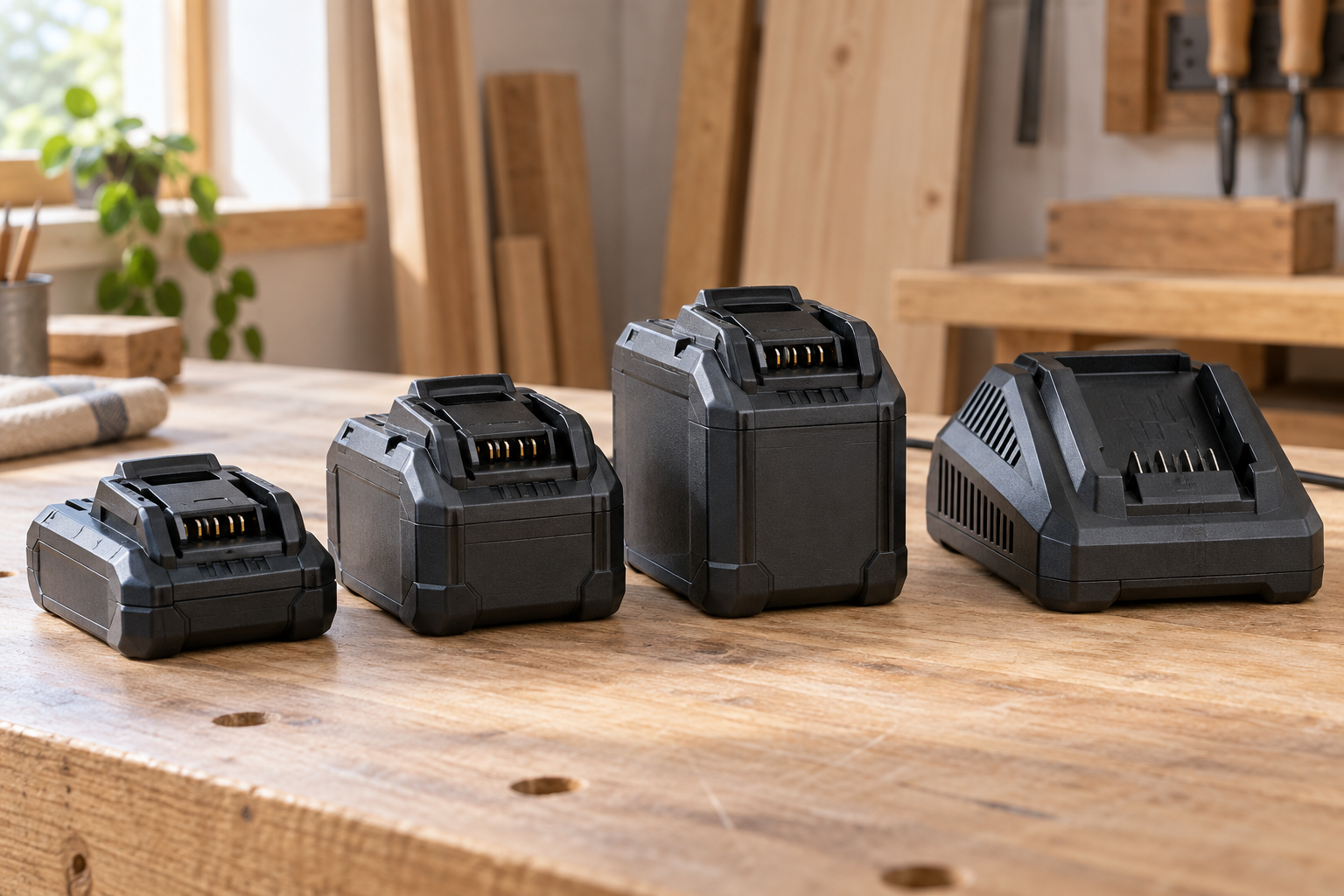
Remove the battery from the tool or charger and set it on a dry, nonconductive surface. Find the metal terminals on the battery and the matching contacts in the tool or charger. Some packs have extra small terminals for temperature sensing or communication; do not bridge them together or scrape them with a blade. Check the owner’s manual if the terminal layout is unclear.
Look for dust, grime, dark residue, green or white corrosion, bent contacts, and melted or discolored plastic. A little gray transfer or surface film is different from pitting, missing plating, or a contact that has been pushed out of position.
Make the job safe
Take off rings, watches, and other metal jewelry. Keep the battery away from loose screws, keys, and tools that could connect its terminals. Do not use steel wool, sandpaper, a wire brush, a knife, or a screwdriver on the contacts. Abrasives can remove protective plating; metal tools can bridge terminals. Avoid spraying liquid directly into a battery, tool, or charger.
For normal cleaning, gather a lint-free cloth or cotton swabs and high-purity isopropyl alcohol. A small bottle of 90% or higher isopropyl alcohol is a sensible buy if you do not already have it; lower concentrations contain more water and take longer to evaporate. A bottle of high-purity isopropyl alcohol is useful for electrical contacts and other small cleaning jobs. Do not substitute household cleaners, vinegar, or water.
Clean light dirt and residue
With the battery removed, wipe the battery terminals with a dry lint-free cloth. Use a barely dampened swab for stubborn grime. The swab should be damp, not dripping; do not let alcohol run into seams or openings. Wipe the tool or charger contacts the same way, taking care not to bend spring-loaded contacts or leave cotton fibers behind.
Let every surface air-dry fully before reinstalling the battery. Isopropyl alcohol is flammable, so keep it away from flames, sparks, and hot surfaces while it is open or drying. Do not use a heat gun or compressed air to speed drying. Once dry, insert the battery normally and check that it seats securely. Never force a pack that will not slide into place.
Choose the right cleaning approach
| Condition | Approach | What to avoid |
|---|---|---|
| Dust or fingerprints | Dry lint-free cloth; use a lightly dampened swab for residue. | Spraying liquid into the tool or pack. |
| Sticky or greasy film | Small amount of high-purity isopropyl alcohol on a swab; allow full drying. | Household degreasers, water, and soaking. |
| Light surface oxidation | Gentle wiping only; stop if the plating is pitted or the deposit will not lift easily. | Scraping, sanding, or aggressive polishing. |
| Heavy corrosion, heat damage, or loose contacts | Stop using the affected pack, tool, or charger and arrange qualified service or replacement. | Further cleaning or testing with a questionable battery. |
Contact-cleaner products are not automatically a better choice. Some leave a lubricant or residue, and some are intended for specific materials. If you buy a residue-free electrical contact cleaner, check its label for plastic compatibility and follow its directions. For occasional light cleaning, a cloth and isopropyl alcohol are usually enough.
Know when cleaning is not the fix
Do not clean or charge a battery that is swollen, cracked, leaking, unusually hot, or giving off an odor. Do not use a pack with melted plastic, deep pitting, visible internal corrosion, or a terminal that moves in its housing. These signs can indicate cell or connection damage, not just dirt. Set the pack aside away from combustible materials and follow the manufacturer’s instructions for service or disposal. Do not put a lithium-ion battery in household trash.
If a tool’s contact is bent, loose, or visibly burned, do not try to straighten it with the battery installed. A damaged charger contact is also a reason to stop using that charger. Replacing a charger or tool component is safer than trying to restore a contact that no longer holds its shape or makes reliable pressure.
Test methodically after cleaning
After everything is dry, try the pack in a known-good compatible tool, or try a known-good compatible pack in the affected tool. Change one item at a time. If the same battery fails in multiple tools, the pack is the likely problem. If multiple batteries fail in one tool, the tool contacts or electronics are more suspect. If charging is the issue, test only with a compatible charger and inspect its contacts too.
Intermittent operation after cleaning can point to a loose terminal, worn battery latch, damaged wiring, or a failing pack—not dirt. Stop if the battery gets hot, the connection sparks, or the tool cuts out repeatedly under light load. Avoid repeated insertion and removal as a way to “scrub” contacts; it can wear the plating without fixing the underlying fault.
Prevent repeat problems
Store batteries and tools in a dry place, away from metal debris and damp sawdust. Keep the battery terminal cover in place when supplied, and wipe dust from contacts before storage if the tool has been used in a gritty environment. A quick visual check every few months—and whenever a tool starts cutting out—is usually enough. Clean only when there is visible dirt or a symptom to investigate; frequent polishing can do more harm than good.
Related guides
- Longest Lasting Lawn Mower Battery: AGM vs Lithium vs Flooded Lifespan and Cost per Season
- Duralast Gold Lawn Mower Battery Review: U1 Fit, CCA and When to Pay for AGM
- Greenworks Pro 80V 21-Inch Mower Review: Runtime Math, Push vs Self-Propelled and Yard Fit
- Bosch High Pressure Washer Gun Replacement: Fittings, Adapters and What Fits Your Model