What's inside
As an Amazon Associate I earn from qualifying purchases. This post may contain affiliate links at no extra cost to you.
Starting a cordless tool system means paying for more than the first tool. Batteries and chargers can add a substantial share of the cost, especially if you buy several small packs separately or discover later that your charger is too slow for your workday. A practical budget starts with the jobs you expect to do, then covers enough battery capacity and charging time to keep tools usable without buying every accessory at once.
As an Amazon Associate we earn from qualifying purchases at no extra cost to you.


Start with the work, not the battery lineup
List the tools you expect to use in the next year and how intensively you’ll use them. A homeowner drilling holes, assembling furniture, and making occasional cuts has different needs from a contractor running a saw for hours. A drill and impact driver used intermittently can often share two batteries: one in use and one charging. A saw, grinder, or blower can drain a pack much faster, so extended work may call for more capacity or a spare.
Check what comes in each tool kit before comparing prices. A “bare tool” includes no battery or charger; a kit may include one or two batteries, a charger, and a case. Compare the complete cost of getting the tools operational, not just the tool’s advertised price. A discounted kit can be a better system starter than a cheaper bare tool plus separately purchased accessories.
Choose capacity for runtime and handling
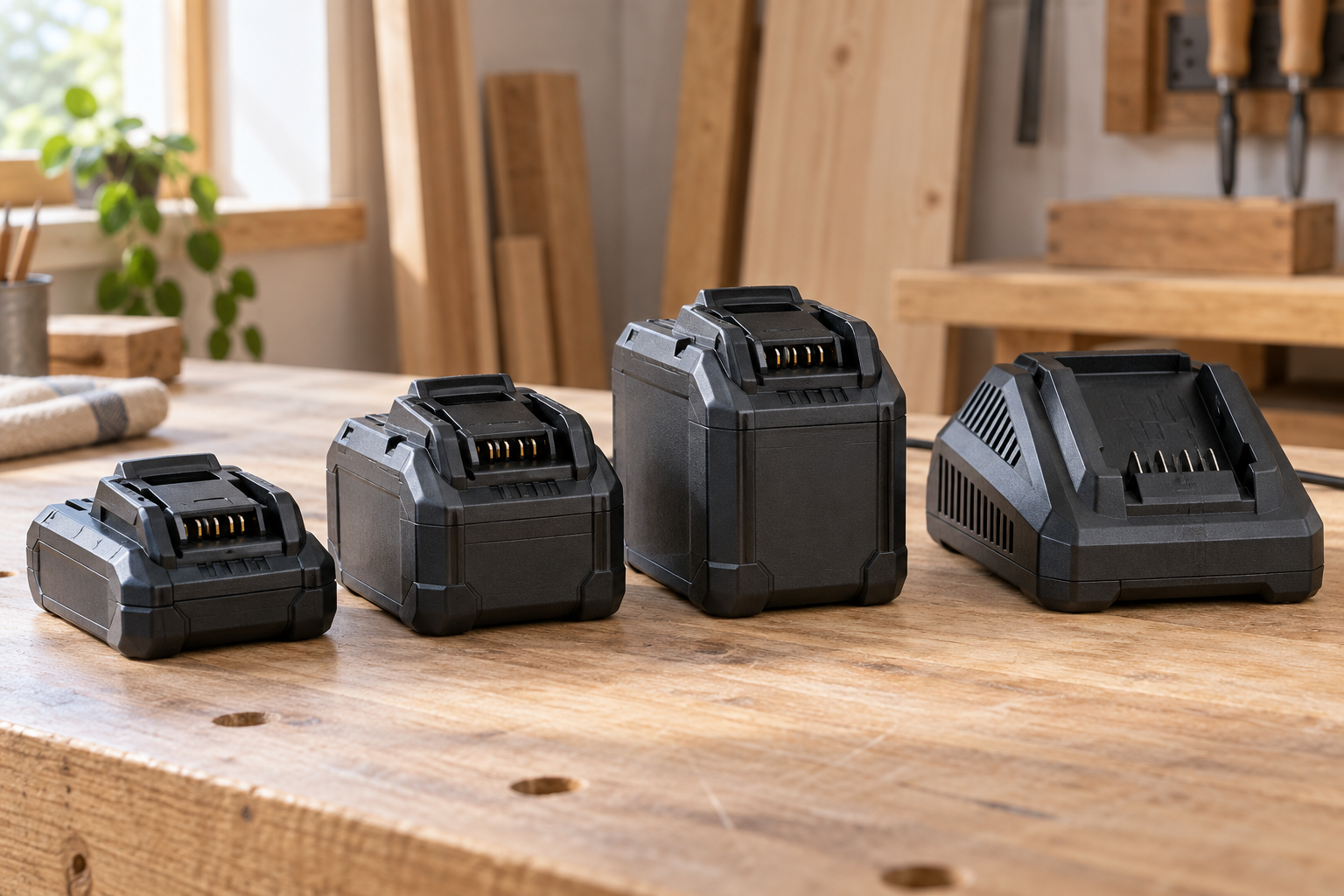
Battery capacity is usually stated in amp-hours (Ah). Within the same voltage platform, a 4 Ah pack generally stores about twice the energy of a 2 Ah pack, though actual runtime varies with the tool, material, and workload. Higher-capacity packs tend to cost more and weigh more. That extra weight matters on an overhead drill or a compact driver used all day; it matters less on a stationary or high-draw task where fewer battery swaps are valuable.
For light household work, a pair of compact packs can be easier to handle and may provide enough runtime. For repeated cutting, sanding, or outdoor work, budget for at least one higher-capacity pack if the platform offers one. Don’t assume the biggest battery is always the best purchase: it may make a small tool tiring, and it still needs time to recharge.
When comparing listings, confirm that voltage, platform, and battery generation are compatible with your tools. Packs from different voltage platforms generally do not interchange, even within one brand. Some brands also have compact tool lines with their own batteries. Read the compatibility details rather than relying on brand name alone.
Budget for charging time
Charger speed can determine how many batteries you need. A charger’s stated charge time is often based on a particular battery size and may differ for larger packs. Check the manufacturer’s charge-time chart for the exact capacity you plan to buy. If you regularly use a 4 Ah battery faster than your charger can refill it, one spare may not keep up with a long shift.
For occasional DIY, a basic charger is usually fine: work can pause while a pack charges, and overnight charging is rarely a problem. Pay extra for a faster charger only when shorter turnaround will reduce the number of batteries you need or prevent costly delays. A starter kit with two batteries and a charger is often a sensible way to establish a working setup; compare the included capacities and charge times, not just the number of packs.
Before buying a second charger, check whether your existing one can serve multiple tools and whether the new charger is compatible with all your packs. A second charger helps when you have several batteries or need one at a separate work location. It does not add runtime by itself; batteries do that.
A practical starter budget
Prices vary by brand, promotions, and battery size, so use these as planning ranges rather than quotes. A tool kit’s value depends on the tools included, but the following gives a rough sense of where extra system costs can land. Compare current prices for your chosen platform before setting a firm budget.
| Setup | Typical use | Budget allowance beyond bare tools | Main trade-off |
|---|---|---|---|
| Basic | Occasional home repairs; one or two tools | About $50–$120 for a battery and charger, or a kit deal | Low upfront cost, but limited runtime and possible waiting |
| Flexible starter | Several tools used in short sessions | About $100–$250 for two batteries and one charger | Good rotation; charger may not refill packs quickly |
| Frequent or heavy use | Long sessions with saws, grinders, or outdoor tools | About $200–$450 or more for higher-capacity packs and faster charging | Less downtime, but greater weight and upfront cost |
These ranges are not universal. Promotional bundles can shift the value considerably, and premium high-capacity batteries can cost more than a basic tool. If you already own compatible batteries, count them as part of the budget only if their condition and capacity suit the new workload.
Avoid false savings and common failures
The cheapest battery may be adequate for occasional drilling, but be cautious with unverified third-party packs. A poor fit, unreliable protection circuitry, inconsistent capacity, or weak warranty can turn a small saving into downtime—or damage. For a pack used in a high-draw saw or grinder, buying the tool maker’s battery or a reputable compatible option is generally the safer bet. For light use, a compact battery for your platform can be a reasonable lower-cost choice if compatibility, seller, warranty, and return terms are clear.
Heat and storage also affect battery life. Avoid leaving packs in a hot vehicle or charging a very hot battery immediately after hard use; follow the manual’s temperature guidance and let the pack cool if required. Store batteries somewhere dry, and check the maker’s instructions for long-term storage charge. A swollen, cracked, leaking, or unusually hot pack should be taken out of service—not kept as an emergency spare.
Buy in stages and protect platform flexibility
It’s rarely necessary to buy the entire battery collection on day one. Start with the batteries included in a useful kit, then track actual use. If you repeatedly stop because both packs are empty, buy another battery or a faster charger based on the charge times. If a compact pack routinely runs a saw flat mid-task, put the next dollar toward a larger pack rather than another charger.
Before committing to a platform, look at the cordless tools you’re likely to add over the next few years. A battery system is valuable when its packs and chargers work across the tools you actually need; a broad lineup is less useful if the tools are poor fits for your jobs. Budgeting around a realistic first set of tools, two usable batteries, and one suitable charger avoids both extremes: overspending on unused capacity and starting so lean that the system spends more time charging than working.
Related guides
- Longest Lasting Lawn Mower Battery: AGM vs Lithium vs Flooded Lifespan and Cost per Season
- Duralast Gold Lawn Mower Battery Review: U1 Fit, CCA and When to Pay for AGM
- Greenworks Pro 80V 21-Inch Mower Review: Runtime Math, Push vs Self-Propelled and Yard Fit
- Bosch High Pressure Washer Gun Replacement: Fittings, Adapters and What Fits Your Model