What's inside
As an Amazon Associate I earn from qualifying purchases. This post may contain affiliate links at no extra cost to you.
What these washers are good for
A cordless pressure washer that accepts your existing tool batteries can be handy for rinsing muddy bikes, cleaning patio furniture, washing a car, or working where a tap and power outlet are inconvenient. It is not a cordless replacement for a full-size electric pressure washer. Most battery models move less water and run for a limited time, and many draw water from a bucket or tank rather than using a garden hose.
That distinction matters more than a big pressure number on the box. For routine vehicle and garden cleaning, water flow, nozzle control, and battery runtime determine whether the tool is useful. For stripping paint, cleaning a large concrete driveway, or removing stubborn algae, a corded unit with a hose connection is usually the better buy.
As an Amazon Associate we earn from qualifying purchases at no extra cost to you.


Check the battery platform first
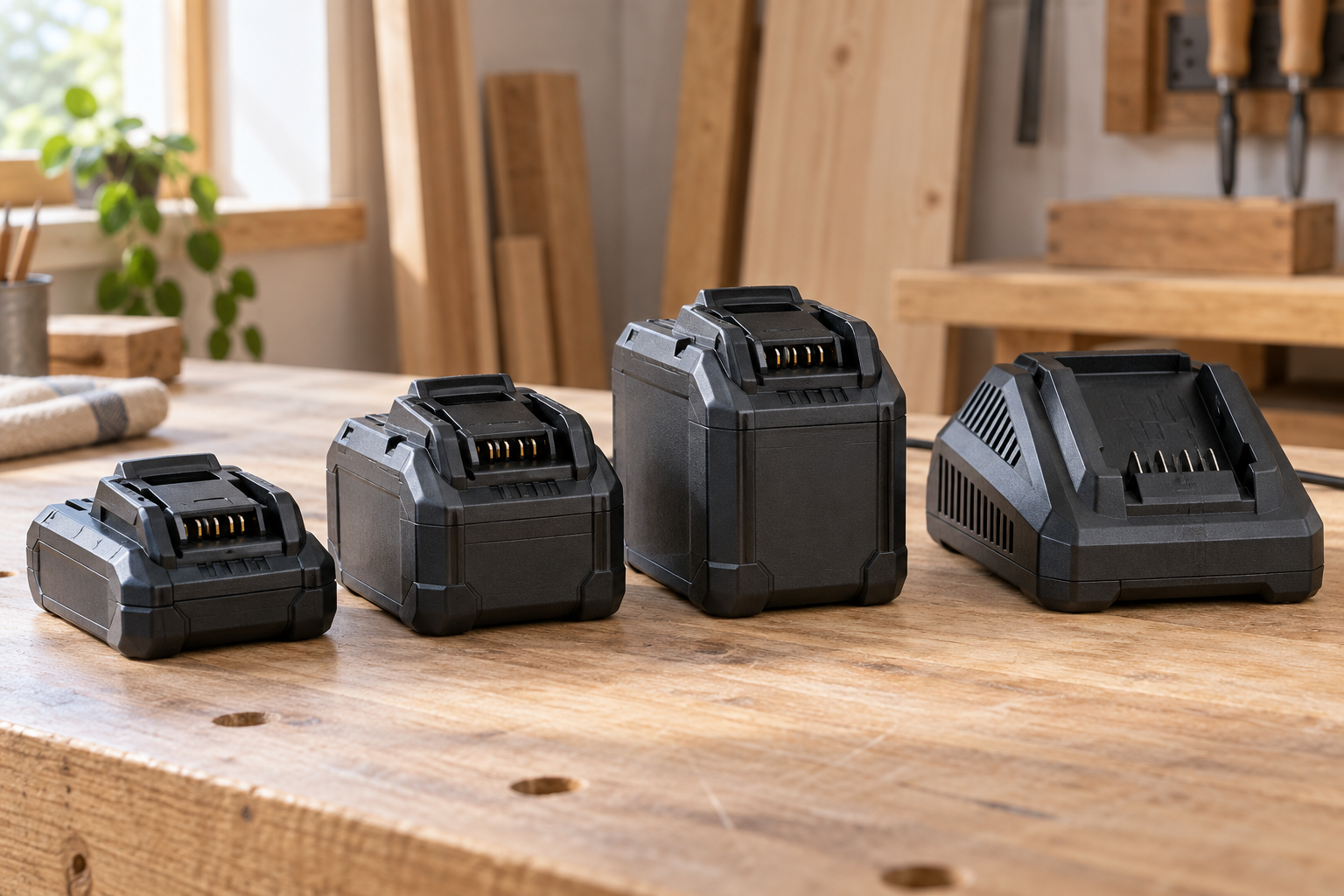
“Compatible with tool batteries” does not mean compatible with every brand or voltage. A washer may fit one manufacturer’s 18V or 20V battery platform, while another uses a proprietary battery pack or only accepts batteries included with that washer. Confirm the exact platform and battery type before ordering; nominal 18V and 20V tools are often part of the same voltage class, but their packs are not interchangeable across brands.
Battery capacity affects runtime. A 2.0Ah pack is lighter, but it can run down quickly under a sustained pump load. A 4.0Ah or larger pack is a more practical choice for washing a vehicle or doing repeated rinses. Use the battery manufacturer’s guidance for suitable packs, and avoid expecting a compact battery to deliver the same working time as a high-capacity one.
If you already own several batteries and a charger in a compatible ecosystem, a bare tool can keep the cost down. If you do not, compare the price of the washer kit and its battery against a compact corded washer before committing to a new battery platform.
What to compare before buying
| Feature | Why it matters | What to look for |
|---|---|---|
| Water source | Determines where the washer can work | Hose connection for a tap; self-priming or suction hose for a bucket or tank |
| Flow rate | Affects how quickly you rinse and cover an area | Compare gallons per minute (GPM), not pressure alone |
| Pressure and settings | Too much force can damage paint, seals, or soft materials | Adjustable modes or multiple nozzles; start with the gentlest setting |
| Battery requirements | Changes runtime, weight, and total cost | Exact platform compatibility and recommended battery capacity |
| Hose and filter | Poor water supply can interrupt operation or admit debris | Enough hose length for the job and an inlet filter for bucket use |
Pressure figures can be difficult to compare because manufacturers may emphasize peak or maximum pressure rather than the pressure delivered during normal use. Treat advertised PSI as one specification, not proof that a washer will clean faster. A narrow jet may concentrate force but also damage delicate surfaces; a wider spray is safer for general rinsing.
Best fit by buyer
For an existing battery-platform owner: A bare-tool washer that matches your batteries is the sensible starting point. It saves money and avoids another charger, provided your packs are the type the washer supports. Check that the tool is sold for your exact ecosystem and that the manufacturer does not require a separate adapter or special battery.
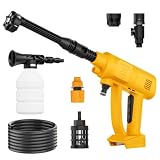
For bucket-fed cleaning: Look for a washer supplied with a suction hose and filter, and check whether it can prime from the height and distance you plan to use. A bucket-fed setup is convenient for a quick bike rinse or a car parked away from a tap, but the container must supply water steadily. A small bucket can empty surprisingly fast; keep an eye on the inlet so the pump does not run dry.
For occasional light jobs: A lower-cost washer or a kit with a modest battery can be enough for furniture, muddy tools, and short rinses. It is a poor choice if you expect long sessions, heavy dirt removal, or frequent work far from a place to recharge. Browse cordless pressure washers compatible with tool batteries, then verify the platform and included accessories in the listing.
For regular vehicle washing: Prioritize a stable low-pressure mode, a useful spray pattern, and enough battery capacity for the whole rinse. A washer is not a substitute for careful car-wash technique: keep the nozzle moving, avoid blasting close to paint or trim, and use a suitable detergent only if the tool supports it.
Common limitations and failure modes
Battery washers can struggle when the water source is restricted. A kinked hose, clogged filter, low bucket level, or poor-quality suction connection can cause pulsing or weak flow. Check the filter and hose before assuming the pump is faulty. Use clean water; grit can wear or block small internal passages.
Do not run a pump dry unless the manual explicitly allows it. Some models need to be primed before use, and an air leak at a hose connection can prevent suction. After use, follow the manufacturer’s draining and storage instructions, especially before freezing weather. Water left inside a pump or hose can expand and cause damage.
Runtime is another practical limit. Continuous spraying draws power, and a small pack may be exhausted before a large job is done. If you have a second compatible battery, swapping packs is easier than waiting for a recharge, but the washer still may not deliver enough flow for large surfaces.
How to choose without overbuying
Start with the job, then the battery. For a quick rinse near a bucket, a compact model with a suction hose may be all you need. For broader cleaning, a garden-hose-capable unit and a larger compatible battery are more convenient. If you need to clean a driveway or work for extended periods, compare a corded pressure washer instead of paying extra for cordless convenience that cannot meet the workload.
Search by your existing battery brand and voltage, and compare bare-tool and kit prices. Compare battery-compatible cordless washer options, checking the manual or manufacturer listing for water-source requirements, included nozzles, and recommended battery size. The best choice is the one that fits your battery shelf and the scale of your cleaning—not the one with the largest number on its packaging.
Related guides
- Longest Lasting Lawn Mower Battery: AGM vs Lithium vs Flooded Lifespan and Cost per Season
- Duralast Gold Lawn Mower Battery Review: U1 Fit, CCA and When to Pay for AGM
- Greenworks Pro 80V 21-Inch Mower Review: Runtime Math, Push vs Self-Propelled and Yard Fit
- Bosch High Pressure Washer Gun Replacement: Fittings, Adapters and What Fits Your Model