What's inside
As an Amazon Associate I earn from qualifying purchases. This post may contain affiliate links at no extra cost to you.
Intermittent cordless tool use creates a different battery problem than a full day of construction work. A drill may run only a few minutes at a time, yet its battery can be empty when you need it weeks later. The usual causes are storage temperature, gradual self-discharge, tool electronics left active, charging habits, and using a battery that is much larger than the job requires.
The best solution is not always buying the largest battery. Match the battery to the tool and duty cycle, store it correctly, and make charging part of the job rather than leaving packs connected indefinitely.
Understand Where the Charge Goes
Modern cordless tools typically use lithium-ion battery packs. These lose charge slowly while sitting, but the loss is usually modest compared with the battery drain caused by a connected tool or accessory. A healthy lithium-ion pack may lose only a few percent per month under normal room-temperature storage. A battery left in a tool with a fuel gauge, Bluetooth function, light, or electronic control circuit can drain noticeably faster.
Some tools draw a small standby current even when the trigger is untouched. Heated gear, radios, work lights, inflators, and connected storage systems are especially likely to consume power while switched on. Remove the battery when the tool will sit for more than a few days, particularly if it has an electronic display or status light.
Do not confuse a battery that has discharged with one that has lost capacity. If a pack runs out quickly during a short job even after a full charge, it may have worn cells, a poor connection, or excessive tool load. A battery that simply sits unused for a month and still retains most of its charge is behaving normally.
Store Batteries at the Right Charge
For storage lasting several weeks or longer, leave lithium-ion packs at roughly 40% to 60% charge. This reduces stress on the cells compared with storing them at 100%, while avoiding the damage that can occur if a pack is allowed to reach zero and remain there. Many chargers show only a full or empty indication, so run the pack briefly or use the tool’s fuel gauge to estimate a middle charge.
A full charge is sensible when you know you will use the tool soon. It is less suitable as a permanent storage condition in a hot garage. Heat and high state of charge accelerate aging. Store batteries in a dry location between about 50 and 80 degrees Fahrenheit when practical. Avoid a vehicle in summer, an unheated shed during freezing weather, or a location beside a furnace.
Never charge a battery that is below freezing. Bring it indoors and let it warm naturally before placing it on the charger. Charging a frozen lithium-ion pack can cause permanent damage or create a safety hazard. Similarly, let a hot pack cool for 30 minutes or more after heavy use before charging if it feels unusually warm.
Use a Battery Sized for the Job
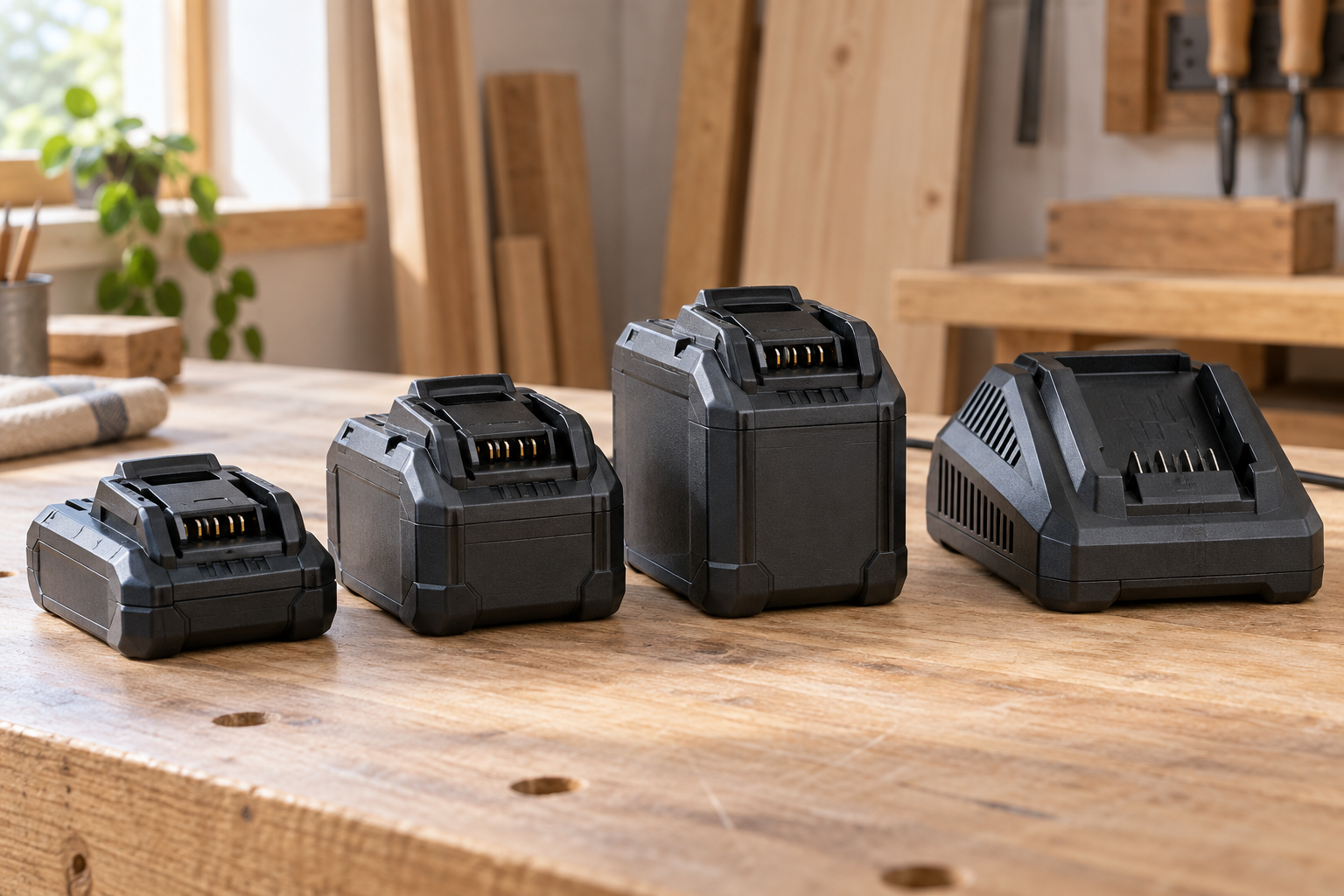
Battery capacity is usually listed in amp-hours (Ah). A 2.0Ah pack generally weighs less and charges faster than a 5.0Ah pack, while the larger pack runs longer. The larger battery may also deliver more sustained power, but it adds bulk to a drill, impact driver, pruning saw, or compact ratchet.
| Battery size | Good fit | Main trade-off |
|---|---|---|
| 1.5–2.0Ah | Occasional drilling, driving, inspection work, light assembly | Shortest runtime, lowest weight, usually quick charging |
| 3.0–4.0Ah | General home repair and mixed tool use | Balanced runtime and weight |
| 5.0Ah and larger | Saws, grinders, blowers, long cutting or drilling sessions | Higher cost and weight; unnecessary for many short jobs |
For intermittent use, two small packs can be more useful than one large pack. You can keep one ready while the other charges, and a lightweight pack makes occasional overhead work less tiring. If your platform sells compact packs, compare compact cordless tool batteries with the larger versions before buying. The cheaper small pack is fine when the job involves a dozen screws, a few pilot holes, or brief touch-up work.
Charge Without Wasting the Battery
Use the charger designed for the battery platform. Generic chargers may have the wrong voltage, charging profile, or temperature protection. Even when a third-party pack fits physically, the charger and tool may not communicate correctly with its protection circuitry.
There is no need to fully discharge a lithium-ion battery before recharging it. In fact, repeatedly running a pack until the tool shuts off is harder on the battery than topping it up after use. If you used 20% of the capacity, recharging immediately is acceptable. For long-term storage, however, take a full pack down to the middle range rather than leaving it on a charger for months.
Unplug the charger after the battery reaches full charge if the manufacturer does not specifically describe the charger as suitable for permanent connection. Smart chargers normally stop the main charge, but the charger may still consume standby power and the pack may receive occasional maintenance charging. A timer or switched outlet can prevent a charger from being forgotten, although it should not replace the charger’s built-in controls.
If you need a second charger, a standard single-battery charger is often the economical choice. A replacement platform battery charger can make sense when the tool is used weekly, but a rapid charger is not automatically better. Faster charging creates more heat and costs more; it is most valuable when several packs must be turned around in one workday.
Reduce Drain While Working
Remove the battery during breaks longer than a few minutes when the tool has a light, display, radio, or connected feature. Turn off work lights instead of leaving them on between cuts. On drills and impact drivers, use the correct speed and clutch setting. A clutch that slips constantly wastes energy and produces heat, while an unnecessarily high speed can overwork the motor.
Keep bits sharp and blades clean. A dull blade, clogged abrasive wheel, or oversized bit can double the load on the motor and turn a short job into a high-current discharge. Do not force a small compact tool through material intended for a larger saw or drill. High current causes heat, and heat is one of the fastest ways to reduce both runtime and long-term battery life.
Spot a Failing Pack
Replace or professionally recycle a battery that is swollen, cracked, leaking, smells unusual, or becomes hot without a heavy load. Stop using it immediately; do not puncture or open it. A pack that shuts down under light work, charges much faster than it once did, or loses half its charge overnight may have a failed cell or unbalanced internal electronics.
Keep contacts clean and dry. A dirty or loose connection increases resistance, creates heat, and can mimic a weak battery. Wipe contacts with a dry cloth and inspect the tool’s terminals before assuming the pack needs replacement. For a household that uses tools only occasionally, correct storage and a modest-capacity spare will usually save more money than buying the biggest battery in the ecosystem.
Related guides
- Longest Lasting Lawn Mower Battery: AGM vs Lithium vs Flooded Lifespan and Cost per Season
- Duralast Gold Lawn Mower Battery Review: U1 Fit, CCA and When to Pay for AGM
- Greenworks Pro 80V 21-Inch Mower Review: Runtime Math, Push vs Self-Propelled and Yard Fit
- Bosch High Pressure Washer Gun Replacement: Fittings, Adapters and What Fits Your Model