What's inside
As an Amazon Associate I earn from qualifying purchases. This post may contain affiliate links at no extra cost to you.
The Basic Difference
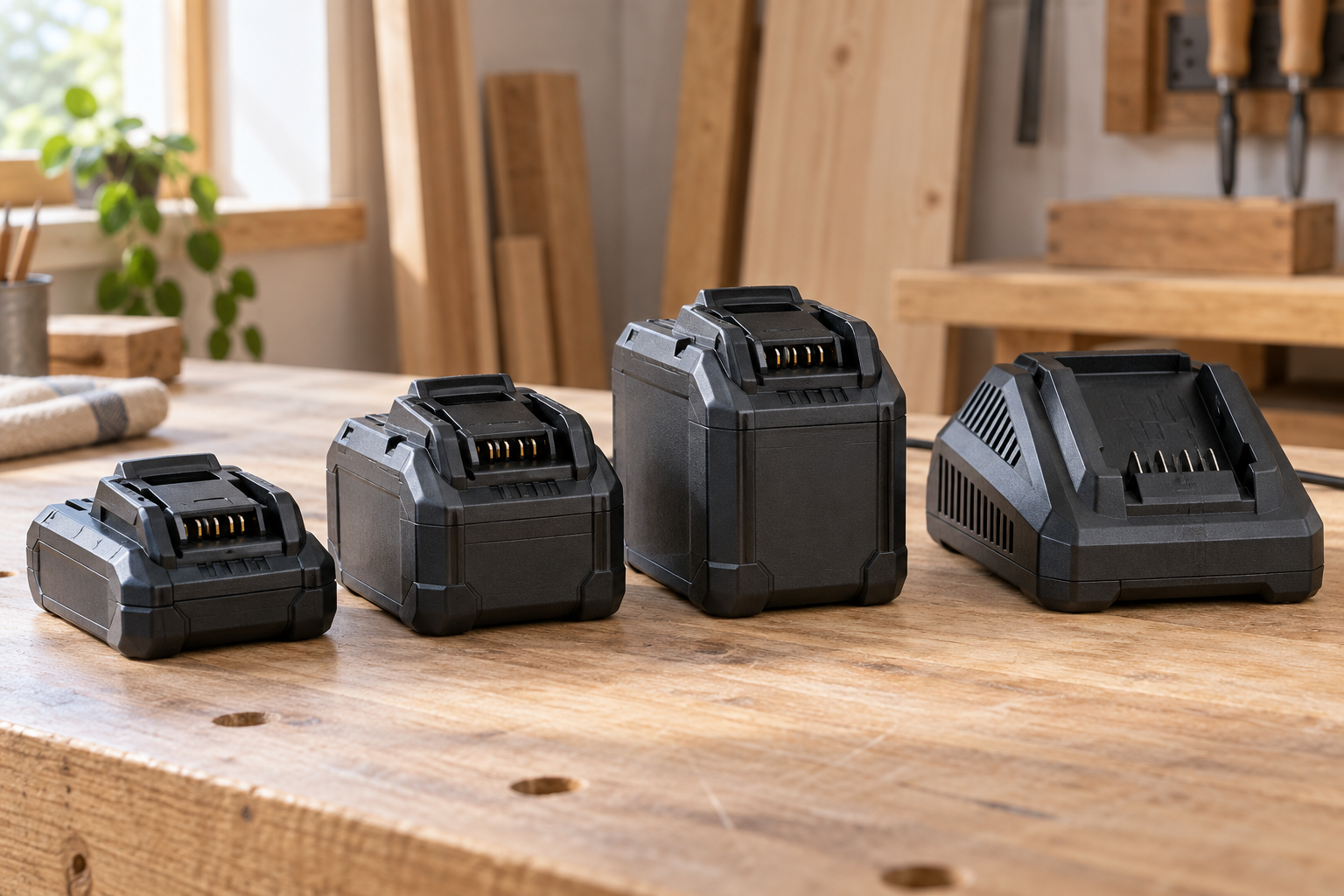
Flex 24V batteries use the same voltage platform, so both the 2.5Ah and 5.0Ah packs work with Flex 24V tools and chargers. The important difference is stored energy. A 2.5Ah battery stores roughly 60 watt-hours (24V × 2.5Ah), while a 5.0Ah battery stores about 120 watt-hours. In simple terms, the larger pack can supply approximately twice the runtime under similar conditions.
That extra capacity is not free. The 5.0Ah battery is larger, heavier, and more expensive. It can make a compact drill or impact driver feel less balanced, especially when working overhead or holding the tool at arm’s length. The 2.5Ah pack gives up work time to stay easier to carry.
As an Amazon Associate we earn from qualifying purchases at no extra cost to you.


| Factor | Flex 24V 2.5Ah | Flex 24V 5.0Ah |
|---|---|---|
| Approximate stored energy | 60Wh | 120Wh |
| Runtime compared with the other pack | Baseline | About twice as long |
| Size and weight | Smaller and lighter | Larger and heavier |
| Best use | Drilling, driving, finish work, short jobs | Saws, grinders, rotary hammers, long sessions |
| Charging downtime | Usually less energy to replace | Longer charge if fully depleted |
Balance and Handling
The 2.5Ah pack is usually the better match for tools where control matters more than maximum runtime. On a drill or impact driver, a smaller battery keeps the tool closer to its natural center of gravity. That can reduce wrist strain during cabinet installation, electrical work, furniture assembly, and repeated overhead fastening.
Balance matters more than many buyers expect. A heavier battery hanging below the grip can make a tool feel stable when cutting, but awkward when driving screws. It also adds fatigue over hundreds of fasteners. If the tool is used in short bursts, the lighter battery may let you work more comfortably even if it requires a swap later.
The 5.0Ah battery makes more sense when the tool is already demanding or when the work naturally favors two-handed control. A circular saw, recip saw, grinder, or rotary hammer generally benefits from having more energy available and less need to stop. On these tools, the additional battery weight is often less noticeable than it is on a compact driver.
What Runtime to Expect
Battery runtime depends heavily on the task. A drill driving small screws into softwood may use only a fraction of the available energy. A recip saw cutting thick lumber, or a grinder removing metal, can drain a pack much faster. For that reason, advertised runtime numbers are difficult to apply across different tools and materials.
As a practical estimate, if a particular job runs a 2.5Ah pack for 20 minutes of actual trigger time, the 5.0Ah pack should provide close to 40 minutes under comparable conditions. “Actual trigger time” is important: a work session that lasts two hours may include measuring, repositioning, changing blades, and lining up cuts. The motor is not running continuously.
High-load tools can also reduce the apparent advantage of the larger pack. Electronics may limit output when the battery gets hot, and the tool may shut down before every last watt-hour is used. A dull blade, pinched cut, oversized bit, or clogged abrasive wheel will increase current draw and create heat. If a battery suddenly seems to run poorly, inspect the accessory and the material before blaming the pack.
Choosing by Tool and Job
Choose the 2.5Ah battery for a drill/driver, impact driver, oscillating tool, compact light, or small wet/dry vacuum when you value low weight. It is also a sensible choice for service calls and punch-list work, where the tool is used intermittently and a spare battery can cover the gaps. Buyers building a starter set can find Flex 24V 2.5Ah batteries useful for keeping everyday tools nimble.
Choose the 5.0Ah battery for circular saws, reciprocating saws, angle grinders, larger blowers, and rotary hammers. These tools can consume a small pack quickly, and repeated battery changes interrupt the job. A 5.0Ah pack is also helpful when cutting sheet goods, framing, demolition, or installing a large number of fasteners in one session.
For a tool that accepts two batteries, check the manufacturer’s requirements before buying. A dual-battery tool may need matching voltage and capacity, and using different charge levels can lead to an early shutdown. Keeping two identical packs together is the least troublesome approach.
Cost, Charging, and Spare Batteries
The 2.5Ah pack is the cheaper option, and it is often the better value when the job is light. Do not buy a 5.0Ah battery simply because it has a bigger number. If you mostly drive screws, assemble furniture, or make occasional repairs, the lighter pack may be more useful day after day.
The 5.0Ah battery earns its price when avoiding downtime matters. Instead of buying one large pack, you can buy two smaller ones and rotate them, provided you have a charger available. This gives you a fresh battery while the other charges, but it also means carrying and managing more packs. A second charger can make a bigger difference than moving from 2.5Ah to 5.0Ah for intermittent work.
Use the charger recommended for the Flex 24V system, and allow a hot battery to cool before charging. Charging a pack immediately after heavy cutting or grinding can extend the waiting period and is harder on the battery. Store packs dry and away from extreme heat. For replacement charging equipment, compare Flex 24V battery chargers based on charge speed, number of bays, and whether the charger fits your available workspace.
The Practical Choice
For most owners, the best setup is not choosing one capacity for every tool. Use 2.5Ah packs on compact tools where balance and low fatigue matter, and keep 5.0Ah packs for high-draw tools or long continuous work. If you are buying only one battery, choose the 2.5Ah for light home maintenance and the 5.0Ah for construction, remodeling, yard work, or any job where stopping to swap batteries is costly.
In either case, a spare battery is often more valuable than a larger single pack. The right choice depends on whether your main limitation is hand fatigue or interruptions. Pick the 2.5Ah when the tool feels heavy; pick the 5.0Ah when the work ends because the battery does.
Related guides
- Longest Lasting Lawn Mower Battery: AGM vs Lithium vs Flooded Lifespan and Cost per Season
- Duralast Gold Lawn Mower Battery Review: U1 Fit, CCA and When to Pay for AGM
- Greenworks Pro 80V 21-Inch Mower Review: Runtime Math, Push vs Self-Propelled and Yard Fit
- Bosch High Pressure Washer Gun Replacement: Fittings, Adapters and What Fits Your Model