What's inside
As an Amazon Associate I earn from qualifying purchases. This post may contain affiliate links at no extra cost to you.
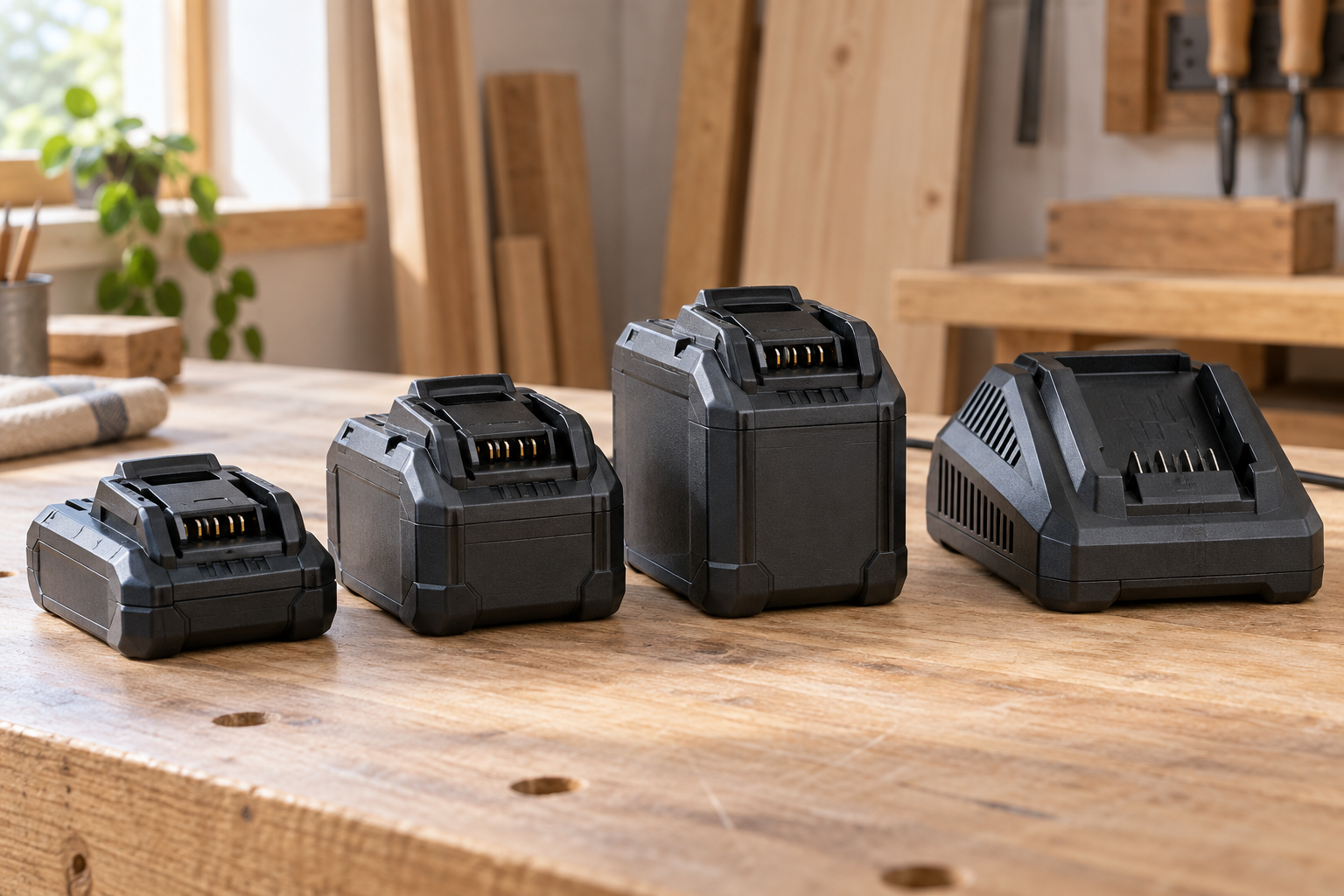
Flex 24V batteries are available in 2.5Ah and 5.0Ah capacities. The choice is mainly about runtime, weight and how often you’re willing to stop for a battery change—not a guarantee that every tool will deliver twice the work on the larger pack. A 2.5Ah battery suits lighter jobs and tools used intermittently. A 5.0Ah pack is more practical for sustained cutting, grinding or drilling, especially when a stop to recharge would slow the job.
As an Amazon Associate we earn from qualifying purchases at no extra cost to you.


What the Ah rating tells you
Amp-hours (Ah) measure battery capacity. At the same nominal 24V, a 5.0Ah pack stores roughly twice the energy of a 2.5Ah pack: about 120 watt-hours versus 60 watt-hours, using the rated voltage as a simple calculation. In practice, usable energy varies with the tool, load, temperature and battery condition.
Twice the capacity does not always mean twice the runtime. A tool drawing a heavy current can make a battery run warmer and may trigger protection sooner. Cold weather, dense material, a dull blade or a clogged accessory can also cut runtime. Expect the 5.0Ah pack to last substantially longer under the same conditions, but treat any exact runtime claim as specific to a tool and task.
Flex 2.5Ah vs 5.0Ah at a glance
| Consideration | 2.5Ah | 5.0Ah |
|---|---|---|
| Rated energy at 24V | About 60Wh | About 120Wh |
| Runtime | Shorter; best for brief or intermittent work | Longer; better for extended work between charges |
| Weight and balance | Lighter and generally easier on handheld tools | Heavier; can make overhead or one-handed work tiring |
| Good fit | Drills, compact fastening and occasional use | Saws, grinders and repeated heavy-duty cuts |
| Trade-off | More battery swaps on demanding jobs | More weight to carry and hold |
When the 2.5Ah pack is enough
Choose 2.5Ah if you use a drill or impact driver for short bursts, assemble furniture, install hardware or handle occasional repairs. These jobs often involve pauses to mark, reposition or change bits, so a lighter battery can be more useful than extra capacity. Less weight also matters when driving screws overhead or holding a tool at arm’s length.
It is a sensible lower-cost choice for someone who already owns a larger pack and wants a light spare. It can also work well as a second battery while another charges, provided the work is not continuously demanding. Check the tool’s balance with the pack attached if you can; a battery that feels fine on a drill may feel awkward on a compact tool.
The limitation shows up when a small pack is asked to do sustained, high-load work. Repeated long cuts or grinding can drain it quickly, leading to frequent changes and interruptions. That is inconvenient, but it does not automatically mean the battery is unsuitable: for a few cuts or occasional use, paying for more capacity may not be worthwhile.
When to step up to 5.0Ah
A 5.0Ah battery is the stronger choice for longer sessions with a circular saw, reciprocating saw or grinder, and for drilling many large holes. It reduces battery swaps when the tool is working hard, which can matter more than the pack’s extra weight on a job where the tool stays near waist height or rests between cuts.
The weight penalty is real. On a drill used overhead, a larger battery can increase fatigue and make it harder to control the tool accurately. If that describes your work, consider keeping a 2.5Ah pack for overhead and light tasks, then using the 5.0Ah pack for heavier work at bench or floor level. A pair of batteries can be more useful than one large pack if your schedule depends on keeping a tool ready.
For a demanding job, look at the whole setup rather than capacity alone. A sharp blade, suitable accessory and sensible feed rate reduce unnecessary load. If a tool repeatedly stops under load, check for a hot battery, obstructed accessory or overly aggressive cut before assuming the pack is defective. Let a hot battery cool before charging or continuing, and follow the battery and tool manuals.
Check compatibility and charging
Before buying, confirm that the battery is for the Flex 24V platform and that the charger you own supports it. A battery from another voltage platform should not be treated as interchangeable just because it fits a tool. Check the manufacturer’s compatibility information, particularly when buying a battery separately or considering a bundle.
Charging time depends on the charger, battery condition and temperature; capacity alone does not give an exact wait time. If you have one battery and a full day of work, the charger may become the bottleneck. A second pack can reduce downtime, but only if you can charge it safely and the job justifies the extra cost. Avoid charging a pack that is very hot or very cold; use the operating guidance supplied with the battery and charger.
A practical buying decision
For light use, start with the 2.5Ah option if it costs less and you value a lighter tool. It is not a false economy when the work consists of short tasks, and a larger battery will not make a drill more precise or eliminate poor technique. If the smaller pack frequently runs out halfway through a task, or you spend more time swapping batteries than working, move to 5.0Ah.
If you need to add capacity to an existing Flex 24V kit, compare current battery prices and bundles rather than buying by Ah rating alone. These searches can help you check availability: Flex 24V 2.5Ah batteries and Flex 24V 5.0Ah batteries. Confirm the listed battery capacity, platform and included charger before ordering.
For a mixed tool kit, owning one of each capacity is often the most balanced arrangement: use the 2.5Ah pack when weight matters and the 5.0Ah pack when uninterrupted runtime matters. If you only want one, base the decision on your most demanding regular task—not the occasional job that can be handled with a battery swap.
Related guides
- Longest Lasting Lawn Mower Battery: AGM vs Lithium vs Flooded Lifespan and Cost per Season
- Duralast Gold Lawn Mower Battery Review: U1 Fit, CCA and When to Pay for AGM
- Greenworks Pro 80V 21-Inch Mower Review: Runtime Math, Push vs Self-Propelled and Yard Fit
- Bosch High Pressure Washer Gun Replacement: Fittings, Adapters and What Fits Your Model