What's inside
As an Amazon Associate I earn from qualifying purchases. This post may contain affiliate links at no extra cost to you.
Overhead cordless work is where battery choice stops being a simple runtime decision. A larger pack can keep a saw, trimmer, or rotary hammer working longer, but it also adds weight at the worst possible location: above your shoulders. That extra pound or two increases arm fatigue, makes the tool harder to control, and can turn a manageable job into a series of short, inaccurate cuts.
The right battery is the smallest pack that delivers enough power and runtime for the job. That usually means comparing watt-hours, not just amp-hour ratings, then considering how the battery changes the tool’s balance.
Why Battery Weight Matters Overhead
Holding a tool at shoulder height is tiring because your muscles are working against leverage, not just total weight. A battery mounted behind the handle can pull the tool backward; one mounted beneath the grip can pull it down. Either way, your wrist and shoulder must constantly correct the tool’s balance.
A 2-pound battery may not sound heavy on the ground. At the end of a long pole saw, hedge trimmer, or drywall screw gun, however, that weight can produce noticeable strain. The effect is worse when you reach above your head, extend your elbows, or work from a ladder where you cannot easily change position.
Fatigue also creates practical problems. You may press harder than necessary, wander off a cut line, lose control when a blade binds, or drop the tool when lowering it. A smaller battery that lasts 20 minutes may be safer and more productive than a larger battery that lasts 40 minutes but requires frequent rest breaks.
Compare Watt-Hours Before Buying
Amp-hours alone do not compare batteries across voltage platforms. Estimate energy with this formula:
Watt-hours = nominal voltage × amp-hours
A 5.0Ah battery on an 18V or 20V-max platform stores roughly 90 to 100 watt-hours, depending on the manufacturer’s voltage convention. A 4.0Ah battery on a 36V platform stores roughly 144 watt-hours. The higher-voltage pack may run a demanding tool longer, but it may also be substantially heavier.
| Battery example | Approximate energy | Typical overhead advantage | Main limitation |
|---|---|---|---|
| 18V/20V-max, 2.0Ah | 36–40Wh | Lightest and easiest to control | Short runtime under heavy load |
| 18V/20V-max, 4.0Ah | 72–80Wh | Good compromise for short jobs | More rear weight and heat |
| 18V/20V-max, 5.0Ah | 90–100Wh | Useful for repeated cutting or drilling | Can make pole tools tiring |
| 36V/40V-max, 4.0Ah | 144–160Wh | Strong sustained output for outdoor tools | Usually heavier and more expensive |
These figures describe stored energy, not guaranteed runtime. High-current tools lose time to heat, electronic limits, blade resistance, and the operator’s work rate. A battery near empty may also deliver less peak performance, especially in cold weather.
Match the Battery to the Tool and Job
For light overhead work, start with a compact battery. A 2.0Ah or similar slim pack is often appropriate for an impact driver, inspection light, compact drill, or short fastening session. It is also a sensible choice for a hedge trimmer used in brief passes, provided you have a spare charged pack.
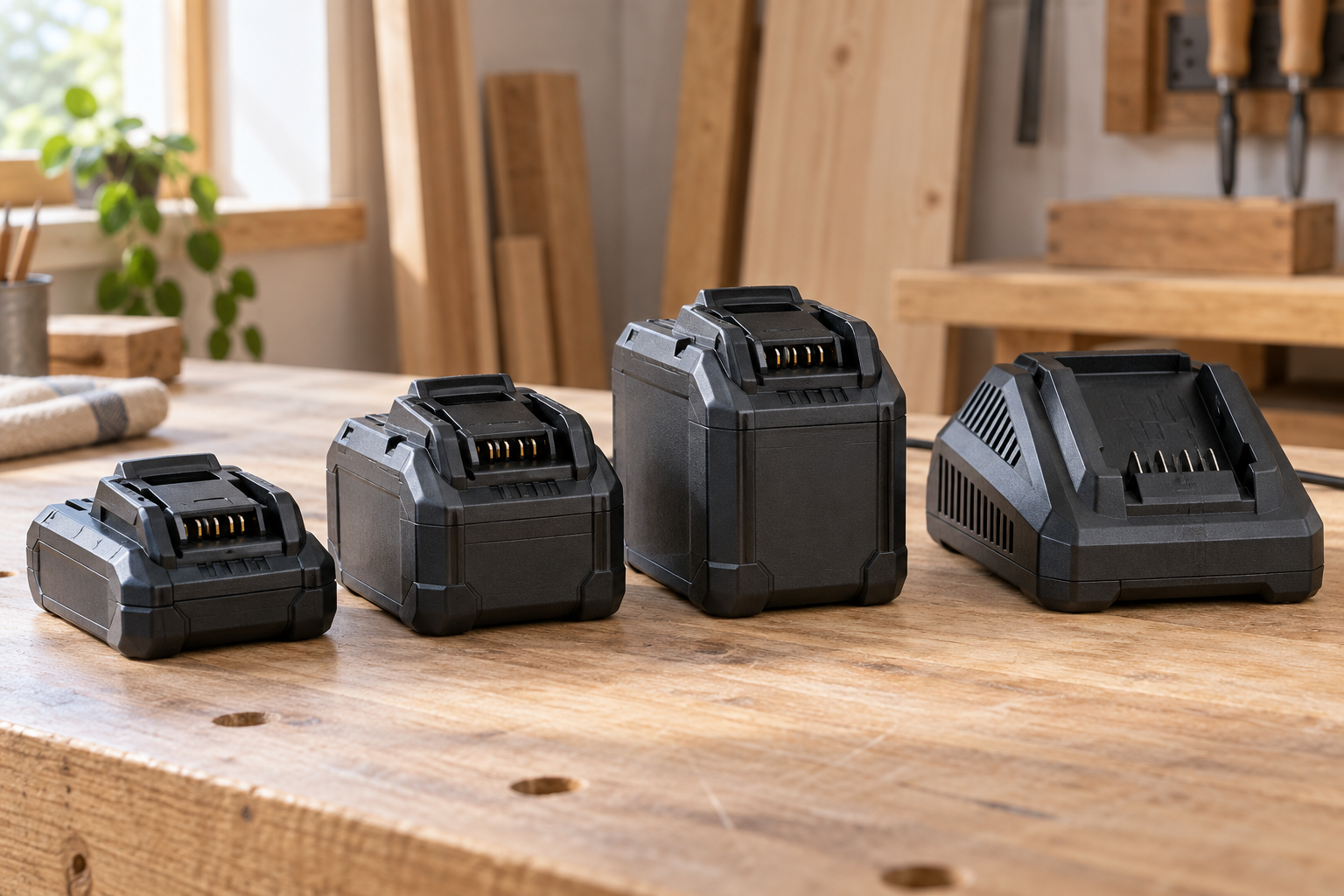
Medium packs in the 3.0Ah to 5.0Ah range work well when the tool needs more current or the job involves repeated cuts. They are a practical choice for a reciprocating saw used overhead to remove a few branches, for installing framing overhead, or for drilling many holes into wood. Before buying, check the manufacturer’s published battery weights; capacity does not always increase weight in a straight line.
Large high-output packs make sense for demanding tools such as long pole saws, heavy-duty rotary hammers, and high-power blowers. They can reduce voltage sag and keep the motor from cutting out under load. That performance is useful when the alternative is stalling, overheating, or taking twice as long to finish a cut.
For occasional overhead use, the cheaper option is often fine: buy a smaller battery and a second pack rather than one oversized pack. Swapping batteries takes less than a minute and lets one pack cool while the other is working. For daily commercial work, the time lost to swaps may justify the larger pack.
Choose the Battery Form Factor Carefully
Battery shape affects balance as much as capacity. A compact pack that sits close to the handle usually feels better than a tall pack that moves the center of gravity away from your hand. Some high-output batteries use multiple rows of cells or a wider housing. They may supply more current, but the extra bulk can interfere with a tool resting against your shoulder or with a pole tool’s harness.
When possible, hold the assembled tool with the battery installed before buying. Check whether you can operate the trigger with a relaxed wrist and whether the battery hits your forearm. For pole saws and trimmers, also check the battery location relative to the shoulder strap. A tool that is balanced on the ground may feel nose-heavy once its cutting head is extended.
If your platform offers a remote battery system or backpack battery, consider it for long sessions. Moving the battery from the tool to a belt or harness can greatly reduce hand weight. The trade-offs are cable management, higher purchase cost, and less convenient switching between tools.
Browse compact cordless tool batteries when low weight matters more than maximum runtime. For sustained outdoor work, compare high-output battery packs by both weight and watt-hours.
Manage Runtime and Fatigue
Use the tool in short work cycles. For overhead cutting, 5 to 10 minutes of work followed by a brief lowering and grip change can preserve control. Keep a charged spare in a pocket, tool bag, or nearby bucket rather than climbing down a ladder repeatedly.
Do not run a small battery until it repeatedly trips the tool’s protection system. Sudden shutdowns are inconvenient and can be hazardous on a ladder. Stop when performance drops, the pack becomes unusually hot, or the tool begins pulsing under normal load. Let hot batteries cool before charging; charging a very hot or cold pack can be restricted by its electronics and slows the job.
Finally, use the tool’s support features. A shoulder strap, auxiliary handle, extension pole, or battery harness can shift load away from your wrists. No battery can compensate for a poorly positioned tool or a dull blade. A sharp accessory and steady feed pressure often save more energy than moving up to a much larger pack.
For buyers building one platform around overhead work, prioritize compact batteries, a fast charger, and at least one spare pack before buying the largest available battery. Choose the big pack only when the tool genuinely needs its current output or when frequent battery changes would cost more time than the added weight costs in fatigue.
Related guides
- Longest Lasting Lawn Mower Battery: AGM vs Lithium vs Flooded Lifespan and Cost per Season
- Duralast Gold Lawn Mower Battery Review: U1 Fit, CCA and When to Pay for AGM
- Greenworks Pro 80V 21-Inch Mower Review: Runtime Math, Push vs Self-Propelled and Yard Fit
- Bosch High Pressure Washer Gun Replacement: Fittings, Adapters and What Fits Your Model