What's inside
As an Amazon Associate I earn from qualifying purchases. This post may contain affiliate links at no extra cost to you.
A cordless tool’s voltage rating tells you its potential, but the battery determines how much of that potential is available under load. Two packs with the same nominal voltage and amp-hour rating can produce noticeably different results. A high-output battery uses cells, connections, and control electronics designed to deliver more current with less voltage drop.
That matters most when a tool demands a sudden burst of power: driving large structural screws, cutting thick lumber, drilling a large hole saw, or running a grinder at full load. The motor can maintain higher speed, the tool is less likely to bog down, and the battery may run cooler. It does not make every cordless tool faster, however, and the higher price is not always justified.
What “high-output” means in a battery pack
Battery capacity is usually listed in amp-hours (Ah), while output is limited by the cells’ discharge capability, internal resistance, wiring, and battery-management system. A 5.0Ah pack built with high-drain cells can supply current more effectively than an older 5.0Ah pack using cells optimized mainly for capacity.
When a motor draws heavily, every battery experiences some voltage sag. A pack marked 18V or 20V maximum does not hold that voltage under all conditions. If the voltage drops too far, the tool slows, the electronics may cut out, and the battery generates more heat. High-output packs reduce that drop by using lower-resistance cells and better current paths.
“20V” and “18V” platforms generally describe the same nominal voltage class; the difference is often how the manufacturer labels fully charged voltage. The important comparison is between packs within the same brand ecosystem, not the number printed on different brands’ labels.
Where you will notice the improvement
High-output batteries are most useful with tools that draw substantial current for extended periods. Cordless grinders, circular saws, reciprocating saws, rotary hammers, high-torque impact wrenches, and large impact drivers are common examples. A stronger pack can help the motor hold speed as the cutting wheel meets resistance or as a fastener tightens.
The benefit is also noticeable in tools with electronic performance modes. Some newer saws and grinders can detect a capable battery and deliver their highest power setting. With a smaller or older pack, the same tool may still run, but it can cut out earlier or spend more time recovering after a heavy load.
Do not expect the same gain from a drill used for small pilot holes, an inspection light, or a compact impact driver installing cabinet screws. Those jobs normally draw modest current. A standard battery may provide virtually identical results while costing less and weighing less.
High-output battery trade-offs
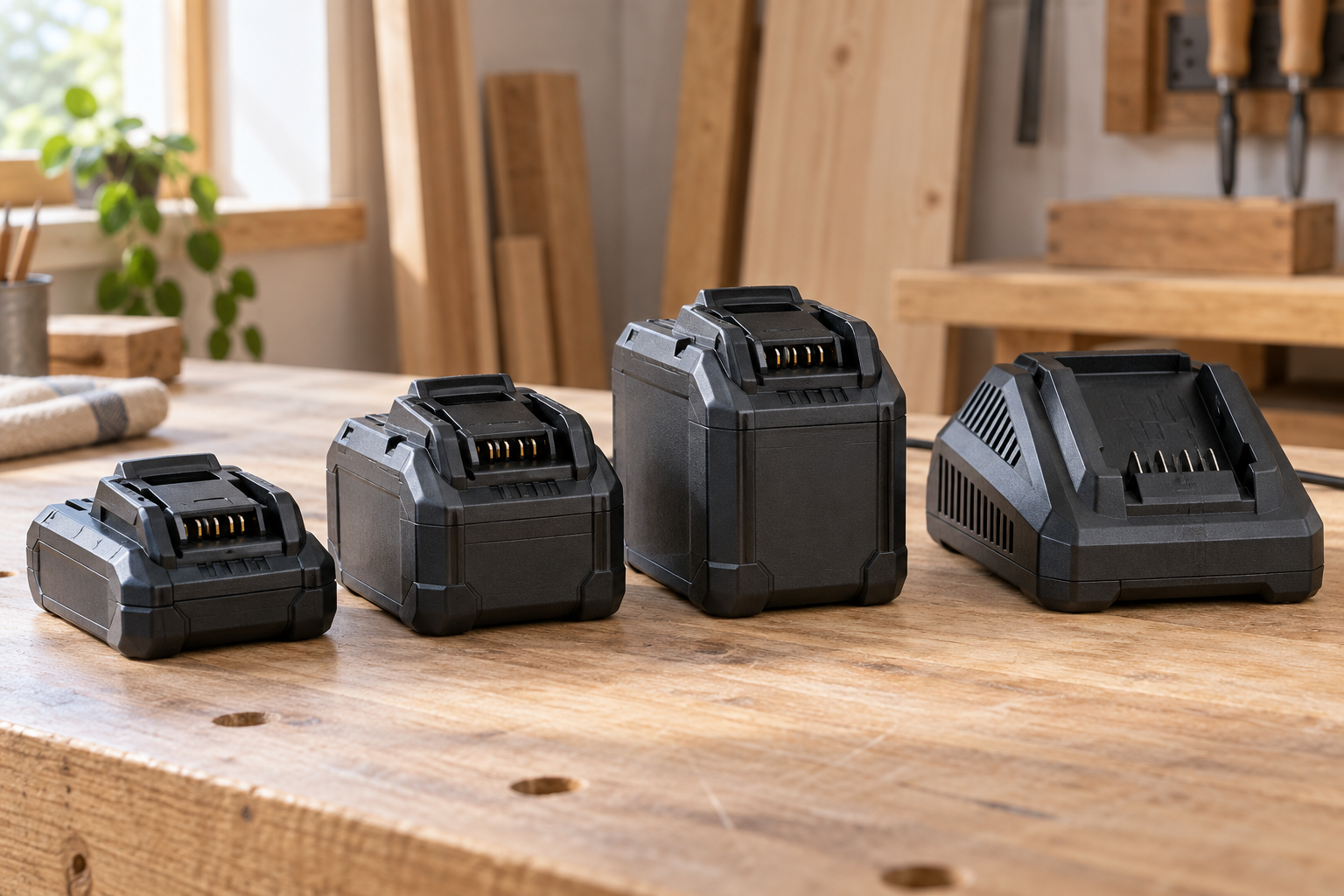
| Battery type | Best use | Main advantages | Main drawbacks |
|---|---|---|---|
| Compact 2.0–3.0Ah | Drills, lights, finish work | Light weight, lower cost, quick to charge | More voltage sag under heavy load |
| Standard 4.0–5.0Ah | General construction and maintenance | Good balance of runtime, size, and price | May bog down sooner in demanding tools |
| High-output 5.0–6.0Ah | Saws, grinders, rotary hammers | Better sustained power and reduced heat | Heavier and usually more expensive |
| High-capacity 8.0Ah or larger | Long cutting and drilling sessions | Long runtime with strong output | Bulky, costly, and tiring on handheld tools |
The extra cells and heavier construction add weight. A large battery can make a drill awkward overhead and can shift the balance of a compact saw. It can also cost considerably more than a standard pack. If the task involves short bursts, carrying two smaller batteries may be more practical than carrying one large battery.
Runtime, heat, and real-world efficiency
A higher Ah rating generally means more stored energy, but runtime is not perfectly proportional. A 6.0Ah pack does not always run a tool exactly 20% longer than a 5.0Ah pack because temperature, material resistance, and the tool’s control system affect consumption. High-output cells can improve usable runtime under heavy load by wasting less energy as heat, even when the printed capacity is similar.
Heat is a major failure factor. Repeatedly pushing a marginal battery through thick cuts can trigger thermal shutdown, shorten cell life, or leave the pack too hot to charge immediately. Most battery systems prevent charging when the pack is outside a safe temperature range. That can stop a workday if you have only one battery and no lighter-duty backup.
High-output does not mean the battery is immune to abuse. A dull saw blade, pinched reciprocating-saw blade, overloaded grinder, or jammed drill can still trip protection. Keep vents clear, avoid storing packs in a hot vehicle, and let a heavily worked battery cool before charging. If a pack swells, smells unusual, becomes excessively hot, or repeatedly cuts out on normal work, remove it from service.
How to choose the right pack
Start with the tools you use most. For a drill and impact driver used for ordinary fastening, a compact battery pack is often the better choice. It reduces wrist fatigue and is usually adequate for hundreds of small fasteners.
For a circular saw, grinder, or rotary hammer, choose a high-output 5.0Ah or 6.0Ah battery if the platform offers one. This is a sensible middle ground: enough capacity for meaningful runtime without the bulk of the largest packs. If you make long cuts all day, an high-capacity 8.0Ah-class pack may be worthwhile, but check the tool’s balance first.
Also compare chargers. A large battery can take several hours on a basic charger, while a rapid charger may require a higher purchase price and can produce more heat. A practical setup often includes one high-output pack for demanding tools and one or two standard or compact packs for lighter work. That costs less than replacing every battery and keeps the heaviest pack out of jobs where it provides no real advantage.
Platform compatibility matters
Stay within the manufacturer’s battery platform unless the battery is specifically listed as compatible. Physical fit is not enough: terminals, communication electronics, protection settings, and charger requirements can differ. Avoid unverified adapters and bargain replacement packs for high-current tools, where poor-quality cells or protection circuits create both performance and safety problems.
For buyers starting a new ecosystem, compare the available high-output batteries, charger prices, warranty terms, and tool range—not just the cost of the first drill kit. The best battery is the one that matches the tool’s workload. High-output packs are a worthwhile upgrade for sustained, power-hungry work; for light fastening and occasional DIY repairs, a cheaper standard battery is usually the smarter buy.
Related guides
- Longest Lasting Lawn Mower Battery: AGM vs Lithium vs Flooded Lifespan and Cost per Season
- Duralast Gold Lawn Mower Battery Review: U1 Fit, CCA and When to Pay for AGM
- Greenworks Pro 80V 21-Inch Mower Review: Runtime Math, Push vs Self-Propelled and Yard Fit
- Bosch High Pressure Washer Gun Replacement: Fittings, Adapters and What Fits Your Model