What's inside
As an Amazon Associate I earn from qualifying purchases. This post may contain affiliate links at no extra cost to you.
What a Punch-List Tool Needs
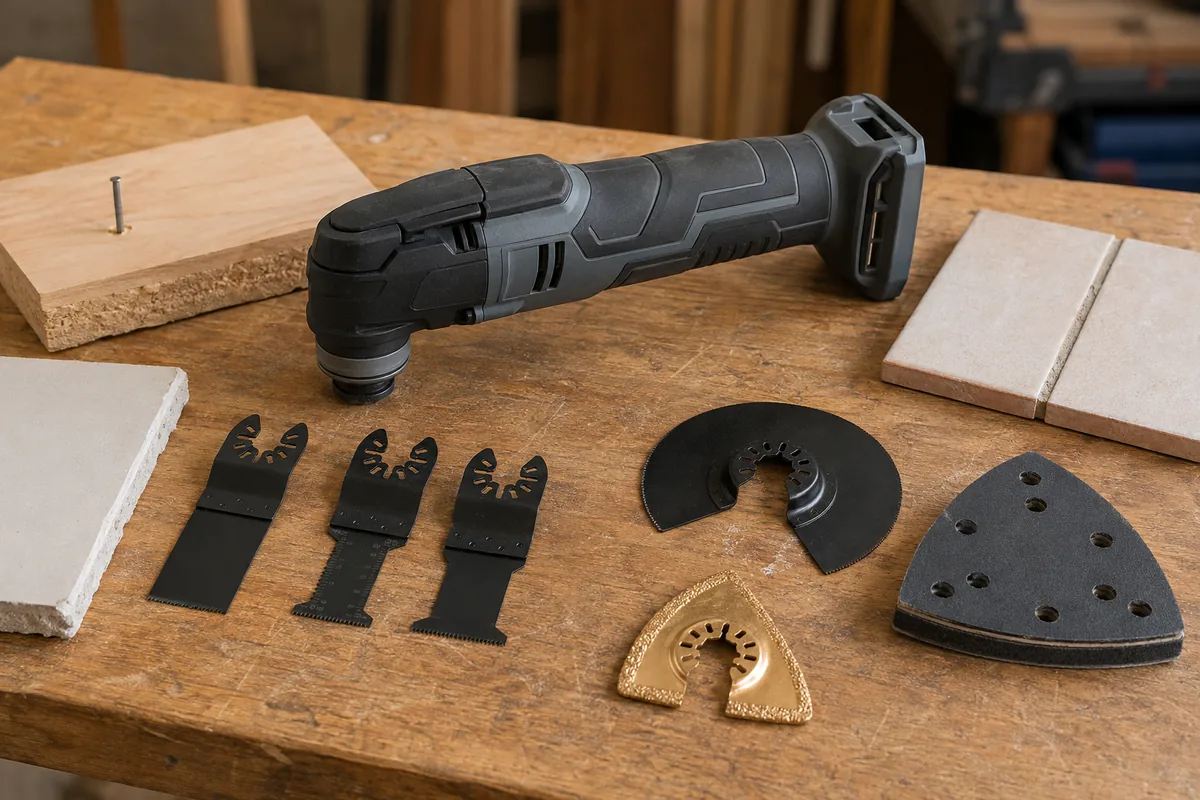
A cordless oscillating multi-tool is a trim-and-repair tool, not a substitute for a reciprocating saw or circular saw. Its strength is controlled cutting in places where a larger tool cannot fit: trimming door jambs, undercutting baseboard, removing grout, cutting drywall openings, scraping adhesive, and slicing through a few nails or screws.
For remodel punch lists, prioritize control, accessory compatibility, and battery convenience over maximum advertised speed. Most jobs involve short cuts, awkward positions, and repeated starts and stops. A tool that is comfortable and quick to set up will usually save more time than one with slightly higher power.
Before buying, decide whether the tool will be used for light finish work or demolition. Cutting a wood shim and scraping caulk is easy work. Flush-cutting hardwood flooring, removing hardened construction adhesive, or cutting several embedded screws requires a stronger drive system and better blades.
Cordless Versus Corded
Cordless is usually the better choice for punch lists because remodel work moves between rooms and often takes place where outlets are inconvenient. It also avoids dragging a cord across finished flooring. The trade-off is runtime and battery weight.
A compact 12-volt tool is adequate for caulk removal, drywall, plastic, thin wood, and occasional grout work. An 18- or 20-volt tool is the safer choice for regular remodeling, especially when cutting hardwood, nails, metal fasteners, or thick adhesive. Full-size battery packs add weight, but they also reduce voltage sag during demanding cuts.
| Tool class | Best for | Main limitation |
|---|---|---|
| Compact 12V | Trim work, drywall, caulk, light scraping | Shorter runtime and slower tough cuts |
| 18V/20V compact | General remodeling and punch-list work | Heavier, especially with large batteries |
| 18V/20V high-output | Frequent hardwood, metal, grout, and demolition cuts | Higher cost and more hand fatigue |
| Corded | Long demolition sessions and shop use | Less convenient around finished spaces |
If you already own batteries, staying within that platform is normally the cheapest and most practical option. A bare tool may cost less than half the price of a kit, and your existing charger and batteries are already paid for. If you are starting from zero, compare the battery cost, charger quality, and availability of other tools—not just the oscillating tool’s price.
Speed, Control, and Vibration
Look for variable-speed control with a broad range, commonly around 8,000 to 20,000 oscillations per minute. Lower speeds help with plastic, painted surfaces, and delicate trim. Higher speeds cut wood and remove grout faster, but they also create more heat and vibration.
A trigger gives excellent moment-to-moment control but can be tiring during long cuts. A sliding or paddle-style switch is easier to keep running, though it is less convenient when you need to stop instantly. For punch lists, either design works; favor the one you can operate while wearing gloves and holding the tool at an awkward angle.
Vibration is a major buying issue. Two tools with similar speed ratings can feel very different because of their internal balancing and grip design. Excess vibration causes numb hands, wandering cuts, and premature blade wear. If possible, handle the tool with a battery installed. A bare tool that feels light may become nose-heavy with a large pack.
An LED light is useful in cabinet corners and under toe kicks. A tool-free blade clamp is also worth paying for, particularly if you switch between a wood blade, scraper, and grout blade several times per day. Some clamps accept universal accessories; others use a proprietary interface or require an adapter. Confirm compatibility before buying.
Battery and Charger Choices
For occasional punch-list work, a 2.0Ah or similarly compact battery keeps the tool manageable. Expect roughly 15 to 30 minutes of active cutting from a small pack, depending on material and blade condition. That can cover a surprising number of short cuts because the tool is not running continuously.
A 4.0Ah or 5.0Ah pack is better for demolition or a full day of repairs. It may double usable runtime, but it adds noticeable weight at the back of the tool. A high-output battery can improve performance on thick wood and metal, but it is unnecessary for trimming a few door casings.
Use the charger already in your platform if it is in good condition. A second charger is worthwhile when the tool is used every day or when several batteries must be rotated. Avoid mixing unapproved batteries, adapters, or cheap replacement packs. Poorly matched electronics can cause shutdowns, unreliable fuel gauges, or overheating.
If you need a general-purpose cordless tool for a remodel, compare 18V or 20V cordless oscillating tool bare tools within the battery system you already own. A kit is sensible only when it includes a battery size you will actually use and a charger that supports the rest of the platform.
Blades Matter More Than the Tool
A bargain tool with a poor blade will perform badly, while a midrange tool with a sharp, appropriate blade can handle most punch-list tasks. Buy separate blades for wood, wood with nails, metal, grout, and scraping. Bi-metal blades are useful for occasional nails and screws; carbide-grit blades last longer in grout and abrasive mortar.
Use a blade no longer than necessary. A long blade flexes, wanders, and transfers more vibration. For flush-cutting casing, a short fine-tooth blade is easier to control. For removing adhesive, hold the scraper nearly flat. For plunge cuts, mark the depth with tape and start at a low speed until the blade is established.
Blade heat is a common failure mode. If a wood blade smokes, stops cutting, or turns dark, the teeth are likely dull or you are forcing it. Back out, let the blade cool, and replace it. Pushing harder can overload the motor and damage the blade clamp.
When to Spend More
Pay more for a brushless motor, lower vibration, a reliable tool-free clamp, and a strong battery platform if the tool will be used weekly. Brushless models generally run cooler and deliver better runtime, but they are not essential for a homeowner making a few cuts each year.
The cheaper option is fine when the work is limited to drywall, caulk, thin trim, and occasional scraping. Spend the difference on quality blades instead. Upgrade to a stronger 18V/20V model when the tool will regularly cut hardwood flooring, embedded fasteners, grout, or construction adhesive. For that workload, look at brushless oscillating tool kits with a battery and charger.
Finally, protect the battery from extreme heat, keep the blade clamp free of dust, and remove the battery before changing accessories. Those small habits prevent the most common downtime: damaged clamps, overheated packs, and accidental starts in cramped spaces.
Related guides
- Longest Lasting Lawn Mower Battery: AGM vs Lithium vs Flooded Lifespan and Cost per Season
- Duralast Gold Lawn Mower Battery Review: U1 Fit, CCA and When to Pay for AGM
- Greenworks Pro 80V 21-Inch Mower Review: Runtime Math, Push vs Self-Propelled and Yard Fit
- Bosch High Pressure Washer Gun Replacement: Fittings, Adapters and What Fits Your Model