What's inside
As an Amazon Associate I earn from qualifying purchases. This post may contain affiliate links at no extra cost to you.
A cordless impact driver can handle structural screws, ledger fasteners, and timber framing work, but not every “high-torque” driver is a good choice for the job. The right tool depends on fastener size, material, access, and how often you will use it. A compact 18V driver may be ideal for occasional work, while repeated installation of large structural screws can justify a stronger tool—or a 1/2-inch impact wrench.
Start With the Fastener
Check the fastener manufacturer’s installation instructions before choosing a tool. Structural screws are not interchangeable with ordinary construction screws. The instructions may specify a pilot-hole diameter, minimum embedment, washer requirement, or a maximum driving torque.
Most structural wood screws with 1/4-inch hex heads are designed for an impact driver. Common sizes range from roughly 5/16 inch to 3/8 inch in diameter and 3 to 10 inches long. Longer screws driven into dense lumber can demand substantially more torque than their diameter suggests. A 6-inch screw into softwood is an easier job than a 4-inch screw into pressure-treated southern yellow pine.
For bolts, nuts, and screws with large hex heads, a cordless high-torque impact wrench is usually the better tool. A 1/4-inch impact driver accepts bits and nut-setters, but its small hex chuck and anvil are not intended for unlimited heavy fastening.
Understand Torque Ratings
Manufacturers commonly advertise fastening torque in inch-pounds or foot-pounds. These figures are useful for comparing tools within one brand, but they are not a reliable prediction of how quickly a driver will install a particular structural screw. Test methods vary, and peak breakaway torque is often higher than the torque available during real installation.
As a practical starting point, choose a full-size brushless driver rated around 1,800 inch-pounds or more for routine structural screws. Compact models can work for smaller fasteners, but they may slow sharply when the screw reaches the final part of its drive. If the tool repeatedly stalls, overheats, or takes several seconds per fastener, it is being pushed too hard.
Do not assume that more torque is always safer. Excess torque can strip the screw recess, snap a screw, crush a washer, or overdrive the head below the surface. The fastener’s instructions matter more than the maximum number printed on the tool box.
Choose the Drive Type
| Tool type | Best use | Main limitation |
|---|---|---|
| Compact 12V impact driver | Small structural screws, tight spaces, light framing | Slower on long or large fasteners |
| Full-size 18V/20V impact driver | Most structural wood screws and general framing | More weight and wrist reaction |
| Mid-torque impact wrench | Large hex-head screws, bolts, and repeated heavy fastening | Needs socket accessories; less convenient for ordinary bits |
| High-torque impact wrench | Very large fasteners and demanding production work | Heavy, expensive, and easy to over-tighten fasteners |
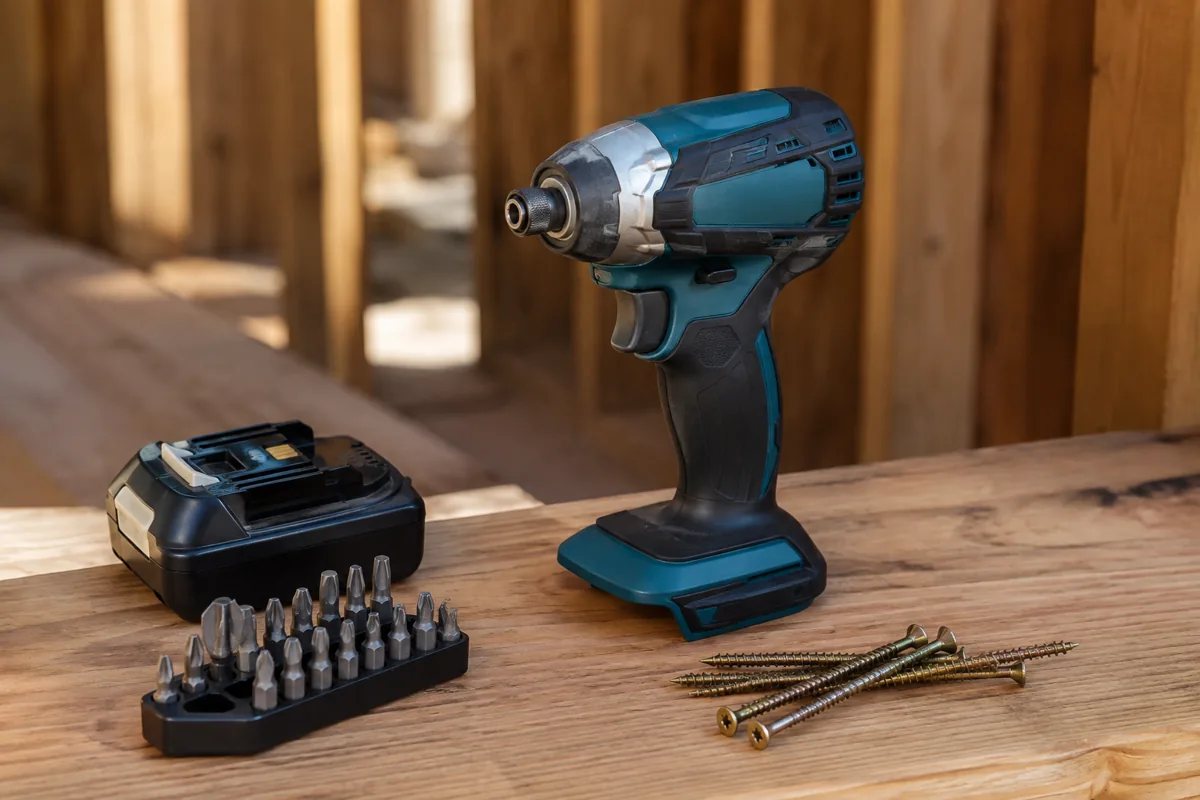
A standard 1/4-inch hex impact driver is the most versatile option for deck framing, timber connections, and structural screws supplied with a bit recess. Look for a brushless model with multiple speed or assist modes. A slower mode helps prevent stripping and makes it easier to stop at the correct depth.
Choose a 1/2-inch impact wrench when the work involves structural bolts, nuts, or fasteners that use sockets. It can also drive large hex-head screws, but the tool is bulkier and provides less control for small screws. For occasional homeowner projects, a full-size impact driver is often the cheaper and more useful choice.
Treat the Battery as Part of the Tool
Structural fastening drains batteries faster than ordinary cabinet or trim work. A 2.0Ah pack keeps a tool light, but a 4.0Ah or 5.0Ah pack usually delivers better runtime and less voltage sag under heavy load. The trade-off is weight: a large battery can make an impact driver tiring when working overhead.
For intermittent repairs, a brushless 18V impact driver kit with two batteries is a sensible starting point. A kit is often cheaper than buying the tool, charger, and battery separately. If you already own compatible batteries, a bare tool may be the better value.
Consider the wider battery platform before buying. The same batteries may power a drill, circular saw, grinder, light, and reciprocating saw. A cheaper tool from a new platform is not cheaper if you later need a second charger and several batteries. Check whether the platform offers compact packs as well as high-capacity packs; that flexibility matters for overhead and ladder work.
Check Control and Durability
Useful features include a variable-speed trigger, a bright work light, a belt hook, and a clear forward/reverse control. Electronic modes that reduce speed near the end of a drive are more useful than a long list of marketing modes. Some tools stop or reduce impact action when they sense that a fastener is seated, but you should still control depth yourself.
Look for a short head length when working between joists or close to metal brackets. A compact tool may have less peak torque, but it can reach fasteners that a powerful, long-bodied model cannot. Also check the chuck: a one-handed 1/4-inch hex collet is convenient, while a loose collet or poorly retained bit becomes frustrating during repetitive work.
Impact-rated accessories are mandatory. Use impact-rated nut-setters, sockets, extensions, and bit holders. Ordinary chrome sockets can crack, and standard driver bits can twist or shatter under impact loading. Keep a spare bit available; a worn bit causes cam-out, damaged screw recesses, and wasted battery power.
Avoid Common Installation Failures
Do not use an impact driver to force a screw through a knot, buried nail, or steel bracket without checking the instructions. Back the screw out and clear the obstruction instead of holding the trigger until the motor stalls. Repeated stalls heat the motor and battery and can damage the tool’s impact mechanism.
Pre-drill when the fastener manufacturer specifies it, especially near board ends, in hardwood, or with long screws. A pilot hole reduces splitting and lowers driving load. Keep the bit aligned with the fastener; a slight angle can strip the recess before the screw is fully seated.
For occasional structural fastening, buy the full-size brushless driver that matches batteries you already own. If you are installing dozens of large screws every week, step up to a higher-output model with larger batteries—or use a mid-torque wrench when sockets make sense. The best choice is the tool that reaches the required depth without repeated stalls, while still giving you enough control to stop before the fastener or connection is damaged.
Related guides
- Longest Lasting Lawn Mower Battery: AGM vs Lithium vs Flooded Lifespan and Cost per Season
- Duralast Gold Lawn Mower Battery Review: U1 Fit, CCA and When to Pay for AGM
- Greenworks Pro 80V 21-Inch Mower Review: Runtime Math, Push vs Self-Propelled and Yard Fit
- Bosch High Pressure Washer Gun Replacement: Fittings, Adapters and What Fits Your Model