What's inside
As an Amazon Associate I earn from qualifying purchases. This post may contain affiliate links at no extra cost to you.
A cordless jobsite blower is an easy tool to underestimate. It may run for only a few minutes at a time, but blowing wet leaves, concrete dust, sawdust, and chips can drain a battery quickly. The right battery platform matters more than the blower’s advertised air speed because it determines runtime, charging time, replacement cost, and which other tools you can add later.
Start by choosing the battery ecosystem, then choose the blower. A blower bought with an unfamiliar battery may look inexpensive, but the second battery, charger, and future tools can erase that savings.
Match the Platform to the Job
For clearing a small deck, garage, or workbench, a compact 18V or 20V platform is usually enough. These blowers are lighter and typically use smaller batteries. They are practical for short cleanup jobs where you work near the charger.
For clearing a driveway, roof, large deck, or jobsite, look at a higher-output 36V, 40V, or dual-battery system. Some brands create higher voltage by using two standard batteries together. Others use a physically larger battery pack. Both approaches can deliver more power, but they are not interchangeable with the brand’s smaller tools.
As a rough guide, a compact blower with a 2.0Ah battery may provide about 10 to 20 minutes of useful intermittent work. A high-output blower using a 5.0Ah or larger pack may run 15 to 30 minutes, depending heavily on the trigger setting, nozzle, and material. Maximum-power runtime is often much shorter than the number printed in casual product descriptions.
Understand Voltage and Amp-Hours
Voltage indicates the electrical class of the platform. Amp-hours indicate how much energy the battery stores within that class. To compare batteries more fairly, multiply nominal voltage by amp-hours to estimate watt-hours:
watt-hours = volts × amp-hours
For example, a 20V 5.0Ah pack stores roughly 100 watt-hours, while a 40V 2.5Ah pack stores roughly the same amount. The 40V tool may deliver more peak power, but the two batteries do not necessarily provide twice the runtime simply because the voltage is doubled.
Battery ratings are not a promise of blower runtime. Turbo modes, restricted airflow, dirty intake screens, cold temperatures, and wet debris all increase consumption. A battery that works well in a drill may sag under the sustained load of a blower. If the platform offers standard and high-output packs, choose the high-output version for the blower when the manufacturer recommends it.
Compare Common Platform Sizes
| Platform type | Best use | Typical strengths | Main compromise |
|---|---|---|---|
| 12V to compact 18V/20V | Benches, vehicles, small patios, light sawdust | Low weight, lower entry cost, many hand tools | Shorter runtime and less airflow for wet leaves |
| 18V/20V high-output | General jobsite and property cleanup | Broad tool selection and good portability | May need a large, expensive battery for sustained use |
| 36V/40V single pack | Leaves, larger yards, heavy cleanup | More sustained power from one battery | Battery may fit fewer tools and cost more to replace |
| Dual-battery systems | High-output blowers and demanding outdoor work | Strong performance using an established battery line | Heavier tool, two batteries required, higher total cost |
Look at the Whole Ecosystem
Do not select a platform based on the blower alone. List the tools you are likely to buy over the next three years: drill, impact driver, circular saw, reciprocating saw, string trimmer, hedge trimmer, light, or inflator. A platform with several useful hand tools can save more money than a slightly cheaper blower.
Also check which tools are sold bare. A bare tool is useful only if you already own compatible batteries and a charger. If not, compare the complete kit price, not the advertised tool price. A kit containing a blower, charger, and one small battery may be a poor value if the blower really needs a larger pack.
For a homeowner who already owns compatible batteries, a bare-tool 18V or 20V blower is often the cheapest sensible choice. The cheaper option is fine when the job is occasional and the existing batteries are at least 4.0Ah. Buying a new ecosystem just for sweeping a porch usually makes little financial sense.
Include Battery and Charger Costs
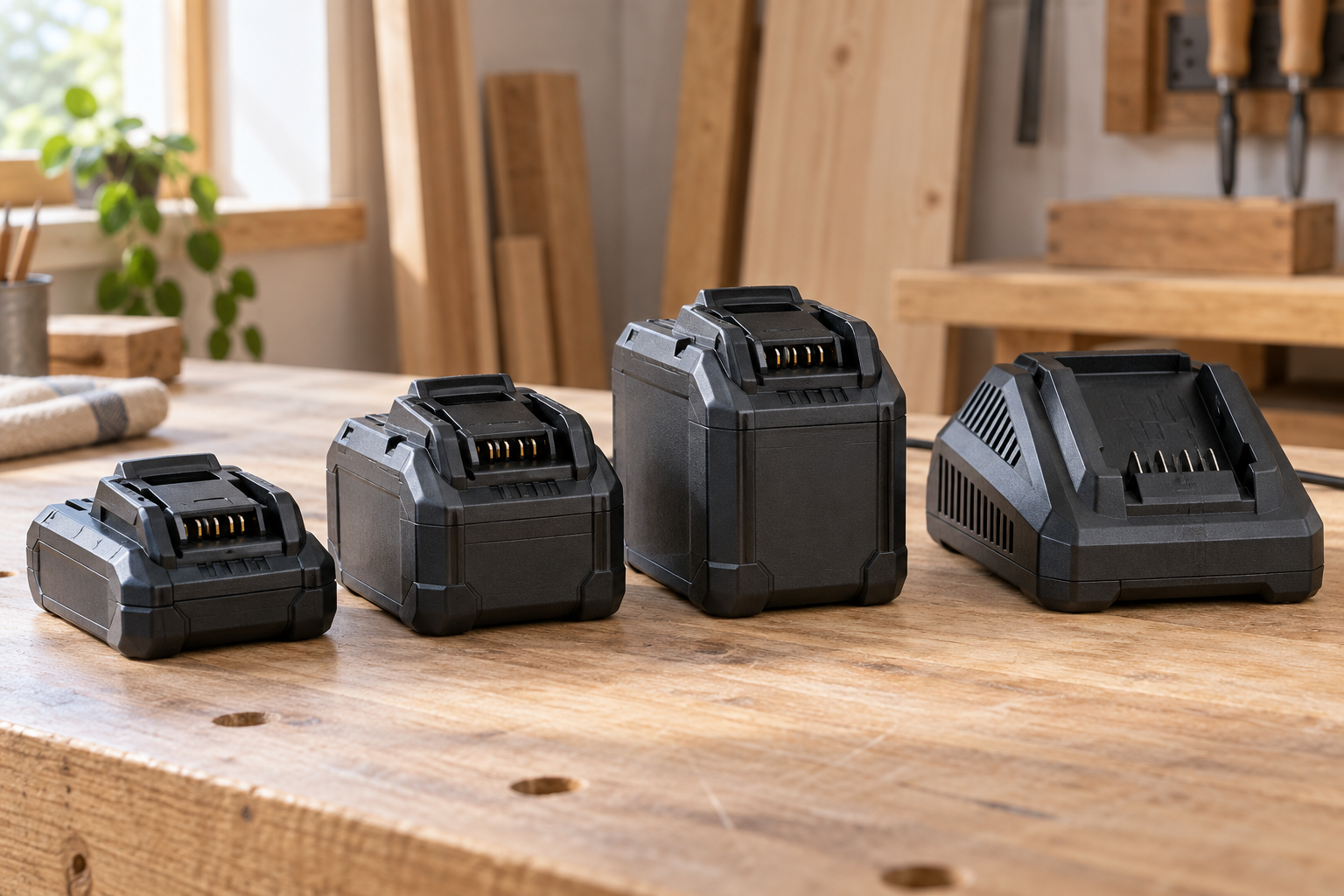
A second battery is not an optional luxury if the blower is used away from a power outlet. While one pack is running, the other can charge. For regular outdoor work, two medium or large batteries are usually more practical than one very large battery, provided the charger can keep up.
Charging speed matters. A basic charger may take several hours to recharge a large pack. A rapid charger may reduce that to roughly 30 to 60 minutes, but it can cost more and may generate more heat. Never charge a hot battery directly after hard use; let it cool first. Do not use a damaged pack, leave batteries in a hot vehicle, or substitute a charger from another platform.
Battery replacement is another long-term cost. Packs lose capacity with age, heat, and repeated deep discharges. If the blower is your only cordless outdoor tool, a platform with inexpensive replacement batteries may be more practical than one with a powerful but costly proprietary pack. Check the price of a replacement 5.0Ah battery before committing.
Check Airflow and Ergonomics
Air speed is useful for loosening stubborn debris, but cubic feet per minute (CFM) tells you more about how much material the blower can move. A narrow nozzle can produce a higher air-speed number while moving less total air. For leaves and broad cleanup, prioritize useful airflow and a controllable trigger. For packed sawdust in corners, a focused nozzle and higher air speed help.
Weight changes as soon as you install the battery. A blower that weighs 5 pounds bare may exceed 7 or 8 pounds with a large pack. Hold the tool at shoulder height for 30 seconds if possible. Poor balance causes wrist fatigue faster than raw weight alone.
A variable-speed trigger is preferable to a simple on/off switch. Full power is often unnecessary and can scatter dust or blow debris into finished surfaces. A lock-on button can reduce hand fatigue during long clearing jobs, but it also makes it easier to leave the blower running accidentally.
For frequent use, consider a high-output cordless blower kit with a battery sized for the tool. For occasional cleanup, a compact kit or existing-platform bare tool is usually adequate.
Avoid Common Platform Mistakes
Do not assume every battery carrying the same voltage label is compatible. Battery rails, electronics, communication systems, and physical mounts vary by brand and product line. Adapters can create fit or safety problems and may void warranties.
Do not buy the largest platform solely for a high CFM claim. Larger tools are tiring, louder, and more expensive. Choose the smallest platform that handles your material without running continuously at maximum power. If you already own several batteries in a platform, that existing investment is often the deciding factor.
If you are starting from zero, a mainstream 18V/20V ecosystem is the safer general-purpose choice for mixed hand tools. Choose a 36V/40V or dual-battery system when outdoor tools and sustained airflow are the priority. Before ordering, price one blower, two usable batteries, a charger, and your next likely tool. That complete comparison—not the bare blower price—reveals which platform is actually cheaper.
Related guides
- Longest Lasting Lawn Mower Battery: AGM vs Lithium vs Flooded Lifespan and Cost per Season
- Duralast Gold Lawn Mower Battery Review: U1 Fit, CCA and When to Pay for AGM
- Greenworks Pro 80V 21-Inch Mower Review: Runtime Math, Push vs Self-Propelled and Yard Fit
- Bosch High Pressure Washer Gun Replacement: Fittings, Adapters and What Fits Your Model