What's inside
- Best Arc One Welding Lens: Shade Options and Compatibility
- Arc One lens options at a glance
- Choose by welding process and working conditions
- Optical clarity: what the ratings tell you
- Compatibility: match the lens to the helmet, not the brand name
- Which ArcOne lens suits your situation?
- Ownership details that affect value
- Bottom line
- Best Arc One Welding Lens: Shade Options and Compatibility
- Arc One lens options at a glance
- Choose by welding process and working conditions
- Optical clarity: what the ratings tell you
- Compatibility: match the lens to the helmet, not the brand name
- Which ArcOne lens suits your situation?
- Ownership details that affect value
- Bottom line
As an Amazon Associate I earn from qualifying purchases. This post may contain affiliate links at no extra cost to you.
Best Arc One Welding Lens: Shade Options and Compatibility
The best Arc One welding lens depends on your helmet and process: choose a lens whose shade range covers your welding current, whose viewing area fits the work, and whose model is explicitly compatible with your ArcOne helmet—not just one that looks similar.
Arc One lens options at a glance
ArcOne sells several auto-darkening lens families, and specifications can vary by model and production version. The figures below are representative ranges commonly associated with these product lines; check the exact lens label and current manufacturer documentation before buying, especially when replacing a lens in an older helmet.
As an Amazon Associate we earn from qualifying purchases at no extra cost to you.

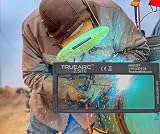
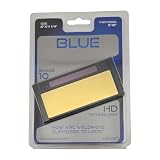

| Lens family | Typical operating shades | Approximate viewing area | Best fit |
|---|---|---|---|
| ArcOne X-Series | Variable, commonly shade 9–13 | About 3.8 × 2.2 in | General MIG, stick, and TIG work when the helmet is designed for the X-Series cartridge |
| ArcOne Vision | Variable, commonly shade 9–13 | About 3.8 × 2.2 in | Welders who want a broad view and controls for adjusting shade and sensitivity |
| ArcOne Carrera | Variable options; verify the exact model, often shade 9–13 | Varies by cartridge, around 3.8 × 2.2 in on common versions | Replacement shopping for a Carrera helmet or cartridge system |
| ArcOne S-Series | Model-dependent; confirm the marked shade range | Smaller than many wide-view cartridges on some versions | Compact helmet setups and users prioritizing a lighter, simpler assembly |
These dimensions describe the viewing window, not the full cartridge. A lens with a similar window size can still have different mounting tabs, external dimensions, connector placement, or control layout. Treat the helmet model and cartridge part number as the decisive fit checks.
Choose by welding process and working conditions
For occasional MIG or stick welding
A variable shade 9–13 lens is a practical starting point for many common MIG and stick jobs. It lets you adjust darkness as current, wire size, and arc brightness change. If you mostly weld at one setting, a straightforward lens with accessible shade controls may be easier to live with than paying extra for features you will rarely use.
For low-amperage TIG
Prioritize reliable arc detection and adjustable sensitivity. TIG starts can be less visually intense than a high-current stick arc, so a lens that does not trigger consistently can be frustrating. Confirm that the specific lens supports your intended TIG range; a shade range alone does not guarantee dependable low-current detection.
For frequent repositioning or awkward joints
A larger viewing area can make it easier to find the joint and maintain torch or electrode placement. That benefit matters most when you move between parts or weld out of position. A wide window does not improve optical quality by itself, though: compare the manufacturer’s optical ratings and look for uniform clarity across the view, not just a large opening.
Optical clarity: what the ratings tell you
Auto-darkening filters are commonly rated on four optical properties: optical class, light diffusion, luminous transmittance variation, and angle dependence. A rating of 1/1/1/1 is the top grade in this system; lower numbers indicate more variation or distortion in that category. When comparing an ArcOne lens with another, use the ratings printed in its current specification rather than assuming every lens in a product family has the same performance.
Clarity also depends on fit and upkeep. A scratched outer cover plate can make even a high-rated filter look hazy, while spatter or dust on the inside cover can reduce contrast. Replace damaged cover plates with the correct size and type, and clean them with a soft cloth rather than abrasive cleaners that can leave fine scratches.
Compatibility: match the lens to the helmet, not the brand name
An “Arc 1 welding lens” search may lead to listings that shorten or misspell ArcOne. That does not establish compatibility. ArcOne lenses are not automatically interchangeable across every ArcOne welding helmet, and a cartridge can have the right viewing dimensions yet fail to seat securely or connect to the helmet’s controls.
- Find the exact helmet model name and any revision or series marking, usually on the shell, headgear, or manual.
- Remove the existing cartridge only as directed by the helmet instructions, then record its part number and external dimensions.
- Compare mounting points, retaining frame, control access, and any electrical connections—not just the viewing window.
- Check the manufacturer’s compatibility list or ask ArcOne or an authorized supplier to confirm the replacement part for that helmet.
- After installation, inspect the filter, cover plates, and retention before welding; follow the helmet’s instructions for function checks.
If you own an ArcOne welding helmet but cannot identify its model, do not guess from a photo alone. Older shells may use a cartridge that is no longer listed alongside current products. A clear photo of the helmet label and the old lens markings can help a supplier identify the right replacement.
Which ArcOne lens suits your situation?
| Your situation | What to prioritize | Practical choice |
|---|---|---|
| New welder, occasional projects | Simple controls, broad useful shade range, confirmed helmet fit | A compatible variable shade 9–13 lens; avoid choosing by window size alone |
| Regular fabrication with varied processes | Shade adjustability, sensitivity control, optical ratings | A compatible higher-feature lens from the appropriate ArcOne family |
| Low-amperage TIG work | Arc detection at low current and suitable sensitivity settings | Only a model whose documentation supports the intended TIG conditions |
| Replacing a lens in an older helmet | Exact cartridge and mounting compatibility | The specified replacement part, even if a newer lens appears to have similar dimensions |
| Welding in tight or changing positions | Useful viewing area, secure fit, clear optics | A compatible wide-view option if its cartridge matches the helmet |
Ownership details that affect value
The filter is only one part of the ongoing cost. Cover plates take the first wear from spatter, smoke residue, and scratches; replacing them promptly is usually more sensible than continuing to weld through a cloudy view. Keep spare covers that match the helmet’s specified dimensions, since a poorly fitting plate can leave the filter exposed or interfere with the cartridge.
Also protect the lens from prolonged heat, moisture, and impact when it is outside the helmet. Do not disassemble a sealed filter or attempt repairs to its electronics. If the lens flickers, fails to darken reliably, or shows visible damage, stop using it and follow the manufacturer’s replacement guidance. Never rely on an auto-darkening lens with a damaged filter or missing protective cover.
Bottom line
For many welders, a variable-shade ArcOne lens in the 9–13 range offers useful flexibility for common processes, while a wider viewing area and stronger optical ratings are worth considering for frequent or precision work. The best ArcOne HD welding lens—or any ArcOne replacement—is the one that fits your exact helmet, supports your process and current range, and has specifications you can verify. Confirm the part number before ordering; similar appearance is not proof of compatibility.