What's inside
- Best CB Radios by Use Case
- Best Overall for Truckers: Cobra 29 LTD Classic
- Best Compact Budget Choice: Uniden PRO520XL
- Best Portable Option for Trail Vehicles: Midland 75-822
- Best for Noise Filtering and Fine Adjustment: President McKinley USA
- What Range Should You Expect?
- Truck Cab vs. Trail Vehicle: Decision Matrix
- Mounting and Antenna Setup
- Noise Filtering: Which Controls Matter?
- Ownership Costs and Common Failure Points
- Final Recommendations
- Best CB Radios by Use Case
- Best Overall for Truckers: Cobra 29 LTD Classic
- Best Compact Budget Choice: Uniden PRO520XL
- Best Portable Option for Trail Vehicles: Midland 75-822
- Best for Noise Filtering and Fine Adjustment: President McKinley USA
- What Range Should You Expect?
- Truck Cab vs. Trail Vehicle: Decision Matrix
- Mounting and Antenna Setup
- Noise Filtering: Which Controls Matter?
- Ownership Costs and Common Failure Points
- Final Recommendations
As an Amazon Associate I earn from qualifying purchases. This post may contain affiliate links at no extra cost to you.
The best CB radios for truckers and off-road use are the Cobra 29 LTD Classic for a full-size truck cab, the Uniden PRO520XL for a compact budget installation, the Midland 75-822 for portable trail use, and the President McKinley USA for drivers who want stronger filtering and more adjustment control.
As an Amazon Associate we earn from qualifying purchases at no extra cost to you.
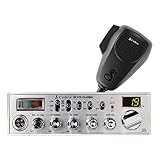


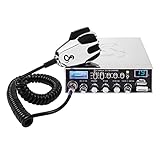
Best CB Radios by Use Case
| Radio | Best fit | Approx. size | Power and channels | Notable features |
|---|---|---|---|---|
| Cobra 29 LTD Classic | Long-haul truck cab | 7.25 × 9.25 × 2.25 in | 4 W AM, 40 channels | Large meter, RF gain, SWR calibration, PA function |
| Uniden PRO520XL | Budget or tight dashboard installation | Approx. 4.5 × 6.75 × 1.75 in | 4 W AM, 40 channels | Compact chassis, RF gain, squelch, instant channel 9/19 |
| Midland 75-822 | Temporary truck or trail installation | Approx. 7.5 × 2.5 × 1.5 in | 4 W AM, 40 channels | Handheld-style controls, weather channels, external antenna support |
| President McKinley USA | Frequent users needing cleaner reception | Approx. 7 × 6.75 × 2 in | 4 W AM, 40 channels | Noise blanker, ANL, RF gain, clarifier and multistandard functions |
| Cobra 75 All Road | Minimalist off-road console | Handset-based design | 4 W AM, 40 channels | Remote control handset, weather resistance, app-connected features on some versions |
Dimensions can vary slightly by production version and whether the mounting bracket or microphone is included. Measure the installation area before ordering, especially in modern trucks with shallow dashboards and integrated controls.
Best Overall for Truckers: Cobra 29 LTD Classic
The Cobra 29 LTD Classic remains one of the easiest CB radios to use in a conventional truck cab. Its large front panel gives you separate controls for volume, squelch, RF gain, and channel selection, while the analog meter makes basic antenna adjustment understandable for beginners.
Its main advantage is ergonomics rather than extra transmitting power. Legal CB output in the United States is limited to 4 watts AM, so a larger radio does not automatically transmit farther than a compact model. The Cobra’s front-facing controls are useful when you need to adjust reception quickly without navigating a menu.
The chassis is relatively wide and deep, making it a better choice for a semi-truck, older pickup, or center-console installation than for a crowded trail rig. Look for a solid metal mounting surface and leave room behind the radio for the power, antenna, and microphone connectors.
Best Compact Budget Choice: Uniden PRO520XL
The Uniden PRO520XL is a practical pick when the radio must fit beneath a dashboard, inside a work truck, or beside other accessories. It provides the essential controls—channel selection, volume, squelch, and RF gain—without taking up the space required by a full-size classic CB.
This radio makes sense for occasional highway communication, convoy driving, and users who already have a suitable antenna. Its lower price is not a substitute for a good antenna system, but it keeps the initial installation cost under control.
The compromise is a smaller display and less comfortable control layout. If you frequently change channels or adjust reception while driving, a larger front panel may be safer and more convenient.
Best Portable Option for Trail Vehicles: Midland 75-822
The Midland 75-822 is designed around a handheld-style control unit rather than a conventional dashboard box. That makes it appealing for Jeep owners, rental vehicles, seasonal trail rigs, and drivers who do not want a permanent radio installation.
It includes access to NOAA weather channels and can be used with an external CB antenna for substantially better performance than the supplied temporary setup. The external antenna is particularly important on a vehicle with a fiberglass, plastic, or removable roof, where a normal metal-ground-plane installation may be difficult.
Portable convenience has trade-offs. The microphone-style body can be easier to store, but the controls and display are smaller than those on a Cobra 29. A removable setup also requires you to protect the connector, handset, and power lead from dust and repeated bending.
Best for Noise Filtering and Fine Adjustment: President McKinley USA
The President McKinley USA is a strong choice for drivers who spend many hours listening to weak or noisy signals. Its automatic noise limiter and noise blanker can reduce some ignition and electrical interference, while adjustable RF gain lets you control how aggressively the receiver responds to distant signals.
Noise filtering is useful, but it cannot repair a poor antenna installation or eliminate every source of interference. A poorly bonded mount, damaged coax, LED lighting, fuel-pump noise, and nearby electronics can still overwhelm the receiver.
The McKinley also offers more settings than a basic CB. That benefits experienced users who want to refine reception, but beginners may prefer the simpler controls of the Uniden or Cobra. Read the manual before changing advanced settings; excessive filtering can make a weak voice sound clipped or unnatural.
What Range Should You Expect?
For vehicle-to-vehicle CB communication, a realistic working range is often about 1 to 5 miles, depending on terrain, antenna height, electrical noise, weather, traffic, and the other vehicle’s equipment. Flat, open ground can produce better results; hills, buildings, dense forest, and a low-mounted antenna reduce range.
A long-distance signal does not prove that a radio has unusually high legal output. Atmospheric conditions can occasionally extend CB signals far beyond normal local coverage, but that is not dependable for convoy planning.
The antenna usually matters more than the radio body. A properly tuned quarter-wave or longer mobile antenna mounted on a sound vehicle bracket will generally outperform a premium radio connected to a short, poorly grounded antenna.
Truck Cab vs. Trail Vehicle: Decision Matrix
| Your situation | Recommended type | Why | Important compromise |
|---|---|---|---|
| Daily highway use, ample dash space | Full-size radio such as Cobra 29 LTD Classic | Large controls and easy RF gain and squelch adjustment | Needs a permanent mount and more dashboard depth |
| Occasional use and limited budget | Compact radio such as Uniden PRO520XL | Low-cost installation with essential controls | Smaller display and less room for controls |
| Several vehicles or removable equipment | Handheld-style radio such as Midland 75-822 | Can move between vehicles and store when not needed | Requires careful connector and cable handling |
| Frequent off-road use with tight console space | Remote-handset system such as Cobra 75 All Road | Leaves the center console open and reduces exposed hardware | Handset controls may take practice |
| Heavy electrical noise or advanced users | Radio with ANL, noise blanker, and RF gain | More control over interference and weak signals | More settings and a higher purchase price |
Mounting and Antenna Setup
Mount the radio where you can reach it without looking away from the road. Under-dash brackets work well in trucks with clear space, while remote-handset radios are useful when a center console is already crowded. Avoid placing the main unit directly against airbag covers, pedals, shifter mechanisms, or heating vents.
- Choose the antenna location first. A roof, hood edge, or rear-bed mount can work, but the bracket must be rigid and the antenna should clear the body as much as practical.
- Use the correct coax length and routing. Keep the cable away from sharp metal edges, ignition components, and high-current power wiring. Do not coil excess coax into a tight loop.
- Check the vehicle ground. Painted or powder-coated mounting surfaces may prevent a good RF ground. Use an appropriate bonding method rather than relying only on the bracket’s physical contact.
- Measure SWR before regular use. An SWR reading near 1:1 is ideal; readings around 2:1 may be usable depending on the system, while consistently high readings indicate a problem that should be corrected.
- Secure the microphone and cable. A loose microphone can become a projectile on rough trails, and repeated flexing at the plug is a common cause of intermittent operation.
A basic SWR meter is often worth adding to the installation budget. For example, a $25 meter used during setup can prevent damage and troubleshooting costs caused by an antenna that is too long, too short, poorly grounded, or connected with a damaged coax cable.
Noise Filtering: Which Controls Matter?
- Squelch: Closes the speaker until a signal reaches a chosen strength. Set it only high enough to remove background hiss, or weak transmissions will disappear.
- RF gain: Reduces receiver sensitivity. Turning it down can make a nearby conversation easier to hear in a noisy area.
- ANL: Helps reduce some repeating electrical noise, such as sharp interference from vehicle systems.
- Noise blanker: Can suppress certain pulse-type noises but may distort audio or add unwanted artifacts with some signals.
- Weather reception: NOAA weather channels are useful for alerts, but they do not replace a dedicated emergency communication plan.
Ownership Costs and Common Failure Points
The radio itself is rarely the first component to wear out. Antenna whips bend or corrode, magnetic mounts lose grip, coax connectors loosen, microphone cords fatigue, and trail dust works into switches and plugs. Budget for a replacement antenna whip or mount rather than treating the initial radio price as the complete system cost.
Clean the radio with a dry or lightly damp microfiber cloth, keep ventilation openings clear, and inspect the coax after off-road trips. Do not transmit with the antenna disconnected, and do not assume a high-power aftermarket amplifier is legal or safe for ordinary CB use. For most truckers and trail users, a properly installed antenna and a radio with usable controls will produce more dependable communication than an expensive radio paired with a neglected antenna system.
Final Recommendations
Choose the Cobra 29 LTD Classic when you have room and want the easiest full-size truck controls. Choose the Uniden PRO520XL for a compact, economical permanent installation. Choose the Midland 75-822 when portability between vehicles matters most. Choose the President McKinley USA when noise filtering and receiver adjustment justify spending more. For a clean off-road console, a remote-handset radio such as the Cobra 75 All Road is the most space-efficient format.