What's inside
As an Amazon Associate I earn from qualifying purchases. This post may contain affiliate links at no extra cost to you.
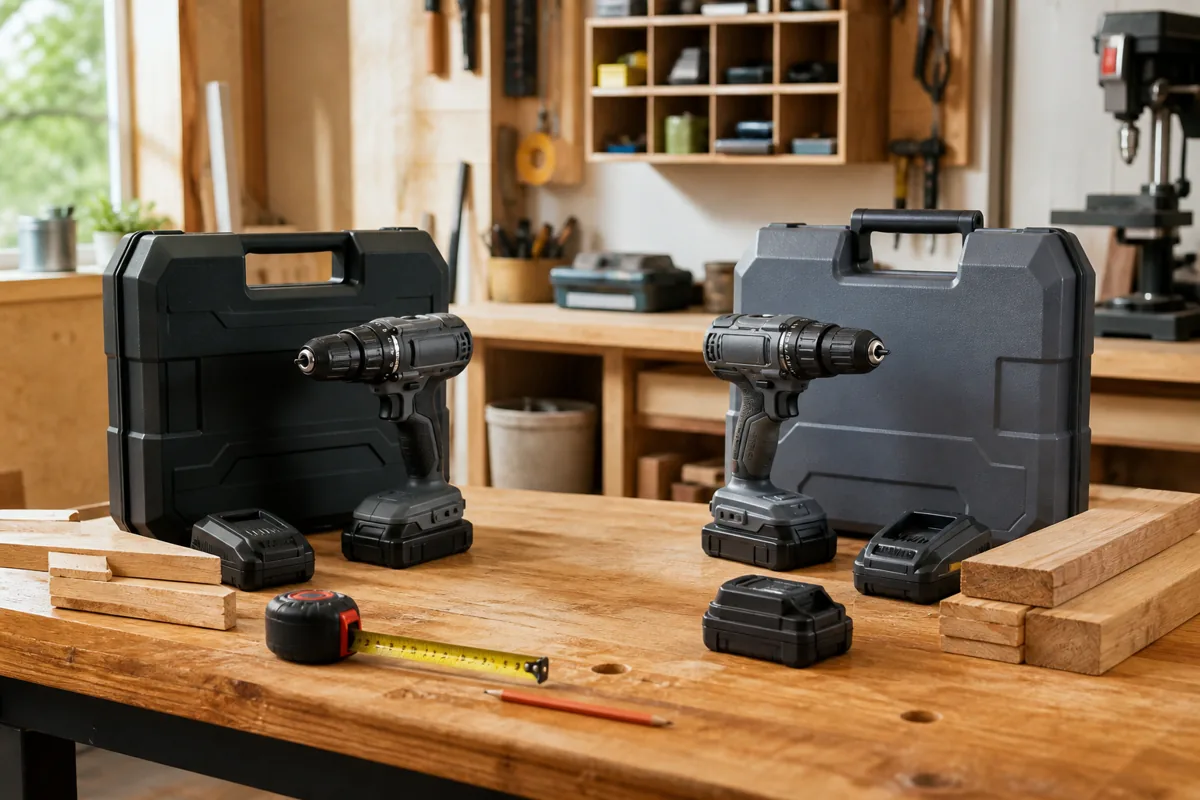
Bosch’s 12V tools are not simply smaller versions of its 18V tools. They trade speed and sustained output for lower weight, shorter length, and easier handling in tight spaces. For cabinet work, repairs, and routine fastening, that trade can make a 12V kit the better buy. For drilling large holes, driving long fasteners all day, or running high-draw tools, 18V is usually the safer choice.
The useful question is not which platform is more powerful. It is whether the job regularly asks for power that a compact tool cannot deliver comfortably. Bosch’s 12V and 18V batteries are separate systems; a 12V battery does not fit an 18V tool, or vice versa. Choose with your likely tool purchases in mind, not only the drill in the starter kit.
As an Amazon Associate we earn from qualifying purchases at no extra cost to you.



What the voltage difference means in practice
Voltage alone does not tell you how long a tool will run or how much work it can do. Battery capacity, motor design, gearing, and the task all matter. But in Bosch’s range, 18V tools generally have more room for sustained power and larger batteries. That matters when a drill is loaded hard for several minutes or a saw is cutting dense material. A 12V tool is designed around a smaller, lighter package, which makes it easier to control overhead and in confined spaces.
For occasional home repairs, a 12V drill can handle pilot holes, assembly, and many holes in softwood. Its limits show up with large bits, repeated holes in hardwood, masonry drilling, or long screws driven without a pilot hole. The tool may slow, stall, heat up, or drain a small battery quickly. Those are not automatically defects; they are signs the job is asking more than the compact platform is meant to supply.
Bosch 12V and 18V at a glance
| Factor | 12V platform | 18V platform |
|---|---|---|
| Size and handling | Typically shorter and lighter; easier in cabinets and overhead | Typically larger and heavier; better suited to demanding work |
| Routine drilling | Good for pilot holes, fixtures, and modest wood or metal holes | More headroom for larger bits and repeated drilling |
| Long or large fasteners | Can manage light jobs, but may slow or stall under heavy loads | Better choice for frequent structural fastening |
| Battery ecosystem | Uses Bosch 12V batteries and compatible 12V tools | Uses Bosch 18V batteries and compatible 18V tools |
| Typical trade-off | Less fatigue and bulk, less sustained capacity | More capability, more weight and cost |
When 12V is enough
Choose 12V if most of your work is fitting hardware, assembling furniture, installing shelves, making pilot holes, or doing service work where the tool spends a lot of time in one hand. A shorter drill can reach into a vanity or between studs where a larger tool is awkward. Lower weight also helps when you are drilling above shoulder height or driving dozens of small screws.
For these jobs, a compact drill-driver and an impact driver make a practical pair. The drill handles controlled holes and screws that need a clutch; the impact driver is useful for repeated fastening. An impact driver is not a cure for every 12V limitation: driving a very long screw into dense lumber can still tax the tool and battery. Use a pilot hole, keep the bit seated, and pause if the tool or battery gets hot.
If you are building a light-duty kit, compare Bosch 12V drill-driver kits. Check what is included: battery count and capacity, charger, case, and whether the kit contains a drill-driver or an impact driver. A low kit price can be less attractive if you need to buy a second battery and charger separately.
When to step up to 18V
Pick 18V if drilling and fastening are frequent, not occasional, or if your work includes larger hole saws, auger-style bits, repeated holes in hardwood, or long structural screws. The extra capacity gives you more margin before the tool bogs down. That margin matters for productivity and for avoiding a common failure mode: leaning harder on a slowing drill, which can make the bit bind and twist the tool in your hand.
18V is also the more sensible starting point if you expect to add demanding tools such as a circular saw, grinder, or high-output work light. Tool availability and battery compatibility vary by exact Bosch product line, so verify the platform printed on the tool and battery before buying. Do not assume that a battery from a different voltage family will work just because both products carry the Bosch name.
For a general-purpose kit with room for tougher jobs, look at Bosch 18V drill-driver kits. If fastening is the main task, compare Bosch 18V impact-driver kits as well. Match battery capacity to the tool: compact batteries reduce weight, while larger packs can extend runtime but add bulk.
Battery cost, runtime, and ownership
Runtime cannot be predicted from voltage alone. A small battery may finish many cabinet screws but empty quickly on repeated large holes. A larger pack can run longer, yet it makes a compact drill less compact. If you already own Bosch tools, first confirm whether they are 12V or 18V and whether your new tool shares that exact platform. Staying within an existing battery system can save more than choosing the cheapest bare tool.
Buying into two platforms is justified only if you regularly benefit from both: 12V for access and low weight, 18V for heavier work. Otherwise, a single platform keeps batteries and chargers simpler. If your demanding jobs are rare, renting or borrowing an 18V tool for a weekend may cost less than maintaining a second set of batteries.
A practical buying decision
List the hardest job you expect to do in a normal month, not the most ambitious project you might attempt once. If that list tops out at small holes, furniture, fixtures, and routine repairs, 12V is a reasonable choice and often more pleasant to use. If it includes regular large-bit drilling, heavy fastening, or several cordless tools with high power demands, start with 18V. Either platform can be the wrong choice when pushed beyond its intended workload; choosing for the work you actually do is more useful than buying extra voltage “just in case.”
Related guides
- Longest Lasting Lawn Mower Battery: AGM vs Lithium vs Flooded Lifespan and Cost per Season
- Duralast Gold Lawn Mower Battery Review: U1 Fit, CCA and When to Pay for AGM
- Greenworks Pro 80V 21-Inch Mower Review: Runtime Math, Push vs Self-Propelled and Yard Fit
- Bosch High Pressure Washer Gun Replacement: Fittings, Adapters and What Fits Your Model