Our Top Picks
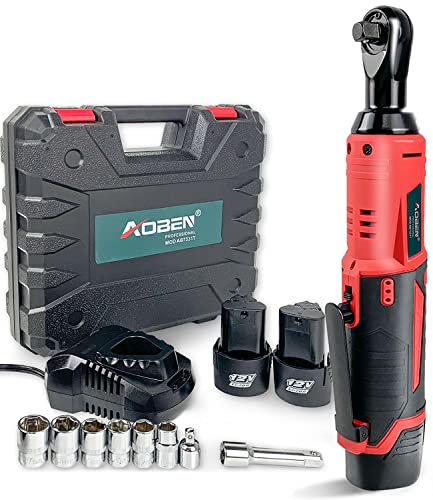 AOBEN Cordless Electric Ratchet Wrench Set3/8" 12V with 2 Batteries12 x 10 x 3.5 inches4.4 poundsCheck on Amazon
 Milwaukee 2457-20 M12 Cordless 3/8" Sub-Compact 35 ft-Lbs3/8"9.47 x 2.94 x 1.76 inches1 PoundsCheck on Amazon



What's inside
As an Amazon Associate I earn from qualifying purchases. This post may contain affiliate links at no extra cost to you.
Ten years ago every serious garage ran on compressed air. Now a mid-torque cordless impact wrench does most of that work without a hose, and it has changed how mobile mechanics operate entirely.
This list is ordered by how often you will actually reach for the tool, not by price and not by how impressive it looks in a drawer. That order matters if you are buying in stages, because the wrong first purchase leaves you holding a heavy wrench you use twice a year with nothing to put on the end of it. One decision sits above all five entries: the battery platform. Every tool here runs on the same packs, so the platform is worth more over five years than any individual tool in the kit, and switching later means paying for batteries and chargers twice.
As an Amazon Associate we earn from qualifying purchases at no extra cost to you.




How to judge a cordless tool for automotive work
Four criteria decide whether a tool earns its space. They are not equal, and the order they come in matters more than any spec sheet.
- Platform first. Compatibility beats features. A slightly slower wrench on packs you already own is a better buy than a marginally better one that arrives with its own charger.
- Battery output second. Impact tools only reach rated performance on high-output packs. A compact battery will run one, but it sags, runs hot and trips its protection under load.
- Access third. Head height and nose length decide whether the tool reaches the fastener at all. Torque you cannot get onto the bolt is worth nothing.
- Control fourth. Multiple torque settings, a bolt-removal mode and a trigger you can feather are what stop you snapping studs and stripping alloy threads.
Raw torque is the number most people shop on and the one that should decide least. Buy for access and control, and the torque you need follows.
1. Mid-torque impact wrench
The centrepiece. Enough to break lug nuts and suspension bolts, light enough to work with in a wheel arch. High-torque models exist for seized truck fasteners, but mid-torque is the daily driver.
When comparing models, remember that manufacturers quote two figures: fastening torque and nut-busting torque. The second is always the bigger and the less useful, because it describes a brief peak against a static fastener rather than what the tool does in your hands on a rusted control arm bolt. Compare fastening torque, then count how many usable settings sit below maximum. Three or four steps plus a bolt-removal mode beats a bigger headline number and a single speed every time.
Where the price bands differ. At the entry end the real choice is brushed versus brushless — take brushless, because automotive work is duty-cycle heavy and brushed motors cook themselves. In the middle band you should be getting a metal gearcase, a ring of work lights rather than one dim LED, and electronics that ease off the first hammer blows. At the top you are paying for vibration control, service life, and a repair network that still exists in five years. Any of the three can be a sound buy. What is never sound is a no-name wrench on a battery format you cannot replace.
Who it suits: anyone doing wheels, brakes, suspension and general service work, which is nearly everyone. Who should skip it: if your work really is engine bay and interior only, a compact 3/8-inch wrench is lighter and reaches further. If you live on heavy trucks and plant, buy high-torque instead and accept the weight.
Mid-torque impact wrenches
1/2-inch drive, multiple torque settings, bolt-removal mode. Run it on a high-output battery to get the rated performance.
2. Cordless ratchet
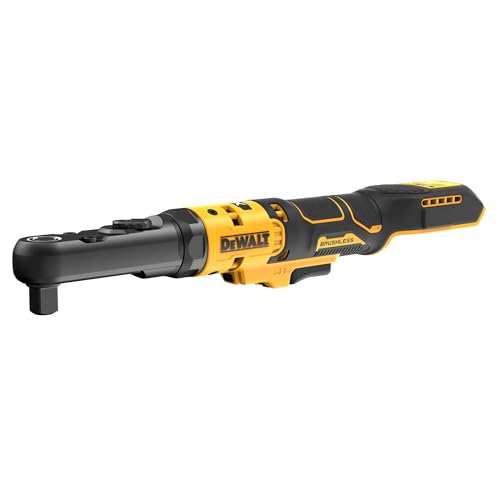
3/8-inch for general work, 1/4-inch for tight engine bay fasteners. Not high torque — the value is speed on long threads, then finishing by hand.
Judge a ratchet on its head, not its motor. Head height and the thickness of the body behind it decide whether you can get onto a fastener tucked behind a bracket, and that is the entire point of the tool. Look for a low-profile head, a slim grip you can hold at an angle, a direction switch you can flick without changing hands, and a drive that genuinely retains the socket. Sockets dropped into an engine bay cost more time than the tool saves.
Common mistake: using it to break fasteners loose. The torque is not there, and leaning on the head with your body weight is how these die. Break loose by hand, run the thread out with the tool, then snug by feel.
Who it suits: anyone working on engines, gearboxes and interiors. Who should skip it: if you are mostly on wheels and brakes, buy sockets and lighting first.
Cordless ratchets
Spins fasteners fast, fits where a wrench swings badly. Break loose by hand, then let the ratchet run it out.
3. Impact sockets — not optional
Chrome hand sockets can shatter under impact. Impact sockets use tougher, more ductile steel. Use them, always, and keep a separate set for hand tools.
The rule extends to everything between the tool and the fastener. Extensions, universal joints and drive adapters all need to be impact-rated, because a chrome extension becomes the weakest link and fails without warning. Choose six-point over twelve-point for anything rusted or already rounded — six flats grip flats. Buy deep and shallow in both metric and SAE, and keep them on a rail or tray so a missing size is obvious before you are under a car.
Where to spend. This is the one place a mid-priced complete set beats a premium partial one, provided it is genuinely marked impact-rated. Pay extra only for thin-wall protective wheel sockets and markings that stay legible after a season of brake dust.
Impact socket sets
Deep and shallow, metric and SAE. Add thin-wall wheel sockets so you do not mark alloy rims.
4. Lighting
Underhood and underbody work is done in shadow. A magnetic area light plus a slim penlight covers most situations, and both being cordless on your existing platform is a real convenience.
Two things separate a good work light from a frustrating one: mounting and colour quality. Mounting means a strong magnet, a hook, and a body that will stand or clamp somewhere useful, because a light you have to hold costs you a hand. Colour quality means high colour rendering and a neutral tone — that is what lets you tell a fluid leak from a wet patch, or brake dust from rust. Cold blue-white light hides both.
Common mistake: relying on a head torch alone. It lights what you look at and throws hard shadow into the exact recess you are working in. Fill the area with one light and probe with another.
5. Inflator
Cordless tyre inflators with digital pressure presets have become genuinely good and are a service item you will use constantly.
Check the auto-shutoff, the hose length, and the chuck — you need one that seats squarely on a valve you cannot see. Understand the duty cycle too: these are built for topping off, so filling a flat or a light-truck tyre takes time and warms the pump. That is the trade for not owning a compressor, not a fault. They will not seat a bead, so do not buy one expecting to mount tyres. This is also the entry non-mechanics get the most use from, which is why it is hard to think of anyone who should skip it.
Cordless inflators
Set the pressure, walk away, it stops. Fits the battery platform you already have.
Buying in stages
If the budget arrives in pieces, buy the impact wrench kit with two high-output batteries and the impact socket set in the same purchase. A wrench with no sockets is an ornament, and that pairing is what actually replaces the compressor. Lighting next, because it makes every other job faster, then the inflator, then the ratchet — everything the ratchet does can be done more slowly by hand, and the other four cannot. After the first kit, buy bare tools. Once you own three packs and a charger, kits stop being value because you are paying for batteries twice.
What cordless did not replace
Cordless took over the speed work. It has not touched the jobs that need feel, leverage or accuracy, and pretending otherwise is how fasteners get ruined.
- ✔ A torque wrench — impacts do not set torque accurately
- ✔ Breaker bars for genuinely seized fasteners
- ✔ Hand ratchets for feel and access
- ✔ Jack stands, and the discipline to use them
- ✔ Penetrating oil and patience
Torque sticks are a partial compromise on wheels, but treat them as a limiter rather than a measurement. The final figure still comes from a torque wrench.
Safety
Most of what goes wrong here comes from speed. A tool that runs a fastener home in a second strips an aluminium thread just as fast.
- ✘ Never work under a vehicle supported only by a jack
- ✘ Do not final-torque wheel nuts with an impact
- ✘ Eye protection when working underneath — rust and fluid fall
- ✘ Chrome sockets on impact tools can shatter
FAQ
Air or cordless? Cordless for most work now. Air still wins for continuous production use and very high torque.
Which platform? Milwaukee M12/M18 and DeWalt both have strong automotive ranges.
How much torque for lug nuts? Any mid-torque model handles standard wheel nuts easily.
Do I need high-torque as well? Only if you regularly meet fasteners that beat the mid-torque wrench — heavy truck work, agricultural kit, badly seized crankshaft or axle nuts. For car and light van work, a breaker bar and heat cover the exceptions more cheaply.
How many batteries? Two high-output packs minimum, three if you work away from a charger. Compact packs are fine for lights and ratchets, not for the wrench.
Get the wrench, the batteries and the sockets right and the rest of the kit fills itself in over a season.
See mechanic tool kits →