
What's inside
As an Amazon Associate I earn from qualifying purchases. This post may contain affiliate links at no extra cost to you.
The short version
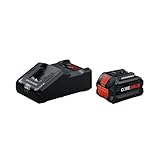
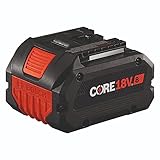
Bosch CORE18V is a higher-output version of Bosch’s 18V battery platform, designed to deliver more power for demanding tools. It uses the same nominal 18 volts as Bosch’s standard 18V packs and fits compatible Bosch 18V tools, but the difference is most noticeable under heavy load—not in every drill, every task, or every minute of runtime.
For driving small screws, drilling pilot holes, or occasional household repairs, a standard pack is usually the sensible buy. CORE18V makes more sense when you regularly run high-demand tools, such as circular saws, grinders, or rotary hammers, and want stronger performance without stepping up to a different battery voltage.
As an Amazon Associate we earn from qualifying purchases at no extra cost to you.


What changes inside the battery
CORE18V packs use a cell arrangement and internal design intended to supply more current than conventional Bosch 18V batteries. More available current can help a power-hungry tool maintain output when the motor is under strain. The battery does not force extra power into a tool; the tool draws what its electronics and motor require.
That distinction matters. A high-output battery cannot turn a compact drill into a more capable drill, and it will not overcome a dull saw blade, a binding bit, or an undersized tool. It can help a compatible tool sustain work when its standard battery would sag under the same load.
Capacity, measured in amp-hours (Ah), is a separate issue. A larger Ah rating generally means more stored energy and potentially longer runtime, but it also usually means a larger, heavier pack. CORE18V refers to the battery’s high-output design, not a single capacity. Compare the Ah rating and physical size of the specific packs you are considering.
What you notice on the job
On a drill doing light work, the difference may be hard to notice. Driving a few cabinet screws or drilling small holes in softwood rarely pushes a modern 18V tool hard enough to expose a battery’s output limit. A standard battery is cheaper and often lighter for this kind of work.
Under sustained load, the difference can be more apparent. A circular saw cutting thick stock, a grinder removing material, or a rotary hammer drilling repeated holes demands more from the battery. With a suitable tool, CORE18V may help reduce bogging and keep the tool working closer to its intended performance. The result depends on the tool, material, accessory, battery charge, and temperature; there is no guaranteed percentage increase in speed or runtime.
Extra output does not automatically mean longer runtime. If the tool uses more power to maintain a faster cut, it can drain the pack quickly. For long work sessions, battery capacity, the number of packs you own, and charging time may matter more than peak output.
CORE18V and standard 18V at a glance
| Factor | CORE18V | Standard Bosch 18V |
|---|---|---|
| Best fit | Frequent or sustained use with high-demand tools | General drilling, fastening, and lighter work |
| Under heavy load | Designed to supply higher current and help maintain output | May bog sooner in a demanding tool or application |
| Runtime | Depends on Ah rating and how hard the tool is used | Also depends on Ah rating and workload; not inherently shorter |
| Weight and cost | Can cost more; larger-capacity packs can add noticeable weight | Often the lower-cost choice, especially at modest capacity |
| Compatibility | For compatible Bosch 18V tools; check the tool and battery documentation | For Bosch 18V tools that accept the specific pack |
Compatibility and chargers
Bosch CORE18V batteries are part of Bosch’s 18V platform, but do not assume that every battery fits every Bosch cordless tool. Bosch has different tool lines and battery connections, including products that are not interchangeable. Check the exact tool manual, battery label, and Bosch compatibility information before buying—particularly for older tools or tools outside the North American 18V system.
Use a charger approved for the battery. Charging speed varies by charger and pack; a battery’s higher output does not mean it will charge faster. If you are buying into the platform, check whether a kit includes a charger and whether it is appropriate for the battery you plan to use.
When CORE18V is worth paying for
Consider CORE18V if you regularly use a high-demand Bosch 18V tool, already own compatible tools, and can feel the standard battery holding back the work. It is also a reasonable choice when buying a battery to share among several demanding tools. Compare Bosch CORE18V battery options by capacity, price, and weight rather than choosing by the CORE18V label alone.
Choose a standard pack if your main jobs are light drilling and fastening, you value a lighter tool, or you need an affordable spare for occasional use. A standard Bosch 18V battery is not a bad battery because it has less high-load capability; it is simply a better match for less demanding work.
If you need longer time between charges, prioritize capacity and buy a spare pack if the budget allows. If weight matters—for example, overhead drilling or ladder work—a smaller standard pack may be easier to handle than a larger high-output battery. A battery-and-charger kit can be useful when starting out, but verify the included battery’s capacity and compatibility before comparing its price with a bare battery.
Avoid common buying mistakes
Do not buy CORE18V expecting a dramatic improvement in every tool. If a saw is cutting slowly, first check blade sharpness, blade suitability, feed pressure, and whether the material is supported. For a drill, the wrong bit, excessive pressure, or a low charge can matter more than battery type. A battery can also reduce output when it is very cold, nearly empty, or too hot from continuous work.
Also avoid comparing batteries by Ah alone. Ah is useful for estimating stored energy, but it does not tell you how well a pack supplies current under load, how heavy it feels on the tool, or whether it will fit your equipment. Match the battery to the job: standard 18V for most everyday tasks; CORE18V when repeated heavy work makes higher output useful.
Related guides
- Longest Lasting Lawn Mower Battery: AGM vs Lithium vs Flooded Lifespan and Cost per Season
- Duralast Gold Lawn Mower Battery Review: U1 Fit, CCA and When to Pay for AGM
- Greenworks Pro 80V 21-Inch Mower Review: Runtime Math, Push vs Self-Propelled and Yard Fit
- Bosch High Pressure Washer Gun Replacement: Fittings, Adapters and What Fits Your Model