What's inside
As an Amazon Associate I earn from qualifying purchases. This post may contain affiliate links at no extra cost to you.
The real difference is runtime, not voltage
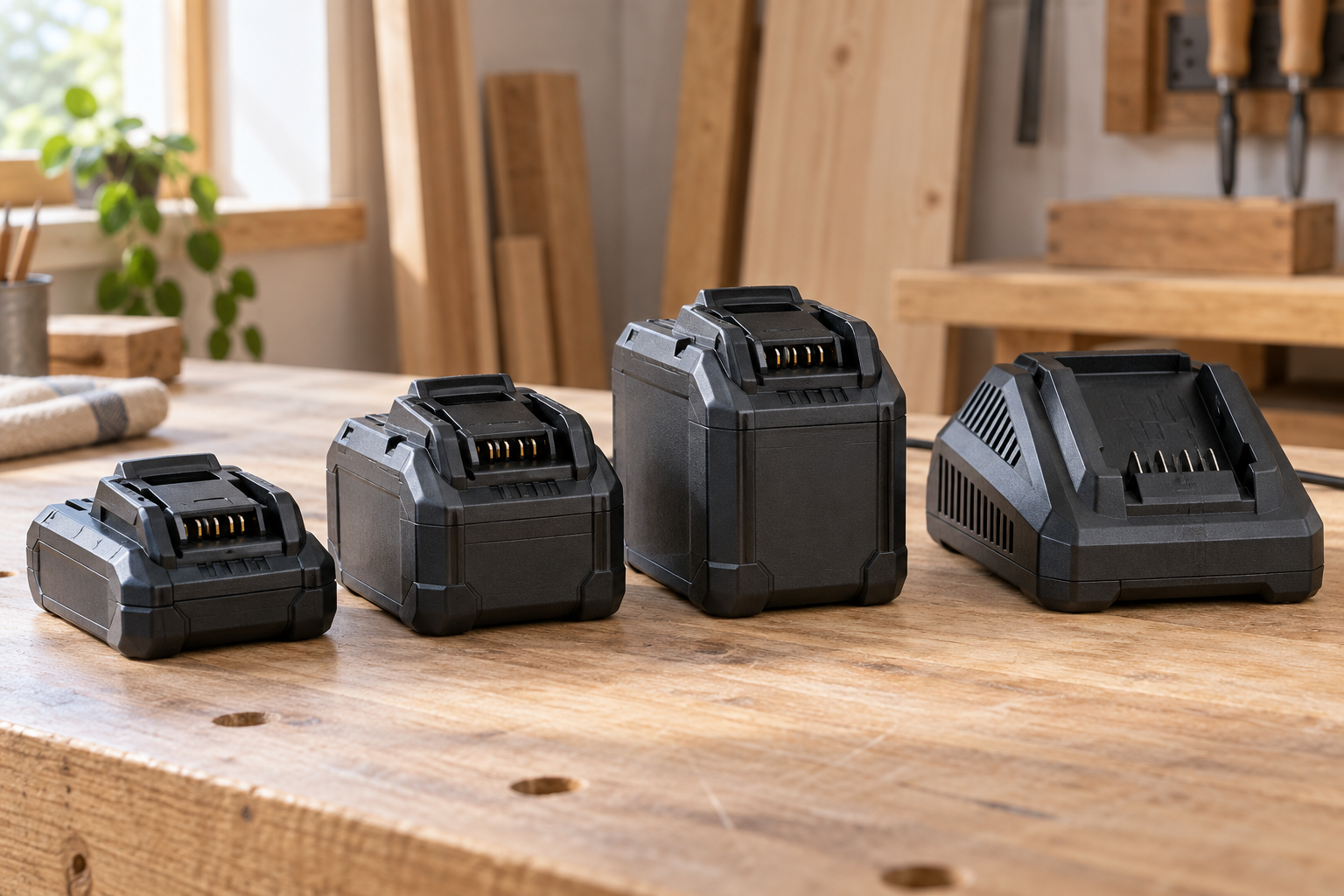
A Bosch 18V 4.0Ah battery and an 8.0Ah battery run compatible 18V tools at the same nominal voltage. The larger pack stores roughly twice the energy, so it can usually run a tool for longer before you need to swap or recharge. It does not automatically make a drill, saw, or grinder twice as powerful.
Capacity is measured in amp-hours (Ah); watt-hours give a clearer sense of stored energy. At a nominal 18V, 4.0Ah is about 72Wh and 8.0Ah about 144Wh. Actual runtime varies with the tool, material, battery temperature, pack condition, and how continuously you work. A compact drill making occasional pilot holes may use little energy; a circular saw cutting thick stock can drain a pack quickly.
As an Amazon Associate we earn from qualifying purchases at no extra cost to you.


Quick comparison
| Factor | 4.0Ah | 8.0Ah |
|---|---|---|
| Stored energy at nominal 18V | About 72Wh | About 144Wh |
| Runtime on the same tool | Reference point | Can approach twice as long under similar conditions |
| Weight and balance | Lighter; easier overhead and one-handed | Heavier; more tiring on handheld tools |
| Best fit | Drilling, fastening, light-to-moderate work | Long, demanding cuts or grinding; fewer swaps |
| Charging time | Usually shorter, depending on charger | Usually longer on the same charger |
When 4.0Ah is enough
Choose 4.0Ah if most of your work comes in short bursts: assembling cabinets, drilling holes, driving screws, trimming small amounts of material, or doing occasional repairs. The lower weight matters more than extra capacity when you are holding a drill above shoulder height or working from a ladder. A large pack can make a balanced tool feel rear-heavy and increase fatigue.
It is also a sensible buy if you already have more than one battery and can rotate packs while another charges. For intermittent home projects, a 4.0Ah pack may get through a useful amount of work without paying for capacity that sits unused. If cost is the deciding factor, browse Bosch 18V 4.0Ah batteries and check that the listing matches your exact Bosch battery platform and tool.
A common failure is treating a small battery as a fix for a tool that is working too hard. If a saw bogs down in a thick cut, first check the blade, cut technique, and material. A dull blade or forcing the tool raises the load and drains any battery faster. More capacity may reduce interruptions, but it will not sharpen a blade or make an unsuitable tool appropriate for the job.
When 8.0Ah makes sense
Move to 8.0Ah when a tool draws substantial power for extended periods and battery changes interrupt the work. Long cuts with a circular saw, repeated work with a reciprocating saw, and sustained grinding are typical cases. The larger pack’s extra stored energy can reduce swaps and keep a crew moving. On some tool-and-battery combinations, a higher-capacity pack may also sustain heavy work better, but the result depends on the specific battery design and tool. Do not assume capacity alone guarantees a power increase.
The trade-off is mass. An 8.0Ah pack can make a handheld tool noticeably heavier, and that penalty is felt on overhead drilling, trim work, or long sessions with a reciprocating saw. It can also take longer to recharge. Check the charger’s specifications rather than assuming that a larger battery will be ready after the same break as a 4.0Ah pack.
If reducing swaps matters more than weight, compare Bosch 18V 8.0Ah batteries. Confirm the battery is listed as compatible with your exact tool and charger; Bosch 18V products can span different generations and battery designs.
Runtime, heat, and real-world limits
“Twice the capacity” is a useful starting estimate, not a runtime guarantee. If a 4.0Ah pack lasts 20 minutes in a sustained cutting task, an 8.0Ah pack might roughly double that under comparable conditions. But a hot battery, frozen material, a jammed blade, or a tool operating near its limit changes the result. Runtime also falls as a battery ages: repeated use and poor storage can reduce the energy it holds.
Heavy work produces heat in both the tool and battery. If the pack or tool stops, slows, or signals an overtemperature condition, let it cool instead of repeatedly restarting it. Do not leave a hot pack on charge, and follow Bosch’s instructions for charging and storage. A bigger battery can extend a demanding session, but it cannot prevent overheating when the tool is overloaded or used continuously beyond its limits.
Compatibility and value before buying
Check the battery label, tool manual, and charger compatibility before ordering. “18V” by itself is not enough to establish fit across every Bosch product line or generation. Also check whether the battery is sold alone or as part of a kit, and compare the price per watt-hour only after confirming compatibility and condition.
For occasional work, one 4.0Ah battery plus a second pack can be more convenient than carrying a single heavy 8.0Ah pack. For production work where charging cannot keep up, a larger battery may save time by reducing changes. If the job involves continuous high-load cutting, compare compatible Bosch 18V chargers as well; the charger is part of the runtime plan, not an afterthought.
Which capacity should you buy?
For general DIY use, start with 4.0Ah if you value a lighter tool and work in short sessions. Choose 8.0Ah for repeated, heavy-duty work where changing batteries costs more time than the added weight does. If you own both types, use the 4.0Ah pack for overhead drilling and fastening, and save the 8.0Ah pack for saws and grinders. That split usually gives better balance without sacrificing runtime where it matters.
FAQ
Which capacity should you buy?
Related guides
- Longest Lasting Lawn Mower Battery: AGM vs Lithium vs Flooded Lifespan and Cost per Season
- Duralast Gold Lawn Mower Battery Review: U1 Fit, CCA and When to Pay for AGM
- Greenworks Pro 80V 21-Inch Mower Review: Runtime Math, Push vs Self-Propelled and Yard Fit
- Bosch High Pressure Washer Gun Replacement: Fittings, Adapters and What Fits Your Model