
Our Top Picks
 OlarHike Tire Inflator Portable Air Compressor6000 (Large Capacity)6.5 x 2.76 x 2.17 inches1.9 PoundsCheck on Amazon

What's inside
- The Short Answer
- Table of Contents
- Types of Cordless Tire Inflators
- Comparison Table: Inflator Types
- Understanding Pressure and Tire Placards
- How to Choose
- Features That Matter
- Battery and Platform Considerations
- Use Cases and Who Should Choose What
- Comparison Table: Tire Type and Fit
- Setup and Step-by-Step Use
- Safety
- Care and Storage
- Common Mistakes
- Buying Checklist
- Frequently Asked Questions
- Conclusion
As an Amazon Associate I earn from qualifying purchases. This post may contain affiliate links at no extra cost to you.
The Short Answer
The best cordless tire inflator is one that matches the tires you actually own. For passenger cars and small crossovers, a mid-sized inflator with a digital pressure setting, automatic shutoff and a reasonably long hose is the practical choice. For bicycles and sports balls, a compact pump with the right valve adapter is lighter and easier to carry. For large truck, trailer or RV tires, expect to need a higher-flow unit, patience, and a careful reading of the product’s stated limits. Whatever you buy, set pressure from the vehicle’s tire placard, not from the tire sidewall, and treat a cordless inflator as a top-up and roadside tool rather than a replacement for a good garage compressor.
Table of Contents
- Types of cordless tire inflators
- Comparison table: inflator types
- Understanding pressure and tire placards
- How to choose
- Features that matter
- Battery and platform considerations
- Use cases and who should choose what
- Comparison table: tire type and fit
- Setup and step-by-step use
- Safety
- Care and storage
- Common mistakes
- Buying checklist
- Frequently asked questions
- Conclusion
Types of Cordless Tire Inflators
Compact handheld inflators
These look like a chunky flashlight or a small drill. A built-in or short-hosed pump runs from an internal rechargeable battery. They fit in a glovebox, are quick to grab, and handle small top-ups for cars, bikes and motorcycles. Their weakness is speed: they can take a while to raise a car tire noticeably, and they warm up during use.
Tool-battery inflators
Some inflators take the removable battery pack used by a family of cordless tools. They offer convenience and spare-pack flexibility if you already own the batteries. Output and size vary, so check the documentation for the tire sizes the tool is intended to handle.
Mid-sized portable inflators with a hose
A bigger body with a longer hose, usually with a digital display and a preset pressure function. This is the most useful type for a household with a couple of cars. It is heavier than a handheld, but quicker, steadier, and easier to set up on a driveway.
High-flow or heavy-duty cordless inflators
Designed for larger tires, these have more powerful pumps and often larger batteries. They suit trucks, trailers and off-road vehicles, though they cost more, weigh more, and still may need breaks to avoid overheating.
Bike-focused mini pumps
Small, light and often USB-rechargeable, these deliver precise, modest air volumes. They are meant for bicycles and sports gear, can reach the higher pressures bikes sometimes need, and may include adapters for different valve types.
Comparison Table: Inflator Types
The table describes general categories. It does not rate or name any product, and actual performance depends on the specific tool and tire.
| Type | Speed | Portability | Typical use | Main drawback |
|---|---|---|---|---|
| Compact handheld | Slow for car tires | Excellent | Top-ups, emergencies, bikes | Heats up, limited capacity |
| Tool-battery inflator | Moderate | Good | Garage and job-site use | Needs compatible packs |
| Mid-sized with hose | Moderate to good | Fair | Household car maintenance | Bulkier to store |
| High-flow heavy-duty | Faster for large tires | Poor to fair | Trucks, trailers, off-road | Heavy, costly, duty limits |
| Bike mini pump | Fast for tiny volumes | Excellent | Bicycles, balls | Unsuitable for car tires |
| Dual-power | Varies | Fair | Cars with a spare power option | Cord and battery to manage |
Understanding Pressure and Tire Placards
Inflators display pressure in one or more units: pounds per square inch (psi), bar, or kilopascals (kPa). Good ones let you switch between them. Be sure you read the right unit, since a number that is right in psi is dangerously wrong if interpreted as bar.
Use the placard, not the sidewall
The recommended pressure for your vehicle is printed on a placard, usually on the driver’s door jamb, and in the owner’s manual. This is the pressure to use. The number moulded into the tire sidewall is the maximum the tire can safely hold, not the recommended operating pressure. Inflating to the sidewall figure on a passenger car typically makes the ride harsh and reduces grip and wear evenness. Front and rear pressures may differ, and loads or towing can change the recommendation, so read the placard carefully.
Cold pressure
Placard figures refer to cold tires: pressure measured before driving or after the vehicle has been parked for a few hours. Driving warms the tire and raises the reading. If you must adjust at a warm tire, expect the pressure to drop as it cools, and do not bleed air from a hot tire to hit the cold number.
Check against a trusted gauge
Built-in gauges on small inflators are convenient but may not be perfectly accurate. It is wise to verify with a separate, reliable tire gauge, especially after first use of a new tool.
How to Choose
Start by listing the tires you maintain: cars, bikes, a trailer, a lawn tractor, sports equipment. Write down the highest pressure and the biggest tire in the group. An inflator must comfortably cover both ends, and a car-focused unit may be awkward for a road bike’s higher pressures, while a bike pump is hopeless for a car tire.
Decide how you will use it. If you keep it in the car for emergencies, size and reliability matter most. If you use it in the garage every month, speed, a long hose and a clear display matter more. If you carry it on a bike ride, weight and valve compatibility rule.
Check how the pump is powered and how you will charge it. A built-in battery with a USB charge port is easy; a removable tool pack is flexible if you own several.
Features That Matter
Automatic shutoff
You set a target pressure and the tool stops when it is reached. This is the most valuable feature for car use because it prevents over-inflation and lets you walk away to do the next tire. Verify with a separate gauge from time to time.
Accurate, readable display
A backlit digital readout is easier than a small analogue dial, especially at night. Make sure you can change units and that the display is protected from knocks.
Hose and connector
A screw-on connector holds securely and is less likely to leak than a push-on one, though it takes a moment longer. A hose that is long enough to reach all four tires from one position saves moving the vehicle. Check that the hose is replaceable or reasonably durable.
Valve adapters
Cars use the common Schrader valve. Many bicycles use Schrader or the slimmer Presta valve, which needs an adapter on some pumps. Sports balls and inflatables need needle or nozzle attachments. Make sure the adapters you need are included.
Duty cycle and heat management
Small pumps overheat. A tool with a stated duty cycle, or one that cuts off if it gets hot, protects itself and you. Plan breaks between tires, particularly with compact models.
Battery and Platform Considerations
Inflating a tire is a surprisingly demanding job for a battery. A single car tire raised by several psi may use a notable fraction of a small pack. Treat the claimed number of tires per charge with caution: results depend on tire size, starting pressure, temperature and battery condition.
If you own cordless tools, an inflator that takes your existing packs gives you spares and a shared charger. If not, an inflator with a built-in battery is simpler, though you will need to remember to charge it. Top it up every few months, because a pump with a flat battery is no use at the roadside.
Cold weather lowers battery output, and tires also lose pressure in the cold, so winter is when you are most likely to need the tool and when it is least capable. Keep the inflator indoors when possible and bring it to room temperature before use.
Follow battery safety guidance: use the correct charger, do not charge a swollen or damaged pack, avoid leaving packs in a hot parked car for long periods, and keep terminals from touching metal objects. Do not charge a device unattended for long periods and use a hard, non-flammable surface.
Use Cases and Who Should Choose What
Everyday commuters
Monthly pressure checks and top-ups are the main job. A mid-sized hose inflator with auto-shutoff in the garage, or a compact one in the trunk, does everything needed. Check pressure at least monthly and before long trips.
Road-trip and emergency kits
For slow leaks and roadside top-ups, a compact unit stored with a flashlight and a gauge is valuable. It will not repair a puncture, but it can get a slowly leaking tire to a tire shop. Never drive on a tire that is visibly damaged or flat.
Cyclists
Road bikes need high pressures in small volumes, mountain bikes lower pressures in larger volumes. A bike-focused mini pump or a cordless unit with the right adapter works; check that its maximum pressure comfortably exceeds what your tires need.
Who should choose what
- Single-car households: a mid-sized auto-shutoff unit.
- Drivers who want a glovebox backup: a compact handheld.
- Tool users on one battery system: a pack-compatible inflator.
- Cyclists: a bike-oriented mini pump.
- Trailer and truck owners: a high-flow model, plus a garage compressor if you inflate often.
Comparison Table: Tire Type and Fit
| Tire or item | Compact handheld | Mid-sized with hose | High-flow | Bike mini pump |
|---|---|---|---|---|
| Small top-up on a car tire | Suitable | Very suitable | Suitable | Not suitable |
| Inflating a low car tire fully | Slow, may need rests | Suitable | Suitable | Not suitable |
| Road bike tire | Check max pressure | Check max pressure | Overkill | Very suitable |
| Motorcycle tire | Suitable | Suitable | Suitable | Slow |
| Trailer, RV or truck tire | Not recommended | Limited | Best fit | Not suitable |
| Sports balls and inflatables | Suitable with needle | Suitable | Overkill | Suitable |
Setup and Step-by-Step Use
- Find the correct pressure. Read the placard on the door jamb or the owner’s manual for each axle, and note the unit.
- Park on level ground away from traffic, apply the parking brake and switch off the engine.
- Check the tire. Look for cuts, bulges, nails, cracked sidewalls and a loose or damaged valve. Do not inflate a tire that looks damaged.
- Measure the current pressure with a gauge while the tire is cold.
- Charge and prepare the inflator. Make sure the battery has enough charge, attach the correct nozzle and select your pressure unit.
- Set the target pressure. Enter the placard value on an auto-shutoff unit.
- Remove the valve cap and keep it somewhere safe, such as a pocket.
- Connect firmly. Press or screw the connector on straight and listen for hissing, which means a poor seal.
- Start and monitor. Watch the display and listen for any unusual noises or smell. Stop if the pump becomes very hot.
- Check after shutoff. Remove the connector quickly and verify the pressure with a separate gauge. Add or release small amounts to hit the figure.
- Refit the valve cap and repeat for the other tires, including the spare if recommended.
If the pump struggles, stops often, or the tire does not rise, stop and check for a leak, a bad connection or a low battery. A tire that will not hold air should be inspected by a professional.
Safety
- Never exceed the tire’s maximum pressure. Over-inflation can cause damage or, in extreme cases, tire failure. Use the vehicle placard for normal inflation and never go above the sidewall maximum.
- Do not inflate a damaged tire. Bulges, deep cuts, exposed cords or a damaged bead are signs to stop and get professional help.
- Be cautious with tires run flat. A tire driven while severely under-inflated can have hidden internal damage. Have it inspected before putting it back in service.
- Stay out of danger zones. Do not inflate tires while standing in a traffic lane. Use hazard lights, a safe verge, and take care with passing vehicles.
- Protect your eyes and ears. Eye protection is sensible if a connector can pop off under pressure, and hearing protection helps with noisy pumps.
- Beware of heat. Pump housings and hoses, particularly near the outlet, can get hot. Allow them to cool before touching or packing away.
- Battery safety. Do not use or charge a swollen, cracked or leaking pack, keep it from extreme heat, and charge in a safe place.
Care and Storage
Let the pump cool fully before storing. Wipe off dust and moisture, coil the hose loosely without kinks, and keep adapters together in a case or a pouch so they do not go missing. Inspect the hose and connector regularly for cracks and worn seals, and replace parts that leak. Store the inflator in a dry place at a moderate temperature. A trunk that gets very hot in summer or very cold in winter can shorten battery life, so for a car kit consider bringing the inflator indoors between seasons. Recharge the battery every few months even if you have not used it, and test it occasionally so you know it works before you need it.
Common Mistakes
- Using the sidewall pressure. That is the tire’s maximum, not the recommended pressure.
- Checking pressure on warm tires and then adjusting to a cold value.
- Trusting a cheap gauge blindly. Cross-check with a reliable gauge.
- Buying a car inflator for a road bike, or the reverse.
- Running the pump too long. Small pumps overheat and wear out early.
- Forgetting to charge it. A flat inflator is no help in an emergency.
- Ignoring slow leaks. Frequent top-ups are a sign the tire needs inspection.
Buying Checklist
- List the tires you will inflate and the highest pressure each needs.
- Choose a model rated above your highest required pressure.
- Look for automatic shutoff and a readable display.
- Check the hose reaches all four tires from one position.
- Make sure the right valve adapters are included.
- Confirm the battery system and charging method.
- Look for overheating protection or a stated duty cycle.
- Buy a separate, reliable tire gauge.
- Read the documentation for limits and warnings.
- Store it where you can find it in the dark.
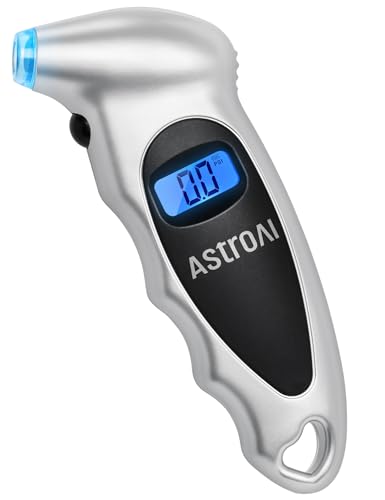
When you are ready to compare options, browse cordless tire inflators, add a digital tire pressure gauge, or see bike mini pumps.
Frequently Asked Questions
What pressure should I inflate my car tires to?
Use the figure on the vehicle’s tire placard, usually on the driver’s door jamb, or in the owner’s manual. Do not use the maximum pressure on the tire sidewall.
How long does it take to inflate a car tire?
It depends on the tire size, starting pressure and inflator. Small handheld models can take noticeably longer than larger ones, so plan for a few minutes per tire and for rests if the pump heats up.
Can a cordless inflator replace a garage compressor?
For top-ups, yes. For frequent heavy inflation, running air tools or seating tire beads, a compressor is more capable.
Will it work on a completely flat tire?
Possibly, but a flat tire is usually flat for a reason. Inspect it for damage first, and do not drive on a tire that will not hold pressure.
Do I need to check pressure with another gauge?
It is a good habit. Built-in gauges can drift, and a separate gauge lets you confirm the result.
Is it safe to leave an inflator in my car?
Short term, generally yes, but extreme heat or cold is hard on batteries. Check the documentation for storage temperature limits and avoid leaving it in direct sun for long periods.
Can I inflate my bike tires with a car-oriented inflator?
Possibly, with the right valve adapter, but check that the inflator can handle and display the lower or higher pressure your bike needs. Bike tires can be damaged by over-inflation quickly, so watch the gauge closely.
Why does the pressure change after I finish?
Small amounts of air escape when you disconnect the connector, and warm tires cool, which lowers pressure. Recheck with a gauge after disconnecting and correct as needed.
Conclusion
A cordless tire inflator is a small tool with a big effect on safety, fuel use and tire wear. Choose the type that fits your tires, look for auto-shutoff, a readable display, the right adapters and sensible heat protection, and be honest about battery limits. Use the vehicle placard for pressure, check tires cold, verify with a separate gauge, and never inflate a damaged tire. Keep the unit charged and stored where you can find it, and it will quietly pay for itself every time a tire needs air.
Disclosure: As an Amazon Associate, we earn from qualifying purchases. If you click an affiliate link and buy, we may earn a commission at no extra cost to you.
Related guides
More from Amazon
Programs that pair well with the guide above. Offers and eligibility are set by Amazon and may change.
A free business account with business pricing and bulk-buying tools for work, shop or home office.
Create a business accountFree shipping on eligible items, Prime Video and more. Eligible new members can start with a free trial.
Start a Prime free trialAudiobooks and podcasts to listen to on the go. Eligible new members can start with a free trial.
Try Audible freeAd-free music streaming. Eligible new subscribers can start with a free trial.
Try Music Unlimited freeAs an Amazon Associate we earn from qualifying purchases.
Write Your Review
No reviews yet. Be the first to share your experience!