
Our Top Picks


What's inside
- What is in this guide
- What a cordless oscillating tool actually does
- Main types and how they differ
- Features that matter most
- Blades and accessories by job
- Comparison table: choosing by situation
- Using one in a woodworking shop
- Safety notes
- Buyer checklist
- Mistakes to avoid
- Frequently asked questions
- Bottom line
As an Amazon Associate I earn from qualifying purchases. This post may contain affiliate links at no extra cost to you.
The short answer: the best cordless oscillating tool is the one whose battery platform you already own, whose blade-change system suits how often you swap accessories, and whose vibration and weight you can tolerate for the length of your typical job. For most woodworkers and renovators, that means a mid-range model with a tool-free blade release, variable speed and a work light, bought as a bare tool if you already have compatible batteries. Light-duty home users can choose a compact model; people cutting trim, nails and old caulk all day should prioritise comfort and an accessory ecosystem over a headline number on the box.
This guide does not rank specific products. Models, kits and prices change often, and a ranked list would date quickly. Instead it explains the tool types, the features that matter, how to match accessories to jobs, and the mistakes that lead to disappointment. Use it to shortlist, then check current specifications and the manufacturer’s instructions on each listing.
What is in this guide
- What a cordless oscillating tool actually does
- Main types and how they differ
- Features that matter most
- Blades and accessories by job
- Comparison table: choosing by situation
- Using one in a woodworking shop
- Safety notes
- Buyer checklist
- Mistakes to avoid
- FAQ
- Bottom line
What a cordless oscillating tool actually does
An oscillating tool moves its accessory in a very short side-to-side arc many thousands of times a minute. Instead of spinning like a saw or drill, the blade shimmies. That tiny motion is why it can cut into a confined space without throwing the tool around, and why it is so good at jobs that other tools cannot reach: plunging into a wall, trimming a door jamb so a floor can slide under it, or cutting a nail that is hiding behind a piece of molding.
The cordless version trades the endless runtime of a mains cord for freedom of movement. When you are kneeling in a hallway or reaching into a cabinet carcass, a trailing cable is a nuisance and sometimes a hazard. A battery model lets you pick it up, make a quick cut, and put it down again. The compromise is that sustained, heavy sanding or cutting will drain the pack faster than light trimming, so the way you plan to use it should drive the purchase.
Main types and how they differ
Compact and light-duty models
Compact units are built around smaller batteries and lighter motors. They suit occasional users, apartment dwellers and anyone whose jobs are limited to trimming a little trim, scraping a bit of sealant or slicing a few fasteners. They are easy on the wrist and usually inexpensive, but they can bog down when you press hard into hardwood or run a thick blade for long stretches. If you rarely use one, a compact model may be all you ever need.
Full-size and heavy-duty models
Larger tools usually pair a stronger motor with a bigger battery and a sturdier head. They are aimed at contractors, remodelers and serious home workshops that use the tool for long sessions: undercutting jambs across an entire floor, cutting out old window trim or removing grout. They tend to weigh more, so check how the weight sits in your hand. A powerful tool that tires you out after ten minutes is not an upgrade.
Kit or bare tool
Kits bundle the tool with a battery, charger and often a starter set of blades. A bare tool strips all that away. If you already own a battery platform, the bare tool is almost always the better value because you avoid paying again for a charger and pack you do not need. If you are starting from nothing, a kit is the simplest route, but check that the included battery size is appropriate for the work you plan to do.
Features that matter most
Blade-change system
This is the feature that separates a pleasant tool from a frustrating one. Some designs use a lever or a quick-release mechanism so you can swap accessories in seconds without a wrench. Others rely on a bolt and a small hex key. If you will change from a cutting blade to a sanding pad and back several times in a job, a tool-free system pays for itself in saved time. Equally important is the mounting pattern: some tools accept a wide range of accessories from many makers, while others favour their own proprietary fittings. Confirm what the listing says about compatibility before you assume a drawer full of blades will fit.
Variable speed
Variable speed matters more than most beginners expect. Soft materials such as plastic, caulk and thin trim can melt or tear at high speed, while hard metals and dense wood often like more. A trigger or dial that lets you start slowly also gives you control when you are beginning a plunge cut, where the blade can skate if it starts too aggressively.
Vibration and ergonomics
Because the tool shakes by design, hand fatigue is a real consideration. Look at the grip shape, any rubberised overmold, and whether the manufacturer mentions anti-vibration features. Reviews that describe how the tool feels after extended use are more useful than a spec sheet. If you work with your hand overhead or at awkward angles, a lighter body and a balanced battery will matter more than raw power.
Battery platform and runtime
Most buyers should start with the batteries they already own. Moving into a new platform means buying a new charger and packs, which can easily cost more than the tool itself. If you do need to choose a platform, think about the rest of the tools you want over the next few years: drills, saws, lights and so on. Runtime depends on battery capacity, the load you place on the tool and the accessory you choose, so check what the listing says and plan to keep a spare charged pack for longer jobs.
Blades and accessories by job
The tool is only as good as the accessory attached to it. Spending a little more on good blades and a few well-chosen extras usually improves results more than upgrading the tool itself. The groupings below describe general types; check each product description for the materials it is rated to cut.
Wood and trim work
Wood-cutting blades are generally designed with a tooth pattern that clears sawdust while cutting. A flush-cut or plunge blade is the classic choice for trimming the bottom of a door casing so flooring can tuck beneath it. A narrow blade suits tight cuts, while a wide blade helps keep a straight line over a longer cut. If you will be working near nails, look for a bi-metal style blade that is described as suitable for cutting wood with embedded fasteners.
Metal and fasteners
For cutting nails, screws and soft metals, you want a blade explicitly labelled for metal. Using a wood blade on a nail will dull it quickly. Metal cutting generates heat and sparks, so take it slowly and let the blade do the work instead of pushing hard.
Scraping, grout and sealant
Scraper blades remove old caulk, adhesive and paint from flat surfaces, while carbide or diamond-style grout blades are intended for cleaning out tile joints. These accessories wear more quickly than wood blades, so they are good candidates for buying in multipacks.
Accessory kits
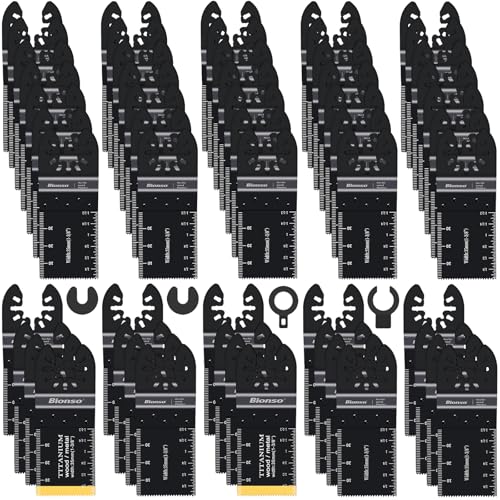
A variety set is an easy way to start, but check that the mounting style matches your tool. A bundle with dozens of pieces looks like a bargain, yet most people use only a few shapes repeatedly. If you can, buy a small starter set and then replace the favorites individually. You can browse oscillating tool blade sets and compare them against the mounting style your tool uses.
Comparison table: choosing by situation
This table matches common situations to the type of tool and feature priorities that tend to fit. It is a starting framework, not a ranking.
| Your situation | Tool type to consider | Features to prioritise | What to watch for |
|---|---|---|---|
| Occasional home repairs | Compact bare tool or small kit | Light weight, simple blade change, modest price | May struggle with long cuts in hardwood |
| Already own a battery platform | Bare tool on that platform | Compatible battery, tool-free blade release | Confirm the battery is actually compatible with the model |
| Flooring and trim installation | Full-size model | Strong plunge-cut control, variable speed, comfortable grip | Weight and vibration over long sessions |
| Cabinet and furniture work | Mid-range model | Fine speed control, good sanding accessories, LED | Dust control and pad quality |
| Demolition and remodeling | Heavy-duty model | Durable head, robust blade clamp, spare batteries | Blades wear quickly on nails and tile |
| Starting from scratch | Kit with battery and charger | Battery platform with a wide tool range | Included battery may be small for long jobs |
Using one in a woodworking shop
In a woodworking context, an oscillating tool earns its place in the corners that other machines leave behind. It can trim a proud dowel flush with a surface, clean up a tenon cheek that is slightly tight, or slice off a protruding biscuit. Used with a depth-limited approach, it can also clear the waste from a stopped dado or hinge mortise where a chisel might be slow.
For these tasks, speed control and a steady grip are everything. Start at a lower speed, lightly mark the line you want to follow, and let the blade establish a groove before you push forward. A strip of masking tape on the surface can reduce tear-out on veneered panels, and a scrap block clamped beside the cut can act as a guide for a straight flush trim.
Do not expect it to deliver the accuracy of a dedicated bench tool. The blade has some flex, the cut surface is rarely glass-smooth, and long straight cuts tend to wander. Treat it as a way to get 90 percent of the way there, and finish with a chisel, plane or sanding block when appearance counts.
Safety notes
- Read the manual first. Instructions differ between models, including how to mount blades and how to remove the battery. Always check current instructions for your specific tool.
- Remove the battery before changing accessories. An accidental trigger pull while your fingers are near the blade can cause a serious cut.
- Wear eye and hearing protection. Fine debris and persistent vibration noise are both part of the job.
- Use a dust mask or respirator. Sanding and cutting old paint, treated lumber or certain composite materials can release hazardous particles. Older paint may contain lead and certain building materials may contain asbestos, so if you suspect either, stop and seek professional guidance before disturbing them.
- Check behind the surface. When plunge cutting into a wall or floor, wires, pipes and fasteners may be hidden. Use a suitable detector and shut off power at the breaker if you are working near electrical lines.
- Handle hot blades with care. Metal-cutting accessories get hot and can burn bare skin after use.
- Treat batteries properly. Use only the charger intended for the pack, avoid charging damaged batteries and store them away from heat and flammable materials.
Buyer checklist
- Do you already own batteries and a charger that fit this tool, or will you need a full kit?
- Is the blade release tool-free, and does the listing name the accessory mounting style it accepts?
- Does the tool offer variable speed that you can adjust smoothly?
- How heavy is it with a battery attached, and does the grip suit your hand size?
- Does the listing mention vibration reduction, and do reviewers comment on comfort over time?
- Is there a work light, and is it bright enough for dark corners?
- Can you connect a dust extractor, and are suitable sanding accessories available?
- Does the package include a carrying case and starter accessories, or only the bare tool?
- What does the warranty cover, and for how long? Check the current terms.
- Are replacement blades easy to find, and do they come in single and multi packs?
Mistakes to avoid
Buying on blade count
A set advertising a huge number of pieces can be tempting, but the quality of a few suitable blades is worth more than a drawer of ones that do not fit. Many sets include shapes you will never use.
Ignoring battery compatibility
Two batteries from the same maker can look identical and still be incompatible with certain tools. Verify the platform and voltage class listed in the product details before you click buy.
Pressing too hard
The tool cuts through small, rapid movements, so leaning on it slows the cut, heats the blade and wears out accessories. Let it work and move it gently along the line.
Skipping dust protection
Because the tool is small, it is easy to treat it as a minor device and skip the mask. Fine dust does not care about the size of the tool, so protect your lungs every time.
Frequently asked questions
1. What is a cordless oscillating tool used for?
It is used for cutting, scraping and sanding in tight places. Typical jobs include trimming door casings, cutting nails, removing old grout or caulk and sanding in corners.
2. Is a cordless model strong enough for professional work?
Many full-size battery models are designed with professional use in mind, though runtime depends on the battery and the load. Keep spare packs charged for long sessions and check the manufacturer’s stated intended use.
3. Will blades from one brand fit another brand’s tool?
Sometimes, but not always. Some mounting systems are widely shared and others are proprietary. Check the compatibility details on the accessory listing and in your tool manual.
4. How do I choose between brushless and brushed?
Brushless designs are generally promoted for better efficiency and longer life, while brushed models can cost less. If you use the tool heavily, brushless may be worth the premium. For occasional use, either can be fine.
5. Can I use an oscillating tool to cut metal pipes?
Some blades are made for cutting soft metal and pipe, but you must confirm the material rating and know what is inside the pipe. Never cut a pipe that could be live, pressurised or carrying gas or electricity.
6. How long do blades last?
It depends on the material, speed and pressure. Blades used on nails, tile or abrasive material wear fastest. Replace a blade as soon as cutting slows or smells of burning.
7. Is it better to buy a kit or a bare tool?
If you already own compatible batteries, a bare tool is usually the better value. If you are starting a new platform, a kit saves the effort of buying parts separately.
8. Can it replace a sander?
Not for large surfaces. The small pad is ideal for corners and detail work, but a random-orbit sander is faster and more even on flat areas.
Bottom line
Choose the platform first, the blade system second and the extras third. A comfortable, well-balanced tool with a tool-free release and good accessories will be used far more often than a powerful one that is awkward to hold. Remember to wear protection, check what is behind your cut and confirm current specifications and instructions before you order. When you are ready to compare options, browse cordless oscillating tools and, for finishing work, a set of oscillating sanding pads and a pair of safety glasses.
Disclosure: As an Amazon Associate, we earn from qualifying purchases. Links marked as sponsored may earn us a commission at no extra cost to you.
Related guides
More from Amazon
Programs that pair well with the guide above. Offers and eligibility are set by Amazon and may change.
A free business account with business pricing and bulk-buying tools for work, shop or home office.
Create a business accountFree shipping on eligible items, Prime Video and more. Eligible new members can start with a free trial.
Start a Prime free trialAudiobooks and podcasts to listen to on the go. Eligible new members can start with a free trial.
Try Audible freeAd-free music streaming. Eligible new subscribers can start with a free trial.
Try Music Unlimited freeAs an Amazon Associate we earn from qualifying purchases.
Write Your Review
No reviews yet. Be the first to share your experience!