
Our Top Picks
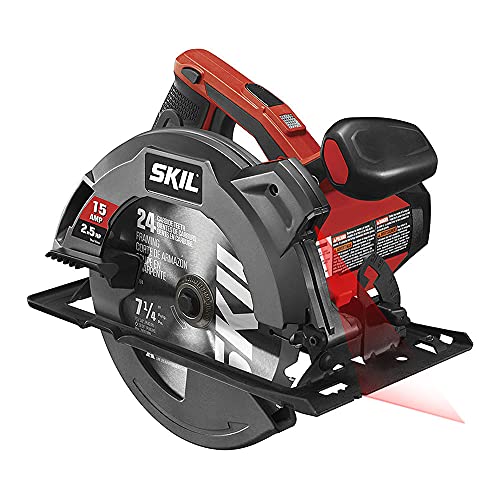 SKIL 15 Amp 7-1/4 Inch Circular Saw with7-1/4 Inch (Pack of 1)14.2 x 9.8 x 8.5 inches8.7 poundsCheck on Amazon

What's inside
- Contents
- Types of cordless circular saws
- Blade size and cutting depth
- Motor and battery: where performance comes from
- Features that matter in daily use
- Weight, balance and fit
- Blades, accuracy and cut quality
- Safety, kickback and care
- Common buying and using mistakes
- Who should choose what
- Pre-purchase checklist
- Frequently asked questions
- Conclusion
As an Amazon Associate I earn from qualifying purchases. This post may contain affiliate links at no extra cost to you.
Short answer: the best cordless circular saw is the one whose blade size, motor type and battery platform match the work you actually do. For most homeowners and weekend builders, a mid-size saw with a brushless motor, a mid-capacity battery and a decent shoe is the sweet spot. Pros who frame, sheath and cut thick lumber all day should look at larger blades and higher-voltage systems. Anyone who mostly trims plywood, shelving and decking will be happier with a lighter compact saw. This guide explains how to decide, what to ignore, and how to use the saw safely.
Contents
- Types of cordless circular saws
- Blade size and cutting depth
- Motor and battery: where performance comes from
- Features that matter in daily use
- Weight, balance and fit
- Blades, accuracy and cut quality
- Safety, kickback and care
- Common buying and using mistakes
- Who should choose what
- Pre-purchase checklist
- Frequently asked questions
- Conclusion
Types of cordless circular saws
Cordless circular saws are not one product. They split into a handful of families, and picking the right family matters more than comparing small differences inside it. Understanding the families first stops you from buying a saw that is either too weak for your lumber or too heavy to enjoy using.
Compact saws use a smaller blade and a lighter motor. They are made for trimming sheet goods, cutting thin boards, shaping shelving and making quick cuts on a ladder or scaffold. Because they are light, they reduce arm fatigue and are easy to control one-handed in a pinch, though you should always prefer two hands on a saw. Their limit is depth: they will not cut through thick or doubled-up lumber in a single pass.
Mid-size (standard) saws are the all-rounders. They accept the blade size most people picture when they think of a circular saw, cut common dimensional lumber in one pass at a square angle, and are supported by the widest range of replacement blades. If you are buying your first cordless circular saw for general home and garden projects, this is where to begin.
Large-blade saws take a bigger blade for deeper cuts through thick beams, posts and stacked material. They need more battery power, they weigh more, and they are more demanding to control. They suit builders and serious deck or timber-frame work rather than casual shelf building.
Worm-drive and hypoid-style saws place the motor behind the blade, giving a long, narrow body, high torque and a distinctive feel. Many builders like them for sustained heavy cutting. They tend to be heavier and more expensive, and the blade sits on the opposite side compared with many standard saws, which affects line-of-sight.
| Type | Best for | Strengths | Trade-offs |
|---|---|---|---|
| Compact | Trim, plywood, shelving, light DIY | Light, easy to handle, small battery acceptable | Limited depth; slower in thick or wet lumber |
| Mid-size standard | General home projects, decking, framing basics | Good balance of depth, power and weight; most blade choice | May struggle with continuous heavy cutting on small batteries |
| Large-blade | Beams, posts, thick stock, heavy framing | Deep cuts, strong power | Heavy, needs large batteries, harder to control |
| Worm-drive / hypoid | Daily professional framing and sheathing | High torque, durable feel | Heavier, higher cost, different blade side |
Blade size and cutting depth
Blade diameter sets the maximum depth of cut, and depth is the most practical number on any saw. When a manufacturer quotes depth, it is almost always at a square 90 degree angle; once you tilt the base for a bevel, the usable depth drops noticeably. Before you buy, think about the thickest material you cut and the angles you cut it at.
Check also the blade size convention. Some saws describe the blade in inches and others in millimetres, and the arbor hole shape and size must match your replacement blades. Confirm the arbor size before ordering spare blades online, because blades that look right but have the wrong bore will not fit.
Motor and battery: where performance comes from
Brushed versus brushless motors
Brushless motors use electronics rather than carbon brushes to switch current. In practical terms that usually means better efficiency, less heat, longer runtime per charge and fewer wearing parts. Brushed motors are cheaper and perfectly able to cut lumber, but they waste more energy as heat. If your budget allows, brushless is a sensible choice for a circular saw because the tool is often run under sustained load.
Voltage, amp-hours and what they really mean
Voltage relates to the power the system can deliver; amp-hours relate to how long the battery can supply it. A higher-capacity battery gives longer cutting time but adds weight on the tool. Because a circular saw draws heavy current on each cut, a very small battery can cause the saw to slow or shut down on thick material, even if it is fully charged. Use a battery sized for the saw rather than the smallest one in the range.
The key buying decision here is the battery platform. If you already own cordless tools from one system, a bare-tool saw that shares your existing batteries is nearly always better value than starting a new platform. Look for a saw sold as a bare tool, and buy a battery and charger only if you need them.
Battery handling and charging
- Charge only with the charger designed for that battery system.
- Charge on a hard, non-flammable surface away from clutter, and do not leave charging batteries unattended for long periods.
- Let a hot battery cool before charging, and let a cold battery warm to room temperature.
- Never use a battery that is swollen, cracked, leaking or has taken a hard impact.
- Store batteries away from direct heat, and away from loose metal objects that could bridge the terminals.
| Motor type | Typical behaviour | Suits | Consider |
|---|---|---|---|
| Brushed | Simple, more heat, more wear parts | Occasional light cutting | Lower upfront cost, shorter runtime per charge |
| Brushless | Cooler, more efficient, fewer wear parts | Frequent or sustained cutting | Higher cost, usually worth it for regular use |
Features that matter in daily use
Spec sheets list dozens of features. Only a few change how the saw feels on a real job. These are the ones worth paying attention to.
- Electric brake. A brake stops the blade quickly after you release the trigger. That shortens the time a spinning blade is exposed and reduces the temptation to set the saw down while it is still coasting. It is a genuine safety and productivity benefit.
- Bevel adjustment. Look for a clear scale, a lever that locks firmly, and a shoe that does not flex. A sloppy bevel mechanism produces cuts that are never quite the angle you set.
- Depth adjustment. A quick, easy-to-reach lever lets you set the blade to protrude only slightly below the material, which is the safer and cleaner way to cut.
- Shoe (base plate) material and size. A flat, stiff, reasonably wide shoe tracks better than a thin one. Magnesium and aluminium shoes are common; a pressed steel shoe can still be fine if it is flat and rigid.
- Guard action. The lower guard should snap back smoothly and fully every time. A guard that sticks is a hazard and should be repaired before using the saw.
- Lock-off switch and trigger feel. A two-step trigger (lock plus pull) prevents accidental starts, which matters even more with a cordless tool that has no cable to remind you it is live.
Weight, balance and fit
A circular saw is held and pushed through resistance, so weight and balance matter as much as power. Weigh the saw with the battery attached, since the battery is a large share of the total, and check that it rests level in your hand without tipping forward. Make sure your finger reaches the trigger comfortably while wearing work gloves. A lighter saw suits ladders and overhead cuts; a heavier one feels planted on long rips but tires you faster.
Weigh the saw with the battery attached, not as a bare tool, because the battery is a large share of the total. Check how the weight sits: ideally the saw rests in your hand with the front handle and rear grip at a natural angle and the body does not tip forward or back when you hold it level.
Blades, accuracy and cut quality
The blade often matters more than the saw. A new saw with a dull or wrong-purpose blade will burn, tear and bog down. Match the blade to the material.
- Fewer teeth remove material quickly and suit rough, fast cuts in framing lumber.
- More teeth give a smoother finish and suit plywood, laminates and trim, though they cut more slowly.
- Thin kerf blades reduce load on the battery and are sensible for cordless saws, although they can flex if the saw is pushed hard.
- Carbide-tipped blades stay sharp far longer than plain steel and are the standard choice for most work.
To get an accurate cut, mark the line clearly, decide whether the blade kerf falls on the waste side, and align the saw’s reference notch with your line rather than guessing. Make a shallow test on scrap if the cut is critical. For long, straight cuts in sheet goods, clamp a straight edge to the work and run the shoe against it. Remember to offset the guide by the distance between the blade and the shoe edge, which you can measure with a tape.
Safety, kickback and care
A circular saw is one of the more hazardous hand tools in the garage, and a cordless model removes the cable but not the danger. The most important hazard is kickback, which happens when the blade binds in the cut and the saw is thrown back toward you. It is usually caused by pinching, twisting, cutting with a dull blade or letting the offcut drop.
Personal protective equipment
- Safety glasses or goggles on every cut.
- Hearing protection, because saws are loud, particularly during long sessions.
- A dust mask or respirator suited to the material, especially for treated timber and engineered boards.
- Close-fitting clothing, tied-back hair, no loose cuffs or jewellery.
- Sturdy footwear. Gloves are a mixed blessing near rotating blades, so use close-fitting ones only if you have a reason to.
Safe cutting habits
- Remove the battery before changing blades or making adjustments.
- Secure the workpiece with clamps so that it cannot shift or pinch.
- Support the work so that the offcut falls free without closing the kerf on the blade.
- Set the blade depth so it protrudes about a tooth’s height or slightly more below the material.
- Let the blade reach full speed before it enters the cut.
- Keep both hands on the saw, stand slightly to one side of the cutting line and never reach under the work.
- Keep the guard operating freely. Never wedge it open.
- Wait for the blade to stop completely before setting the saw down, then remove the battery for storage.
Common buying and using mistakes
- Ignoring the battery platform. A cheap saw that needs a new battery and charger may cost more than a pricier bare tool that uses packs you already own.
- Choosing too small a battery. A tiny pack can trigger overload protection mid-cut, which is annoying and can pinch the blade.
- Forcing the cut. Let the blade work at its pace. Pushing hard overheats the motor and the battery.
- Skipping clamps. Holding a board with your foot or hand is how accidents happen.
Who should choose what
| You are… | Consider | Why |
|---|---|---|
| A first-time homeowner | Mid-size saw, brushless if budget allows, on a platform you may extend | Handles shelves, fences and basic repairs without excess weight |
| A weekend builder of decks and sheds | Mid-size or large-blade saw with a high-capacity battery and a spare | Depth and runtime for lumber, with room for sustained work |
| A furniture or cabinet maker | Compact or track-style saw with a fine blade | Clean cuts in sheet goods matter more than depth |
| A working carpenter | Large-blade or worm-drive-style saw on a high-voltage system | Durability and power for daily use |
| Someone with limited hand strength | Light compact saw with a comfortable grip and electric brake | Reduces strain and improves control |
To compare current options, browse cordless circular saws and check each listing for blade size, included battery and charger, and stated cutting depth.
Pre-purchase checklist
- List the thickest material you will cut and confirm the saw’s stated depth at 90 and 45 degrees.
- Check which battery platform you already own and prefer a bare tool that shares it.
- Confirm whether the kit includes a battery, a charger and a case.
- Choose brushless if the budget stretches that far.
- Verify the blade diameter and arbor size before ordering spare blades; a spare carbide-tipped blade is a worthwhile purchase.
- Look for an electric brake and a lock-off switch.
- Hold the saw with the battery attached and check the weight and balance.
- Check that the guard moves smoothly and the bevel locks securely.
- Read the warranty terms and the manufacturer’s safety manual.
- Buy safety glasses, hearing protection, a dust mask and sturdy clamps alongside the saw.
Frequently asked questions
Are cordless circular saws as powerful as corded ones?
Modern cordless saws can handle most everyday cutting, particularly with brushless motors and good batteries. Corded saws still have an advantage for very long, continuous cutting sessions because they do not run out of charge, and they are often lighter for the same power. For typical homeowner and weekend use, cordless is more than adequate.
Which blade size should I choose?
Choose according to the thickest material you cut. A smaller blade is lighter and easier on the battery; a larger blade gives more depth. Mid-size blades are the most versatile and offer the widest choice of replacements.
Is a brushless motor worth the extra cost?
For a tool that works under sustained load, brushless is usually worth it because it tends to run cooler, use battery power more efficiently and need less motor maintenance. If you use a saw only occasionally for light cuts, a brushed model can be perfectly adequate.
How many batteries do I need?
One is enough for short projects, but two let you keep cutting while one charges. If you cut thick or damp timber for long stretches, a spare battery is almost essential.
Can I cut metal or masonry with a cordless circular saw?
Only with a blade made for that material and only if the manufacturer allows it. Never fit a wood blade to cut metal or masonry; a different tool is usually the better choice.
Why does my saw burn the wood?
Usually a dull or resin-coated blade, too many teeth for a deep cut, feeding too slowly, or a misaligned guide. Clean or replace the blade and check your setup.
How do I avoid kickback?
Use a sharp blade, support the work so the cut does not close, set the correct depth, avoid twisting the saw in the cut and keep a firm two-handed grip. Never cut freehand through a board you are holding in the air.
How should I store the battery between projects?
Keep it in a cool, dry place away from sunlight and loose metal, and follow your manual on storage charge level.
Conclusion
The best cordless circular saw is a matter of fit. Decide on blade size by the thickest material you cut, prioritise a brushless motor and a battery platform you will keep, and judge weight and balance with the battery attached. Add a quality blade, clamps and proper protective gear, and you will get better results than a more expensive saw used carelessly. Treat the saw with respect, keep the guard working and the blade sharp, and it will be a reliable part of your workshop for years.
Disclosure: As an Amazon Associate, loapowertools.com earns from qualifying purchases made through links on this page, at no extra cost to you.
Related guides
More from Amazon
Programs that pair well with the guide above. Offers and eligibility are set by Amazon and may change.
A free business account with business pricing and bulk-buying tools for work, shop or home office.
Create a business accountFree shipping on eligible items, Prime Video and more. Eligible new members can start with a free trial.
Start a Prime free trialAudiobooks and podcasts to listen to on the go. Eligible new members can start with a free trial.
Try Audible freeAd-free music streaming. Eligible new subscribers can start with a free trial.
Try Music Unlimited freeAs an Amazon Associate we earn from qualifying purchases.

Write Your Review
No reviews yet. Be the first to share your experience!