What's inside
As an Amazon Associate I earn from qualifying purchases. This post may contain affiliate links at no extra cost to you.
Start with the jobs, not the battery
A cordless tool kit works best when its tools share batteries, chargers and a realistic workload. Before choosing a brand, list the jobs you expect to do over the next year: drilling pilot holes, driving screws, cutting framing lumber, trimming branches, or working away from an outlet. Then separate frequent tasks from occasional ones. That distinction matters: a battery platform built around weekend repairs may be a poor fit for daily construction work, even if its starter kit looks like a bargain.
Write down the tools you need now and the two or three you might add later. Check that the manufacturer sells those tools as bare tools—without a battery—and that the compatible batteries are easy to find. A low-priced drill kit is less attractive if the brand has few useful add-on tools or replacement batteries are scarce locally.
Choose a battery platform
Compare the size of each brand’s cordless range, the price and availability of batteries, charger options, warranty terms, and the tools you actually plan to use. A larger ecosystem is not automatically better. If you need a drill, impact driver and work light, a smaller range may cover you. If you expect to add a mower, saw and outdoor tools, check those categories before committing.
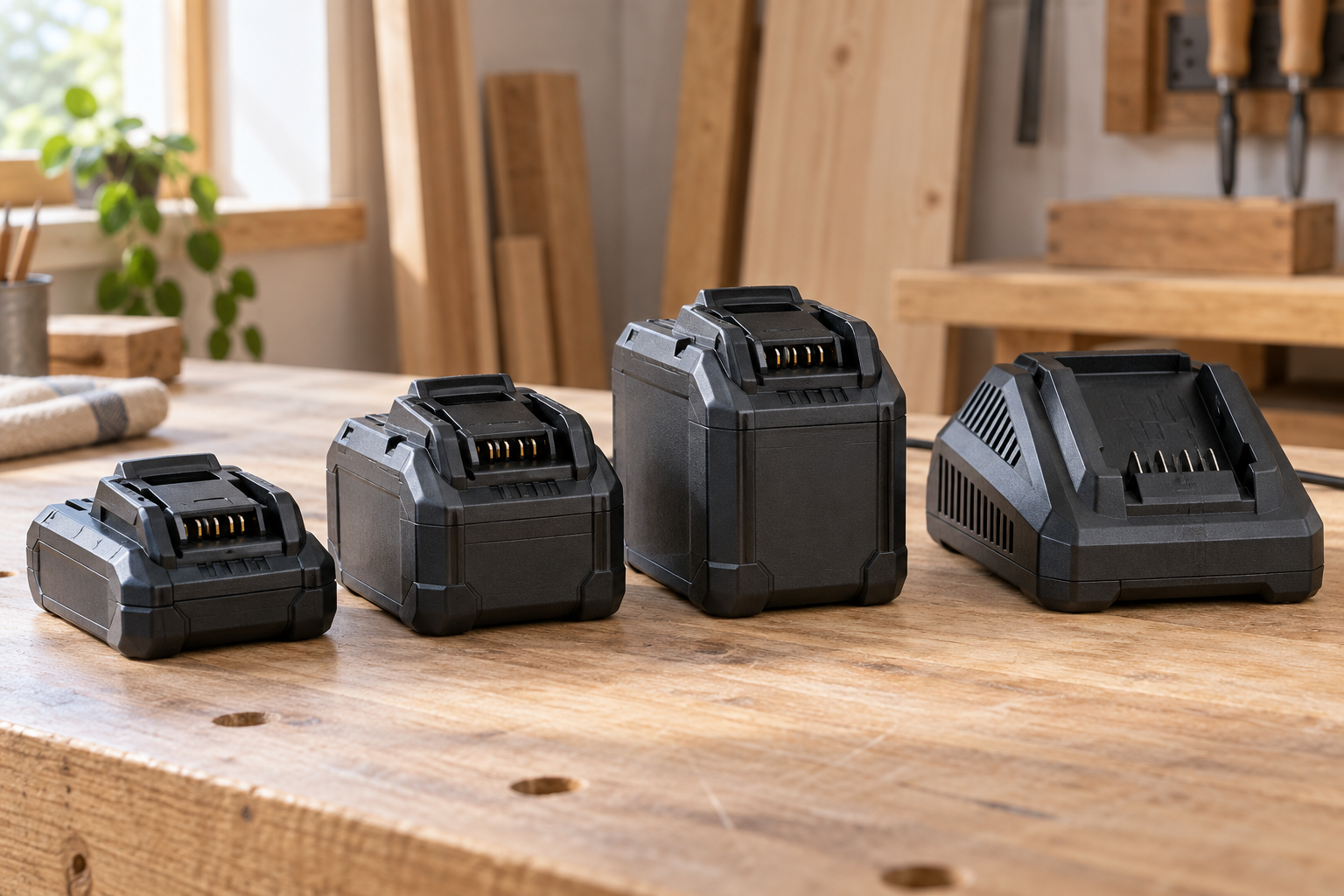
Voltage alone does not tell you how long a tool will run or how hard it will work. Battery capacity, measured in amp-hours (Ah), affects runtime; tool design and the task affect power draw. A 2 Ah battery is lighter and often suits drills or overhead work. A 5 Ah battery generally runs longer, but adds weight and can make a compact tool tiring to hold. Batteries from the same platform may fit several tools, but check the manufacturer’s compatibility chart—some high-demand tools require particular battery types or sizes.
Compare starter kits by what is included
Starter kits can make the first purchase cheaper, but compare the total package rather than the advertised tool count. Look for battery capacity, charger speed, included cases and whether the tools match your work. A kit with several small batteries may be more useful than one with a single large battery if you need to keep working while another pack charges.
| Kit detail | Why it matters | Who benefits |
|---|---|---|
| One compact battery | Lightweight, but limited runtime on saws and other demanding tools | People doing light repairs or mostly drilling |
| Two mid-capacity batteries | One can work while the other charges; easier to rotate packs | Most home users building a first kit |
| Large-capacity batteries | Longer runtime, with more weight, bulk and expense | Frequent cutting or extended work away from power |
| Fast charger | Reduces waiting, but may cost more and take more bench space | Users who run tools most of the day |
For a first purchase, compare cordless drill kits with two batteries. Check the battery capacity and charger included; “two batteries” does not say whether they are compact packs or larger ones.
Buy tools in stages
Start with a drill/driver and, if your work involves many screws, an impact driver. They use different mechanisms: the drill gives you more control for drilling and delicate fastening, while the impact driver is better suited to repetitive driving and larger fasteners. Neither replaces the other in every job. Use the drill’s clutch on small screws to reduce the chance of stripping a head or damaging the material.
Once you know what work is recurring, add a saw or other specialist tool. If you cut sheet goods only a few times a year, borrowing or renting a saw may cost less than buying one and a larger battery. For regular cuts, compare the tool’s weight, blade size, dust control and compatible battery requirements—not just its bare-tool price. Search for a bare cordless impact driver once you have confirmed it uses your chosen batteries.
Buying bare tools is usually the economical move after you own two compatible batteries and a charger. It is not always cheaper at the start: compare the bare-tool price plus batteries and charger against a bundle. Bundles can be a better deal, especially during sales, but avoid buying a tool you do not need just to justify a larger kit.
Size batteries and chargers to your workload
For light household work, two compact or mid-capacity packs are often enough. One can power the tool while the other charges, and the smaller pack keeps a drill manageable. If you use a circular saw for repeated cuts or run outdoor equipment for long stretches, budget for at least one larger pack. A single large battery may still leave you waiting if it runs flat before a job is done.
Charging time varies by charger and battery. Check the manufacturer’s charge-time figures for the exact pack you plan to buy; a fast charger may save a long pause, but it cannot make a depleted battery instant. Keep batteries indoors in a dry place, away from hot vehicles and freezing conditions, and use the charger specified for the platform. Stop using a pack that is cracked, swollen, unusually hot, or has damaged contacts. Do not open it or try to repair its cells.
Avoid compatibility mistakes
Third-party adapters and batteries can look like an easy shortcut, but they may lack the platform’s normal safety checks, protection or warranty coverage. A pack that physically fits is not proof that it is approved for the tool. Use batteries and chargers the tool maker lists as compatible, particularly on high-current equipment such as saws.
Do not plan a kit around a discontinued platform just because its tools are on clearance. Check that replacement batteries are still sold, that common tools remain available, and that the warranty applies where you live. A sale price is only a saving if you can keep the tools running.
The most practical kit is usually modest: a reliable drill/driver, two useful batteries, a charger, and only the extra tools your work justifies. Choose a platform with room to grow, but let actual jobs—not a catalog of possible purchases—set the pace.
Related guides
- Longest Lasting Lawn Mower Battery: AGM vs Lithium vs Flooded Lifespan and Cost per Season
- Duralast Gold Lawn Mower Battery Review: U1 Fit, CCA and When to Pay for AGM
- Greenworks Pro 80V 21-Inch Mower Review: Runtime Math, Push vs Self-Propelled and Yard Fit
- Bosch High Pressure Washer Gun Replacement: Fittings, Adapters and What Fits Your Model