What's inside
As an Amazon Associate I earn from qualifying purchases. This post may contain affiliate links at no extra cost to you.
Start With the Tool, Not the Promotion
A battery deal is only useful if it fits the tools you expect to use. Before comparing kits, list the jobs ahead: drilling pilot holes, driving deck screws, cutting trim, or running a saw away from an outlet. Then choose the tool type and battery platform that suit those jobs. A discounted bundle can be poor value if it ties you to a platform with no other tools you need.
Check the exact battery system, not just the brand name. Some manufacturers sell multiple voltage platforms, and batteries from one may not fit tools from another. Even within a platform, confirm compatibility in the product listing or manual before buying a bare tool or used battery.
Estimate How Many Batteries You Need
For occasional home repairs, one battery can be enough if you can pause to charge it. For a day of work, having two lets one run while the other charges. That matters most with tools that draw power steadily, such as circular saws, grinders, and leaf blowers. A drill used for a few holes at a time puts less pressure on your battery supply.
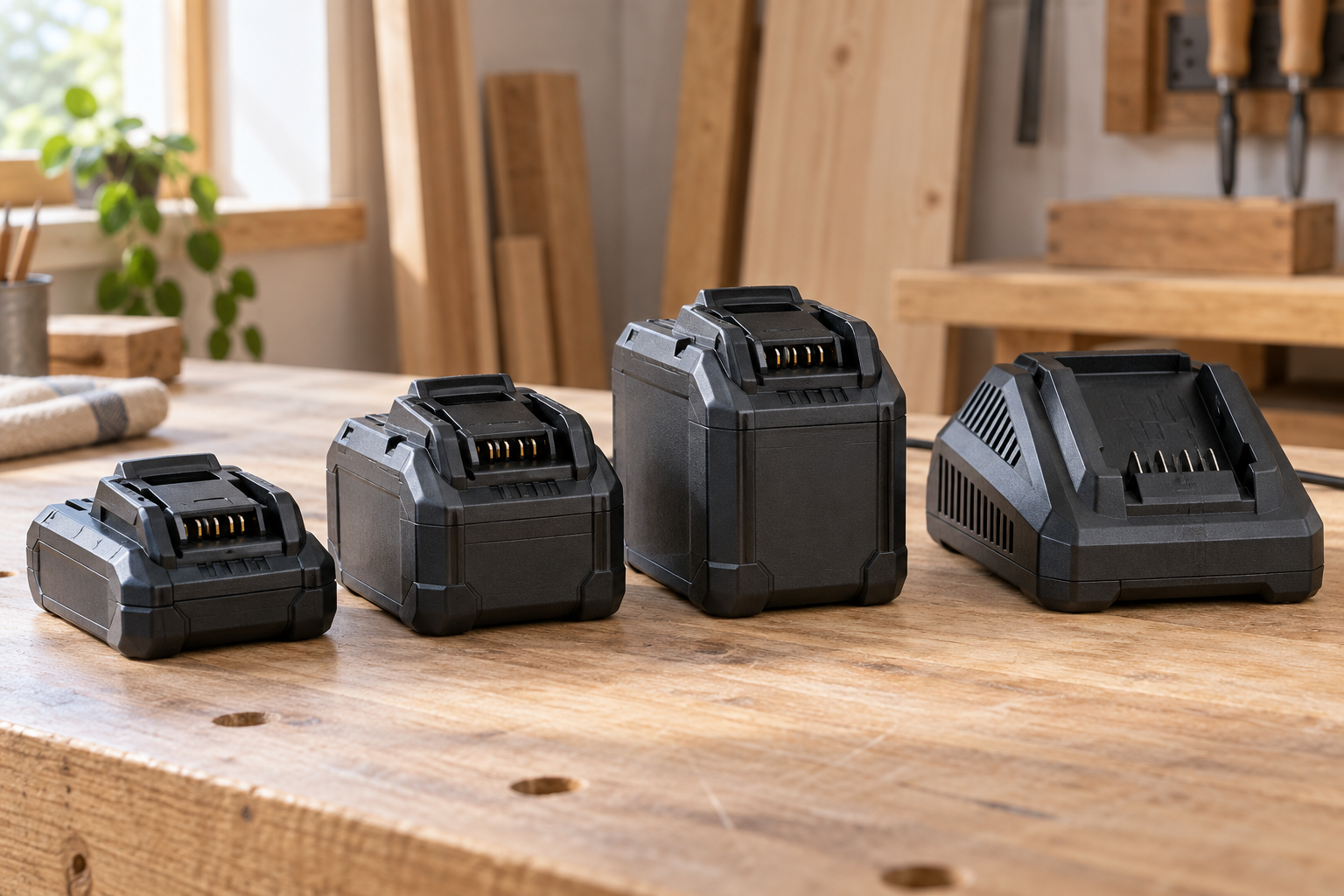
Amp-hours (Ah) indicate stored capacity, not guaranteed runtime. A 5 Ah battery holds more energy than a 2 Ah battery in the same voltage platform, but it also weighs more and may cost more. Higher capacity does not automatically make a tool more powerful; the battery’s design and the tool’s demands matter too. For overhead work, a smaller pack may be worth the shorter runtime because it reduces arm fatigue.
Think about charging as well as capacity. A charger included in a kit may take several hours to refill a large pack, while a faster charger can reduce downtime. Check the manufacturer’s stated charge times for the specific battery size; “fast charger” alone does not tell you how long a full charge will take.
Compare the Whole Kit
Put the parts and prices side by side. A kit price is not a bargain just because it includes two batteries: those packs may be small, and the charger may be slow. Compare the kit with the same tool bought bare plus the batteries and charger you actually need. Also check whether a case, blades, bits, or other accessories are included and whether you would use them.
| Purchase | Usually suits | Check before buying |
|---|---|---|
| Bare tool | Someone who already owns compatible batteries and a charger | Platform compatibility; whether the bare tool includes a case or accessories |
| Starter kit | A first tool on a platform | Battery capacity, charger charge time, and whether the tool is right for the job |
| Tool-and-battery bundle | Someone adding a needed tool and useful extra capacity | Whether the battery size and charger are worth more than the bundle premium |
| Two-tool combo kit | A buyer who needs both tools soon | Whether both tools match your work; combo tools can be less capable than dedicated versions |
For example, a two-tool kit with a drill and impact driver can be convenient for repeated drilling and screw driving: one tool holds a bit while the other drives fasteners. But if you rarely use an impact driver, a single drill kit plus a better-fitting battery may serve you better. Browse cordless drill-and-impact-driver combo kits only after checking what batteries and charger each listing includes.
Read Promotion Terms Carefully
Battery promotions often depend on timing, retailer, and qualifying product. A free battery may require buying a specific tool, while a discount may apply only at checkout or after a rebate submission. Confirm the end date, eligible items, submission deadline, and whether the battery is shipped with the order or claimed separately. Save the receipt and a screenshot of the terms until the promotion is fulfilled.
Calculate the effective price using only items you would otherwise buy. If a $200 kit includes a tool you need, a battery you can use, and an unwanted accessory, do not value that accessory at its shelf price. Likewise, do not count a “free” battery as a $150 saving if you would not buy that battery size at that price.
Avoid Common Battery Mismatches
Check battery weight and balance in the actual tool if possible. A large pack can make a compact drill awkward and tiring during long periods of overhead work. On the other hand, a small pack may trigger repeated pauses in a saw or blower. For steady, high-draw work, a high-capacity battery pack can be practical, provided the added weight and price make sense.
Do not assume that every battery labeled with the same voltage is interchangeable. Third-party or used packs can save money, but they may have uncertain capacity, condition, warranty coverage, or tool compatibility. A damaged case, swollen pack, unusual heat, or inconsistent charging is a reason to stop using a battery—not a problem to solve by trying another charger. Follow the manufacturer’s instructions for storage and disposal.
Choose a Platform for Future Tools
If you expect to buy more cordless tools, factor in the cost of each platform’s batteries, chargers, and bare tools. A platform with a modestly priced starter kit may be a better long-term choice if it offers the hand tools you actually use. If you only need one tool for an occasional job, however, paying extra to build an ecosystem may not pay off. A corded tool can also be the cheaper, simpler choice when the job is stationary and an outlet is nearby.
Before placing an order, verify the exact tool, battery quantity and capacity, charger type, platform, and promotion conditions on the retailer’s listing. Listings can show photos of accessories that are not included, and kit contents can vary by seller or region. That final check is often worth more than chasing a small additional discount.
Related guides
- Longest Lasting Lawn Mower Battery: AGM vs Lithium vs Flooded Lifespan and Cost per Season
- Duralast Gold Lawn Mower Battery Review: U1 Fit, CCA and When to Pay for AGM
- Greenworks Pro 80V 21-Inch Mower Review: Runtime Math, Push vs Self-Propelled and Yard Fit
- Bosch High Pressure Washer Gun Replacement: Fittings, Adapters and What Fits Your Model