
Our Top Picks



What's inside
- In this guide
- Why Choose a Jump Starter Over Jumper Cables
- Types of Jump Starters
- Matching a Unit to Your Engine
- Safety Features That Matter
- Extra Features, Build and Capacity
- How to Use a Jump Starter Safely
- Care, Charging and Storage
- Use Cases: Who Should Choose What
- Common Mistakes
- Buying Checklist
- FAQ
- Conclusion
As an Amazon Associate I earn from qualifying purchases. This post may contain affiliate links at no extra cost to you.
Short answer: the best jump starter is one that the manufacturer states is suitable for your engine type and size, with built-in safety protections and a battery you will remember to keep charged. A portable lithium unit lets you restart a dead battery without a second car, which is valuable on road trips, at trailheads and at remote campsites. Choose by engine compatibility and safety features first, and treat extras like USB ports and flashlights as bonuses.
In this guide
- Jump starter or jumper cables?
- Types of jump starters
- Matching a unit to your engine
- Safety features that matter
- Extra features, build and capacity
- How to use a jump starter safely
- Care, charging and storage
- Use cases: who should choose what
- Common mistakes
- Buying checklist
- FAQ
Why Choose a Jump Starter Over Jumper Cables
Jumper cables are cheap, simple and have no battery of their own to maintain. Their weakness is that they need a second vehicle with a healthy battery, and both vehicles must be parked close enough for the cables to reach. That can be awkward in a crowded car park, impossible on a narrow trail road, and unpleasant on a dark highway shoulder.
A portable jump starter is a self-contained battery pack with clamps. You can use it by yourself, in an empty lot or at a remote campsite, without asking anyone for help. The trade-off is that the unit itself has to be charged. A dead jump starter is as useless as a missing set of cables, so the habit of checking it every few months is part of owning one.
| Method | Needs another car? | Maintenance | Best for |
|---|---|---|---|
| Jumper cables | Yes | Almost none | City driving where help is nearby |
| Portable lithium jump starter | No | Recharge every few months | Road trips, camping, solo driving |
| Lead-acid jump pack | No | Regular charging, heavier | Garage or workshop use |
| Roadside assistance call | No, but waiting | Membership cost | A backup to the above |
Many drivers keep both a jump starter and a set of cables. They cover each other’s weaknesses, and cables cost little.
Types of Jump Starters
Compact lithium packs
These are the pocket- or glovebox-sized units most people picture. They use lithium-ion or similar chemistries and are light for the power they offer. They hold a charge for months and are the usual choice for passenger vehicles and travel.
Larger lithium or heavy-duty packs
Bigger units pack more capacity and are designed for larger engines, diesels and repeated attempts. They weigh more and cost more, and they suit trucks, work vehicles and anyone who regularly helps other drivers.
Lead-acid jump boxes
These are older style units, often with a handle and sometimes built-in compressors or lights. They are heavy, but they can deliver high current and are common in garages. They need to be kept charged more regularly than lithium units, so they are less ideal for a trunk that you rarely open.
| Type | Size and weight | Strength | Limitation | Good fit |
|---|---|---|---|---|
| Compact lithium | Small, light | Easy to store, holds charge | May not suit large engines | Cars, crossovers, travel |
| Heavy-duty lithium | Medium to large | More capacity, bigger engines | Higher cost, bulk | Trucks, diesels, work vehicles |
| Lead-acid box | Heavy | High current, often multi-function | Needs frequent recharging | Garage and shop |
Matching a Unit to Your Engine
This is the most important decision. A jump starter has to deliver enough current for long enough to turn your engine over, and engines differ a lot. Larger displacement engines and diesels need more.
Ignore the biggest number on the box
Many products advertise a peak amp figure in large type. Peak amps describe a momentary maximum, and manufacturers do not all measure it the same way. A bigger number on one product does not guarantee that it can start your engine better than a product with a lower number. A more useful guide is the maker’s statement of the engine sizes and fuel types it supports, such as gas engines up to a certain displacement or diesel engines up to another.
Gas versus diesel
Diesel engines usually require much more starting current, especially in cold weather. If you drive a diesel, look for a unit that explicitly says diesel is supported and that lists a diesel engine size. Do not assume that a unit that starts a gas engine of a given size will manage a diesel engine of the same size.
Cold weather
Cold both weakens your car’s battery and reduces the output of the jump starter’s battery. If you live where winters are severe, size up, keep the unit inside the cabin rather than the trunk on cold nights where practical, and make sure the unit’s operating temperature range suits your climate.
Practical sizing table
| Vehicle | What to look for |
|---|---|
| Compact or midsize car (gas) | A compact unit with compatibility stated for your engine size |
| SUV, minivan or pickup (gas) | A unit rated for larger gas engines, often a mid-size or heavy-duty pack |
| Diesel car or truck | A unit explicitly stating diesel support at your engine size |
| Motorcycle or ATV | A small unit, with clamps that suit small batteries and a compatibility note |
| RV, boat or tractor | A heavy-duty unit, confirmed for larger or multiple batteries |
If you are between two sizes, the larger one is the safer choice, as long as you can store it conveniently. It runs less hard on each start and has more reserve for cold mornings.
Safety Features That Matter
Car batteries can deliver very high current, and a mistake with clamps can cause sparks, damage to electronics or injury. Modern jump starters include protections that make mistakes much less likely. These are worth prioritizing over almost every other feature.
- Reverse polarity protection. Prevents current flowing if the clamps are connected to the wrong terminals. Many units warn you with an alarm or light.
- Short-circuit protection. Stops the output if the clamps touch each other or a metal surface.
- Overload and over-current protection. Guards the unit against excessive demand.
- Over-temperature protection. Shuts the unit down if the internal battery overheats, which matters after repeated tries.
- Spark-resistant clamps or a clear connection indicator. The unit should only energize the clamps when it senses a proper connection.
- Over-charge and over-discharge protection. Protects the internal battery and prolongs its life.
- Insulated clamps and a decent cable. Thin cables and flimsy clamps can heat up and give poor contact.
Protection features reduce risk, but they do not replace care. Always read the manual, keep the clamps away from each other, and keep your face and body away from the battery while connecting. A vehicle battery that is cracked, leaking or frozen should not be jumped. Replace it instead.
Extra Features, Build and Capacity
Power bank function
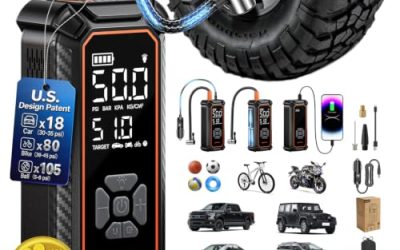
Many jump starters double as power banks with USB ports for charging phones. This is genuinely helpful on a trip. Just remember that every bit you draw for a phone reduces the reserve for starting, so top it up afterwards.
Build and case
Look for a tough shell, tight port covers and a case that keeps clamps, cable and charging cable together. A unit that is easy to find and use at night is more valuable than a slightly more powerful one buried in the trunk.
Charging method
Check how the unit charges. USB-C charging is widely convenient. Some units come with a wall adapter and others expect you to supply one. Verify that a suitable charger is included, and whether the unit can charge from a car outlet.
How to Use a Jump Starter Safely
The steps below are general. Always follow the instructions that came with your own unit and your vehicle’s owner manual, since procedures differ and some modern vehicles specify particular connection points.
- Read the manual for your jump starter and your vehicle. Check that the unit is charged.
- Switch off the ignition, lights, radio, heater and other accessories in the dead vehicle, and put it in park or neutral with the parking brake on.
- Make sure the jump starter is switched off, then connect the red clamp to the positive terminal of the vehicle battery.
- Connect the black clamp to the negative terminal, or to a bare metal ground point on the engine or frame if the manual recommends it. Keep the clamps from touching each other.
- Check that the unit shows a correct connection, and switch it on if it requires this.
- Try starting the engine for a few seconds. If it does not start, wait the time the manual specifies before another attempt.
- When the engine runs, switch off the jump starter if required, then remove the black clamp first, followed by the red clamp.
- Let the engine run, or drive for a while, so the alternator can recharge the battery.
If the engine does not start after a couple of attempts, stop. Repeated tries can overheat the unit and drain it. The problem may not be the battery at all. A starter motor, a fuel issue or a failed connection can look like a dead battery. Do not jump a battery that is damaged, bulging or leaking, and do not use a jump starter near open flames or sparks. Always keep the unit out of the reach of children.
Care, Charging and Storage
A jump starter is an emergency item, which means it is often forgotten until the moment you need it. A few habits keep it ready.
- Set a reminder. Check and recharge the unit every few months. Lithium units lose charge slowly, but they do lose it.
- Avoid temperature extremes. A parked car in a hot summer or deep winter is a harsh environment. Follow the maker’s storage guidance, and consider carrying the unit inside the cabin in extreme weather.
- Keep it dry and clean. Store the unit in its case with the clamps tucked away, and wipe off any dirt or moisture.
- Retire damaged units. A swollen, hot or cracked unit should be taken out of service and disposed of according to local battery recycling rules.
- Recharge after use. A jump consumes a good part of the capacity, so recharge before putting it back in the car.
Lithium batteries age even when unused, so check the manufacturer’s stated service life and replace the unit when it no longer holds charge.
Use Cases: Who Should Choose What
The commuter with a modern gas car
A compact lithium unit rated for your engine size is usually enough. Keep it in the glovebox or under a seat, and check it every few months.
The road tripper and camper
A mid-size lithium pack with a flashlight and USB charging adds convenience. Pack it in the cabin on cold trips and recharge it before each long journey.
The truck, SUV or diesel owner
Choose a heavy-duty unit that explicitly lists your engine size and fuel type. Spend the extra, as an undersized unit is the most common cause of frustration.
Motorcycle, ATV and small-engine owners
A small unit with appropriate clamps is sufficient, though motorcycles with small batteries can be damaged by high current in rare cases. Follow the maker’s guidance for compatibility.
Common Mistakes
- Forgetting to recharge it. A jump starter that has been in the trunk for a year may be nearly empty.
- Leaving it in a very hot or freezing car. Extreme temperatures can shorten battery life and reduce output.
- Buying too small for a bigger engine. Match the unit to your engine and fuel type.
- Trusting peak amp figures. Use the maker’s stated engine compatibility.
- Assuming a jump fixes everything. A battery that keeps dying may need testing or replacement, or you may have a charging system fault.
Buying Checklist
- Note your engine size and fuel type from the owner manual.
- Check the maker’s stated compatibility for that size and fuel type.
- Confirm reverse polarity, short-circuit, overload and temperature protections.
- Look for sturdy, insulated clamps and a reasonable cable length.
- Check the operating and storage temperature range against your climate.
- Decide whether you want a power bank, flashlight or other extras.
- Confirm what charger and cable are in the box.
- Find a place to store it that is easy to reach.
- Set a reminder to recharge it every few months.
- Read warranty terms and recent customer feedback for patterns of failure.
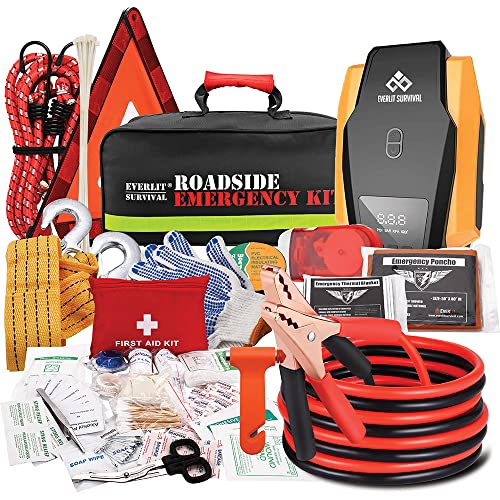
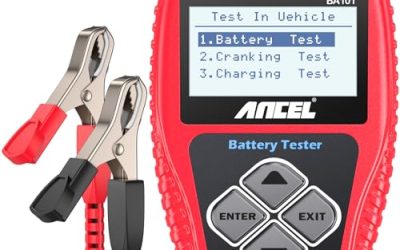
To start comparing options, browse portable jump starters, add a set of jumper cables as a backup, and consider a car battery tester to find out whether your battery needs replacing, plus a roadside emergency kit for the trunk.
FAQ
How many amps do I need?
There is no single answer. Rely on the manufacturer’s stated engine compatibility rather than the peak amp figure. Larger engines and diesels need more capable units, and cold weather raises the requirement.
Can a jump starter damage my car?
Used correctly, it should not. Choose a unit with reverse polarity, short-circuit and overload protections, follow the manual, and avoid connecting it to a damaged battery. If you are unsure about the right connection points on a modern vehicle, check the owner manual.
How often should I charge it?
Check it every few months and after every use. Lithium packs lose charge slowly, but a unit left for a long time may be too empty to help. Follow the manufacturer’s advice for your model.
Can I leave a jump starter in my car all year?
You can, but extreme heat and cold are hard on batteries. Many makers give a storage temperature range. In very hot or very cold climates, consider keeping it inside the cabin or at home between trips, and check its charge more often.
Will a jump starter work on a completely dead battery?
Often, but not always. Some units need to detect a minimum voltage to energize the clamps, and many include a manual override button for deeply discharged batteries. Use an override only as the manual describes, since it disables some protections.
Is a jump starter better than jumper cables?
It is more independent, since you do not need a second vehicle. Cables need no charging, so they are a good backup. Many people carry both.
How long does a jump starter last?
It depends on the build, how it is stored and how often it is used. Lithium cells age with time and heat, so expect to replace a unit after several years or when it no longer holds charge.
Why does my car keep dying after a jump?
The battery may be worn out, a component may be draining it while parked, or the alternator may not be charging it. A jump gets the engine running, but it does not diagnose the cause. Have the battery and charging system tested if the problem repeats.
Conclusion
A jump starter is one of the few pieces of gear you hope never to use, which makes it easy to buy badly and forget. Start from your engine size and fuel type, and pick a unit that the maker states will support them. Insist on proper safety protections, sensible clamps and a charge indicator. Then build the habit that makes the whole purchase worthwhile: recharge it regularly, store it sensibly and know where it is. If the engine will not start after a couple of tries, or the battery keeps failing, treat that as a sign to test the battery and charging system, and call for professional help when in doubt.
Disclosure: As an Amazon Associate, we earn from qualifying purchases. If you click an affiliate link and buy, we may earn a commission at no extra cost to you.
Related guides
More from Amazon
Programs that pair well with the guide above. Offers and eligibility are set by Amazon and may change.
A free business account with business pricing and bulk-buying tools for work, shop or home office.
Create a business accountFree shipping on eligible items, Prime Video and more. Eligible new members can start with a free trial.
Start a Prime free trialAudiobooks and podcasts to listen to on the go. Eligible new members can start with a free trial.
Try Audible freeAd-free music streaming. Eligible new subscribers can start with a free trial.
Try Music Unlimited freeAs an Amazon Associate we earn from qualifying purchases.

Write Your Review
No reviews yet. Be the first to share your experience!