
Our Top Picks
 OlarHike Tire Inflator Portable Air Compressor6000 (Large Capacity)6.5 x 2.76 x 2.17 inches1.9 PoundsCheck on Amazon
What's inside
As an Amazon Associate I earn from qualifying purchases. This post may contain affiliate links at no extra cost to you.
Short answer: the best portable air compressor is the one that fits your actual use: topping off car tires, airing up bikes and camping gear, or powering a light air tool. For most travelers, a compact tire inflator that reaches the PSI your tires need, has an accurate gauge and shuts off automatically is plenty. If you want to run air tools or fill large tires repeatedly, step up to a small tank compressor, and accept the extra weight.
In this guide
- Inflator or compressor: decide the job first
- Types of portable compressors
- Key specs explained
- Power sources and what they mean
- Features worth having
- Using one correctly and safely
- Use cases: who should choose what
- Care and storage
- Common mistakes
- Buying checklist
- FAQ
Inflator or Compressor: Decide the Job First
People use “air compressor” for two quite different things. A small inflator is built to push air into tires, sports balls, bike tires and inflatables. It is usually light, often plugs into a car outlet or runs from a battery, and has a built-in hose and gauge. A true compressor has a tank that stores pressurized air, which lets it deliver bursts for a nail gun, a blow gun or a wrench. It is heavier and louder, and typically needs a wall outlet or generator.
Think about what you will do ten times in the next year. If your list is mostly tires and camp gear, you want an inflator. If it includes brad nailing, blowing out dust or running air tools in the garage, you want a compressor. Many problems come from buying one and expecting the other to behave like it.
Types of Portable Compressors
| Type | Power | Best for | Limitation |
|---|---|---|---|
| 12V plug-in inflator | Vehicle outlet | Car trunk kit, road trips | Depends on the outlet and cord length |
| Cordless inflator | Rechargeable battery | Bikes, quick top-offs, camp use | Limited runtime, battery must be charged |
| Small tank compressor | Wall outlet (AC) | Garage, light air tools, larger tires | Heavier, louder, needs power |
| Camp air pump | USB, battery or manual | Air mattresses, kayaks, inflatables | Low pressure, not for tires |
| Battery-clamp heavy-duty inflator | Direct to vehicle battery | Larger tires, trucks, off-road | Needs care with clamps, bulkier |
12V plug-in inflators
These are the most common choice for road trips. They plug into the accessory outlet, are compact and generally affordable. Their cord must reach all four tires, and the vehicle usually needs to be running to avoid draining the battery. Check the outlet’s rating, since some vehicle outlets are fused at a modest current and a high-draw inflator can blow the fuse.
Cordless inflators
Battery-powered inflators are convenient because there is no cord to manage and they work away from the vehicle. They are great for topping off tires or inflating bike tires, balls and small items. Runtime is limited, and filling a flat from empty can use up much of a battery. Some work on the same removable battery as other cordless tools, which is handy.
Small tank compressors
A small tank gives a reserve of air, so the motor does not run constantly and you get short bursts of higher flow. They are useful for garage work, light air tools and filling large tires more quickly. They are not truly pocket-sized, and many require a wall outlet.
Camp air pumps
Air mattresses and kayaks need a high volume at low pressure, not high pressure. A dedicated camp pump, which may be electric, USB-powered, battery-powered or manual, is better and gentler on the item than a tire inflator. Never use a high-pressure inflator on a low-pressure item without proper control, since it can burst it.
| Item to inflate | Typical pressure level | Suitable tool |
|---|---|---|
| Car or SUV tires | Moderate, per door-jamb sticker | 12V inflator, cordless inflator, tank compressor |
| Bicycle tires | Varies widely by bike type | Cordless inflator, bike pump, small compressor |
| Sports balls | Low | Small inflator with needle adapter |
| Air mattress, kayak, raft | Very low | Camp air pump |
| Air tools and nailers | Moderate to high, with flow needs | Tank compressor |
Key Specs Explained
Maximum PSI
PSI measures pressure. First find the recommended pressure for what you are inflating. For a car, that is on the sticker on the driver’s door jamb or in the owner’s manual. It is not the number molded into the tire sidewall, which is a maximum rating rather than a target. Bicycle tires can need quite different pressures from car tires, with some road bike tires at much higher pressure than car tires and mountain bike tires at much lower pressure. Pick a compressor whose range covers everything you plan to inflate, and be aware that very small inflators may have trouble reaching the top of their stated range.
Flow rate
Flow is often listed in CFM, cubic feet per minute, or in liters per minute. It tells you how fast the unit moves air. A higher flow saves time with large tires and camping gear. Many manufacturers measure flow at different pressures, which makes comparisons uneven, so use it as a rough guide. If a manufacturer lists a time to inflate a standard tire from a specified pressure, that is often easier to understand than a bare flow number, as long as you remember the figure comes from the maker.
Tank size and tool needs
For air tools, flow at a given pressure matters more than maximum pressure. A tool such as a brad nailer uses small bursts and is easy to power. Tools that run continuously, such as sanders and some wrenches, need high flow that small portable compressors cannot sustain. Check the tool’s air requirement before buying a compressor for it.
Duty cycle
Many small compressors can only run for a limited time before they need to cool down. This is called the duty cycle, and it might be stated as a run time followed by a rest time. Ignoring it can overheat the motor and shorten the life of the unit. If you will inflate four large tires in a row, check the manual for how long you can run it continuously.
Accuracy and auto shutoff
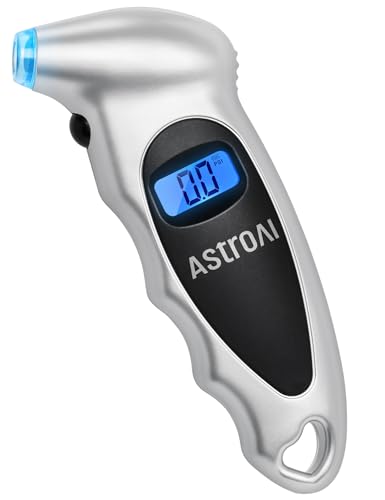
A digital gauge that lets you set a target pressure and stops automatically is convenient and helps prevent overfilling. Built-in gauges can be off by a small amount, so for important checks, keep a separate tire pressure gauge as a backup. Check tires when they are cold, meaning before driving or after the car has been parked for a while, since driving warms the tires and raises the reading.
Power Sources and What They Mean
Vehicle 12V outlet
The most convenient option for roadside use. Keep the engine running while you inflate to avoid draining the battery, and follow the product’s instructions about the maximum time of use. If it keeps blowing the outlet fuse, the inflator is probably drawing more than the circuit supports.
Rechargeable battery
Great portability, but you must keep the battery charged. Consider how many tires a battery can handle, and whether it can use the same battery as your other cordless tools. Batteries lose capacity in the cold, which matters in winter.
AC wall outlet
Best for garage use. It offers continuous power for tank compressors, but you need an outlet or a generator and an appropriately rated extension cord. A cord that is too thin can overheat and starve the compressor, so use one rated for the load.
Features Worth Having
- Adequate cord or hose length. It should comfortably reach all four tires from the outlet or battery position.
- A built-in light. Genuinely useful for night roadside use.
- Nozzle adapters. Needle, cone and other tips for balls and inflatables.
- A screw-on or quality clamp-on valve connector. A connector that seals well with minimal air loss makes the job faster.
- Auto shutoff and presets. Prevent over-inflation.
For off-road drivers who air down tires for traction and then air up again, speed and duty cycle become more important. That kind of use is where a more robust unit or a small tank compressor can be worth the added bulk.
Using One Correctly and Safely
- Find the recommended pressure on the door-jamb sticker or in the owner’s manual.
- Check the tire when it is cold, using a separate gauge if you have one.
- Attach the connector to the valve firmly and listen for hissing air that suggests a poor seal.
- Set the target pressure if the unit has presets, or watch the gauge.
- Run the vehicle engine if you are using a 12V unit, to protect the battery.
- Stop to check the pressure as you go, and let the unit rest if it gets hot.
- Replace valve caps after inflating.
Never exceed the pressure rating of what you are inflating. Do not point an air hose at people or pets, and keep it away from your face. Compressed air can drive debris into the skin or eyes, so eye protection is wise when using a tank compressor and blow guns. If you notice a tire with a bulge, a cut in the sidewall or a fast leak, it may need professional attention rather than another round of air. A flat caused by a nail may be fixed temporarily with air, but have it checked properly.
Loud tank compressors call for hearing protection, particularly in enclosed spaces such as garages. Do not leave a running compressor unattended, and place it on a stable surface with its vents clear. Release the tank pressure and drain moisture from the tank as the manual advises after use.
Use Cases: Who Should Choose What
The commuter or road-tripper
A compact 12V inflator with auto shutoff and a good light is the best value. Keep it in a case in the trunk with a separate gauge. It will handle slow leaks and seasonal pressure changes and be ready for roadside surprises.
The cyclist
A small cordless inflator or a good floor pump handles most needs. Choose one that reaches the pressure your bike tires require and offers the correct valve fittings. Remember that a motorized inflator for low-volume bike tires needs fine control to avoid overfilling.
The camper and paddler
Choose a dedicated air pump for mattresses and kayaks, and carry a small tire inflator if you drive on rough roads. Check that the pump has adapters for your specific valves. A cordless or USB option is easier at a campsite without power.
The off-roader and overlander
Look at faster, more robust units with a strong duty cycle, a long hose and quality connectors, possibly a heavier compressor with a battery connection. Pair it with a good tire deflator and gauge.
The home garage user
A small tank compressor handles inflation, blowing off dust and light air tool use. Check the tool air needs and the noise level. If space is limited, think about whether a portable tank model that you can carry will do.
Care and Storage
- Wipe the unit and hose and keep the connector free of dirt.
- Keep cordless batteries at moderate temperatures and charge them with the proper charger.
- For tank compressors, drain moisture from the tank regularly as the manual instructs, because water accumulation can cause rust.
- Check that the gauge reads sensibly against a separate gauge every so often.
Common Mistakes
- Using the tire’s maximum sidewall pressure. That number is a limit, not the recommended inflation pressure.
- Running a 12V unit with the engine off. It can drain the battery, so follow the product instructions.
- Expecting a tiny inflator to fill a flat quickly. It may take a long time and heat up. Respect the duty cycle.
- Trusting only the built-in gauge. Back it up with a separate gauge.
- Using a tire inflator on a low-pressure item. You can damage a mattress or raft.
- Buying a compressor for tools without checking air needs. A small compressor may not keep up with continuous-use tools.
- Skipping hearing protection with louder tank models.
Buying Checklist
- List everything you want to inflate and the pressure each needs.
- Choose the power source: 12V, battery or wall outlet.
- Confirm the PSI range and the preset or auto-stop function.
- Check the duty cycle and the stated time to fill a standard tire.
- Check cord or hose length against your vehicle size.
- Look for included adapters and a carry case.
- Check the noise level if you will use it in a garage or near others.
- Pick up a separate tire pressure gauge.
- Review warranty terms and recent customer feedback for patterns of failure.
When you start shopping, compare portable tire inflators, add a dependable tire pressure gauge, and for camp use look at a dedicated camping air pump. If you plan to do garage work, a small tank air compressor and some hearing protection are worth considering.
FAQ
What PSI should I inflate my car tires to?
Use the pressure listed on the sticker in the driver’s door jamb or in the owner’s manual. Do not use the maximum number printed on the tire sidewall. Check pressure when the tires are cold.
Is a tire inflator the same as an air compressor?
Not exactly. An inflator is a compact device designed for tires and similar items. A compressor with a tank stores air and can run some air tools. Many people only need an inflator.
Can a 12V inflator drain my car battery?
It can if you run it for a long time with the engine off. Keep the engine running while inflating, and follow the instructions for your model. Also avoid using it with the outlet fuse beyond its rating.
What does duty cycle mean?
It is the amount of time a compressor can run before it needs to rest to avoid overheating, often expressed as a run time and a rest time. Respecting it protects the motor.
Can I use a car tire inflator for an air mattress?
You can with the right adapter, but it is easy to overinflate because these items need very low pressure. A dedicated camp pump is gentler and safer for the product.
Do cordless inflators work for car tires?
Many do, especially for topping off. Filling a tire from flat can drain the battery quickly, so check the battery capacity and keep it charged. Cold weather reduces battery performance.
Are built-in gauges accurate?
They are usually good enough for routine top-offs, but accuracy varies. A separate gauge is a smart backup for important checks, especially before long trips or with heavy loads.
Can I use a portable compressor to run an impact wrench or nailer?
Some light-duty tools, such as brad nailers, work on a small tank compressor. Tools that use air continuously need much higher flow. Compare the tool’s air requirement to the compressor’s output at the same pressure before you buy.
Conclusion
A good portable air compressor is a quiet insurance policy. Decide first whether you need a simple inflator or a tank compressor, then match the power source to where you will use it. Check the PSI range against everything you inflate, respect the duty cycle, and keep a separate gauge as a backup. Use the pressure listed on the vehicle’s door-jamb sticker, never the sidewall maximum, and handle compressed air with the same respect you would give any powerful tool. With a little planning, a compact unit in the trunk will keep your tires and your trip in good shape.
Disclosure: As an Amazon Associate, we earn from qualifying purchases. If you click an affiliate link and buy, we may earn a commission at no extra cost to you.
Related guides
More from Amazon
Programs that pair well with the guide above. Offers and eligibility are set by Amazon and may change.
A free business account with business pricing and bulk-buying tools for work, shop or home office.
Create a business accountFree shipping on eligible items, Prime Video and more. Eligible new members can start with a free trial.
Start a Prime free trialAudiobooks and podcasts to listen to on the go. Eligible new members can start with a free trial.
Try Audible freeAd-free music streaming. Eligible new subscribers can start with a free trial.
Try Music Unlimited freeAs an Amazon Associate we earn from qualifying purchases.
Write Your Review
No reviews yet. Be the first to share your experience!