What's inside
As an Amazon Associate I earn from qualifying purchases. This post may contain affiliate links at no extra cost to you.
Start with the grinder, not the battery label
The right battery depends on the grinder’s voltage platform, the disc size, and how hard you’ll work it. A compact 4½-inch grinder used to trim a few bolts has different needs from a larger grinder cutting steel for several minutes at a time. Check the tool manual for its required battery platform and any recommended capacity. A battery from the same brand may still be incompatible if it belongs to a different voltage system.
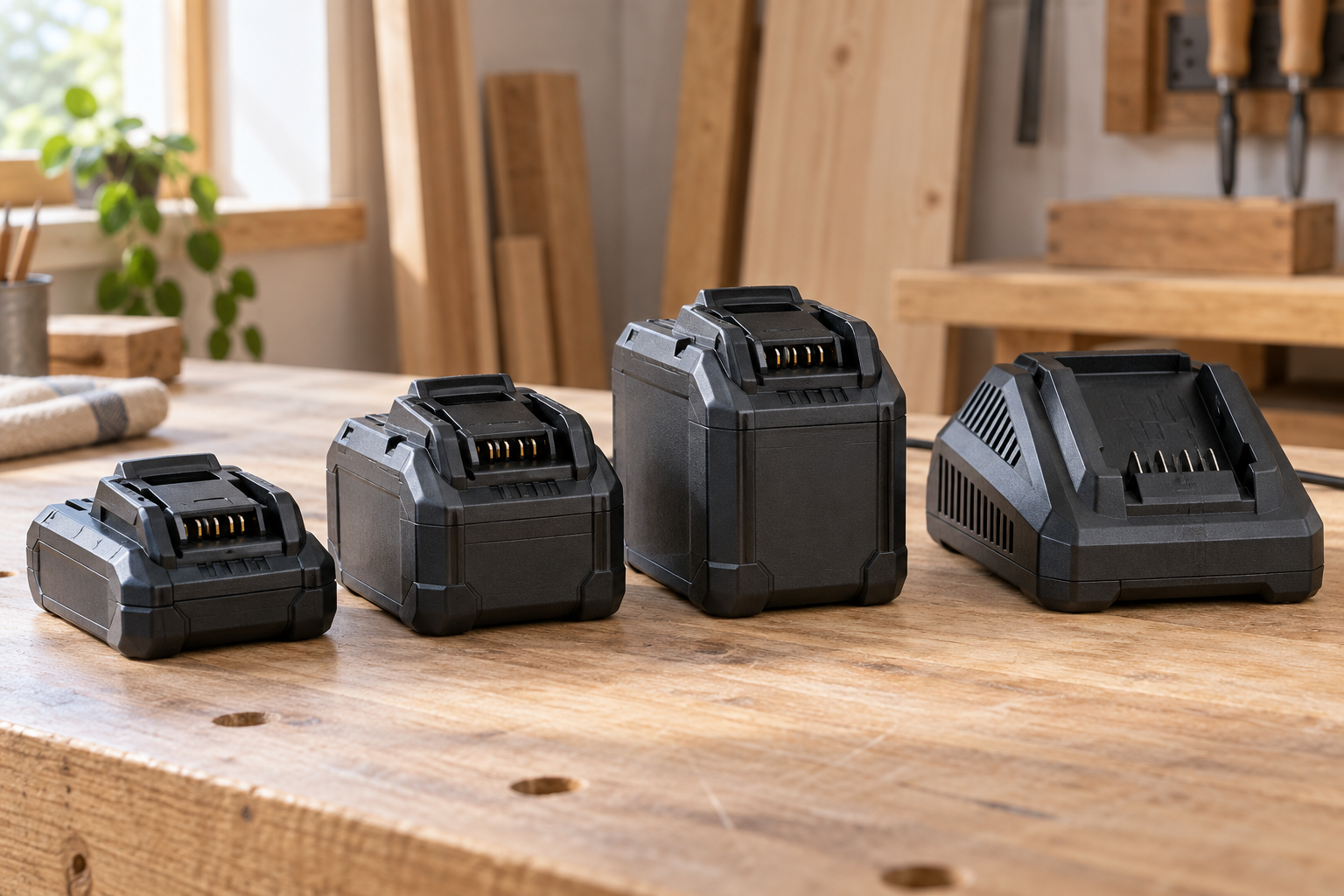
Capacity is measured in amp-hours (Ah). On the same platform, a higher-Ah battery usually stores more energy and runs longer, but it is also heavier and often bulkier. It does not automatically make an incompatible grinder work, nor does it guarantee more cutting power. For sustained heavy work, the battery’s ability to supply current matters alongside its capacity.
Choose capacity for the job
For occasional cuts, deburring, or light grinding, a compact battery in the 2–4Ah range is often a sensible balance. It costs less, weighs less, and is easier to handle when the grinder is held overhead or at arm’s length. A 5–6Ah pack is a practical middle ground for more frequent cutting. For long sessions or demanding work, a high-capacity pack can reduce battery changes, though the extra weight may make the tool tiring and awkward.
Runtime varies too much to promise an exact number of cuts from an Ah rating alone. Disc type, material thickness, pressure, and pauses all change consumption. A grinder that bogs down because you are forcing it through thick steel can drain a pack quickly and may trigger its protection system. Let the wheel do the work; if the motor slows noticeably, ease off rather than leaning harder.
| Battery capacity | Good fit | Main trade-off |
|---|---|---|
| 2–4Ah | Short jobs, occasional use, overhead work | More frequent swaps under heavy load |
| 5–6Ah | Regular cutting and general site work | Heavier than a compact pack |
| 8Ah and up | Longer or demanding work, if supported by the tool | More weight, bulk, and cost; not always the best choice for a compact grinder |
These ranges are useful starting points, not a guarantee of performance. Battery designs differ, and a larger pack may not fit comfortably or be approved for every grinder. If buying a battery for a tool you already own, check the manufacturer’s compatibility chart before ordering. A 5Ah battery for your grinder’s platform can be a reasonable all-round option if it is listed as compatible.
Account for current, heat, and heavy cutting
Grinding and cutting can put a sharp load on a battery. A pack with more cells or a higher-current design may hold performance better during sustained work than a small, lightweight pack, even when the printed Ah figures look similar. Some manufacturers identify these as high-output or high-performance batteries. Those labels are not standardized across brands, so compare the manufacturer’s specifications rather than assuming that “premium” means a specific runtime increase.
Heat is a common reason a tool stops during demanding work. The grinder, battery, or both may shut down to protect themselves. Let the pack cool in a shaded, ventilated spot before charging or using it again. Don’t wrap it, leave it in direct sun, or charge it while it is hot from cutting. If the battery repeatedly cuts out under ordinary pressure, check that the vents are clear and that the pack is compatible and in good condition. A swollen, cracked, leaking, or unusually hot battery should not be used.
Stay within the battery platform
Battery systems are not interchangeable just because the voltage looks similar. Physical rails, contacts, communication electronics, and protection features differ. Avoid unverified adapters for a high-load tool such as a grinder: a poor connection can heat up, interrupt power, or bypass protections. If you already own several tools on one platform, buying another compatible pack may be cheaper and more useful than starting a second ecosystem. If you own no batteries, compare the cost of the bare tool, battery, and charger together—not just the tool’s sticker price.
A fast charger can help when one battery is in use and another is cooling, but charging speed does not improve runtime. Confirm the charger supports the exact battery family. A spare pack is often more useful than a very large single pack for a long job because you can rotate batteries and avoid working with a hot one. For occasional home use, however, a single modest pack and the standard charger may be entirely adequate.
When assembling a first setup, look at battery-and-charger kits for the same tool platform. Kits can offer better value, but check the included capacity: an entry-level kit may come with a small pack that is convenient for short jobs but frustrating for repeated cutting.
Check balance, not just runtime
A large battery can make a grinder tail-heavy and harder to control. That matters when dressing a weld, working in a tight corner, or making a precise cut. If possible, handle the grinder with the battery fitted before buying. A lighter pack may mean more stops, but better control can be worth more than theoretical runtime—especially for short cuts. Use the side handle and the guard specified for the wheel, and keep a firm two-handed grip.
For long sessions, compare the weight of the complete tool with each battery attached. If your grinder’s manual lists approved battery sizes or warns against particular packs, follow that guidance. Don’t choose a battery based on a claim that it will make the grinder “more powerful” unless the manufacturer specifically documents that benefit for your tool.
A practical buying checklist
Before ordering, confirm the voltage platform and exact battery compatibility; choose capacity based on job length and the weight you can manage; and check whether the pack is designed for the grinder’s workload. Consider a second battery if the tool will be used continuously, but don’t pay for a huge pack if most jobs last only a few minutes. If your current battery is old, inspect it for damage and compare its performance with a known-good compatible pack before assuming the grinder is at fault.
Use the correct wheel for the material and grinder, keep the guard installed, and don’t use a cutting disc for side grinding unless it is rated for that use. A good battery helps the tool run reliably; it does not compensate for a worn wheel, excessive pressure, poor technique, or an unsuitable disc.
Related guides
- Longest Lasting Lawn Mower Battery: AGM vs Lithium vs Flooded Lifespan and Cost per Season
- Duralast Gold Lawn Mower Battery Review: U1 Fit, CCA and When to Pay for AGM
- Greenworks Pro 80V 21-Inch Mower Review: Runtime Math, Push vs Self-Propelled and Yard Fit
- Bosch High Pressure Washer Gun Replacement: Fittings, Adapters and What Fits Your Model