What's inside
As an Amazon Associate I earn from qualifying purchases. This post may contain affiliate links at no extra cost to you.
A cordless tool battery can get warm during hard use without being damaged. Cutting, drilling, driving long screws, and running high-draw tools such as grinders or saws all produce heat in the battery cells and electronics. The important distinction is between normal operating warmth and heat that signals a failing battery, overloaded tool, poor connection, or unsafe charging condition.
First, stop and check the battery
Release the tool trigger, remove the battery, and inspect it in a shaded, ventilated place. Do not put a hot pack in a refrigerator, freezer, cooler, or bucket of water. Rapid temperature changes can create condensation inside the pack, and water can reach the terminals or electronics.
Warm is usually acceptable. A pack that is uncomfortable to hold, smells like hot plastic or chemicals, has a swollen case, makes hissing or crackling sounds, leaks, or shows melting around the terminals should be treated as unsafe. Move away from it, keep it away from flammable materials, and do not put it back on the charger or tool. If it begins smoking or burning, leave the area and call emergency services rather than trying to handle it.
Never open a lithium-ion battery pack. Individual cells can deliver very high current even after the tool stops working, and a short circuit can cause fire. Tape over exposed terminals on a damaged pack only if you can do so without touching leaking or hot parts, then follow your local battery-recycling or hazardous-waste instructions.
What temperature is normal?
Battery manufacturers do not use one universal “too hot” number for every platform. The battery-management system may stop discharge or charging when the cells reach a programmed limit, but that protection is not a reason to continue using a pack that feels abnormally hot.
| What you notice | Likely meaning | What to do |
|---|---|---|
| Slightly warm after steady work | Normal heat from current flow | Let it cool before charging |
| Very warm after heavy cutting or grinding | High load, restricted airflow, or an undersized pack | Stop, inspect the tool, and use shorter work intervals |
| Too hot to hold comfortably, repeated shutdowns, or a hot smell | Overload, poor connection, aging cells, or a developing fault | Remove it and do not resume until the cause is found |
| Swelling, leaking, smoke, melted plastic, or hissing | Battery failure and potential fire hazard | Isolate it safely; do not charge or use it |
As a practical rule, give a heavily used battery at least 20 to 30 minutes to cool before charging. A pack that is still hot after an hour, or becomes hot quickly during light work, deserves replacement or professional evaluation.
Find out why it got hot
Check the tool load first. A dull saw blade, clogged vacuum, binding drill bit, overlong screw, or grinder wheel pressed too hard can make the motor draw much more current. The battery may be working normally while the tool is being overloaded. Clear jams, use a sharp accessory, reduce cutting pressure, and let the motor maintain speed instead of forcing it through the material.
Check airflow and temperature. Do not cover the pack with a glove, coat, tool bag, or sawdust. Hot weather and direct sun reduce the battery’s ability to shed heat. In cold weather, a battery may also perform poorly and warm rapidly under load. Let it reach a moderate indoor temperature before demanding maximum output.
Inspect the contacts. With the battery removed, look for dirt, metal filings, corrosion, discoloration, or heat damage on the battery and tool terminals. Clean dry debris carefully with a soft brush or compressed air used at a safe distance. Do not scrape contacts with a metal tool, bend terminals, spray lubricant into the connection, or use a pack with loose terminals.
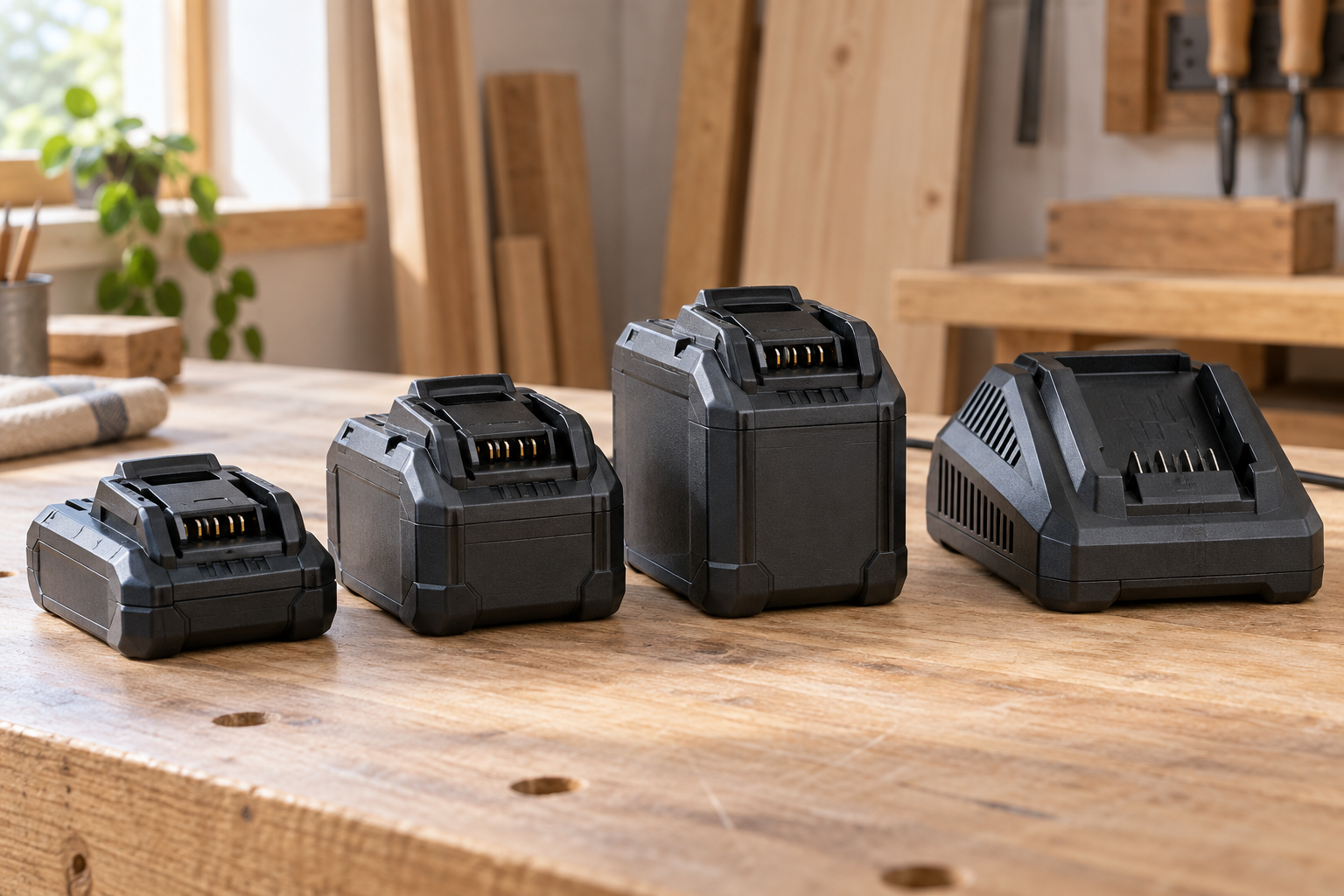
Consider battery size and age. A compact battery can power the same tool as a larger one, but it may heat faster during sustained high-demand work. A higher-capacity pack often has more cells sharing the load, though it also adds weight and cost. If a once-reliable battery now heats quickly, loses runtime sharply, or causes repeated tool shutdowns, its internal resistance may have increased with age.
Charge it safely after use
Use the charger made for that battery platform, or a manufacturer-approved charger designed for the exact pack system. Do not charge a hot pack immediately after grinding, sawing, or drilling. Set the charger on a hard, nonflammable surface with air around it—not on a bed, sofa, vehicle seat, or pile of clothing.
Stop charging if the battery or charger becomes unusually hot, repeatedly switches on and off, smells burnt, or displays a fault. A charger fan that runs during high-current charging is normal; smoke, melted plastic, or a hot electrical smell is not. Do not leave questionable batteries charging unattended overnight.
If you need replacements, staying within one manufacturer’s battery platform is usually cheaper over time because the same packs can run several tools. Start with the cordless power tool battery platform that matches your existing tools rather than mixing incompatible packs.
When replacement is the right answer
Replace the battery when the case is cracked, swollen, melted, leaking, or badly discolored; when it heats during light-duty work; or when it repeatedly triggers thermal or overload protection in more than one tool. A pack that has been dropped hard, submerged, or exposed to fire should also be retired even if it still runs.
Do not assume a new charger will fix a battery that gets hot in use. Try a known-good battery in the tool, if available, and try the suspect battery in another compatible tool. If only one tool causes the problem, have that tool inspected. If the suspect pack behaves badly everywhere, recycle it and buy a replacement.
For occasional household work, a lower-capacity battery is often the cheaper and lighter choice. For saws, grinders, outdoor equipment, or long continuous jobs, consider high-capacity cordless tool batteries and keep a second pack charging. The trade-off is higher purchase price and more weight; neither option makes an overloaded tool safe.
Prevent overheating next time
Use the correct accessory, keep vents clear, avoid forcing the tool, and rotate batteries during long jobs. Let both the tool and pack cool between demanding tasks. Store batteries dry and out of direct sun, with the terminals protected from loose metal objects. For routine maintenance, a basic battery terminal cleaning brush is sufficient; elaborate battery “repair” kits are not a safe substitute for replacement.
Most warm batteries simply need a break and a less aggressive work pace. A battery that becomes painfully hot, changes shape, smells wrong, or heats during easy work is different: remove it from service, isolate it safely, and replace it through an approved recycling channel.
FAQ
What temperature is normal?
Related guides
- Longest Lasting Lawn Mower Battery: AGM vs Lithium vs Flooded Lifespan and Cost per Season
- Duralast Gold Lawn Mower Battery Review: U1 Fit, CCA and When to Pay for AGM
- Greenworks Pro 80V 21-Inch Mower Review: Runtime Math, Push vs Self-Propelled and Yard Fit
- Bosch High Pressure Washer Gun Replacement: Fittings, Adapters and What Fits Your Model