What's inside
As an Amazon Associate I earn from qualifying purchases. This post may contain affiliate links at no extra cost to you.
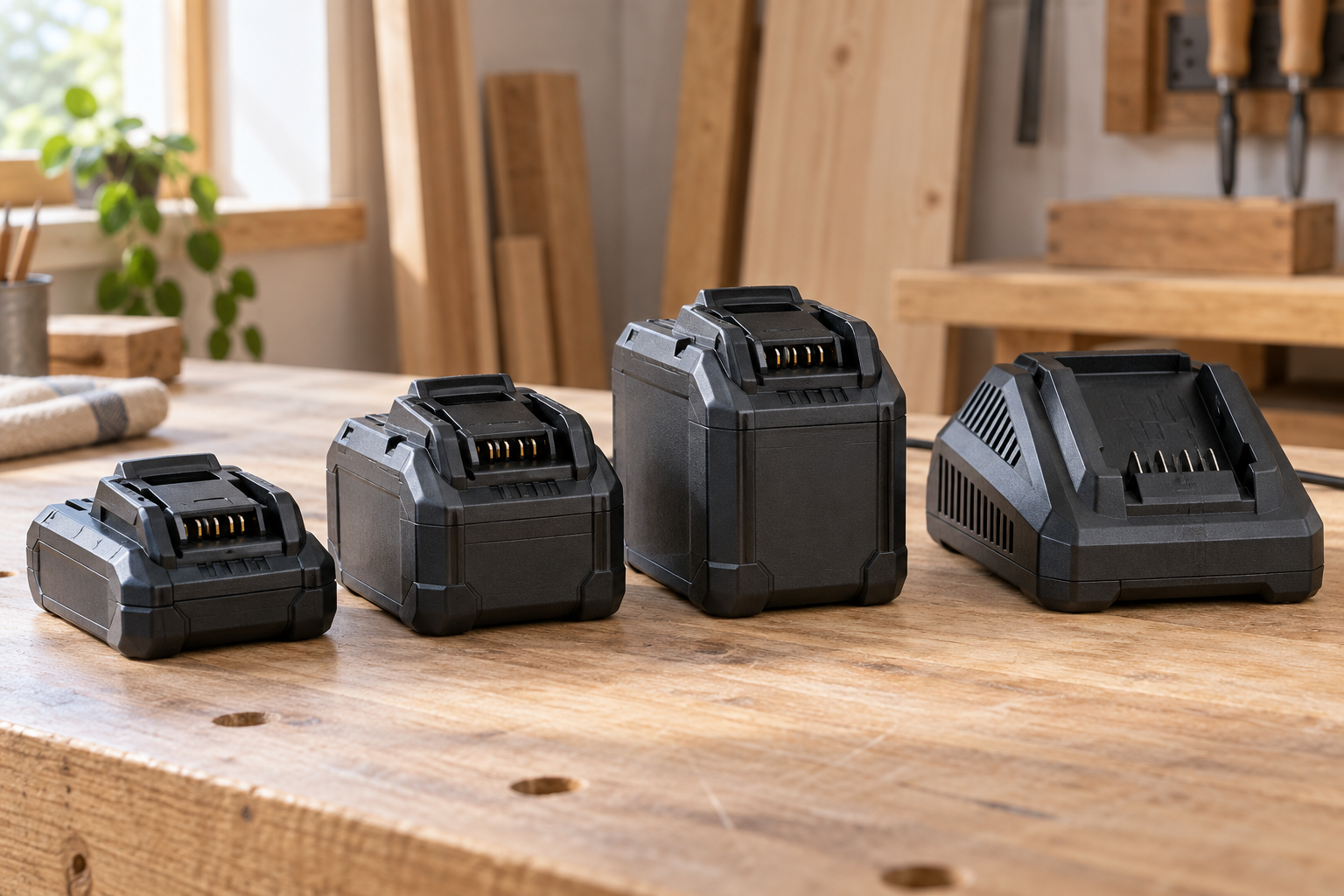
Battery size matters more on compact cordless tools than many buyers expect. A Craftsman V20 2.0Ah pack keeps a drill, impact driver, or small light feeling balanced. The 4.0Ah pack can substantially extend working time, but it adds bulk, weight, and cost. The right choice depends less on the tool’s advertised voltage and more on how long you work between charging opportunities.
What the Ah Rating Means
Amp-hours (Ah) describe battery capacity. A 4.0Ah Craftsman V20 battery stores roughly twice the energy of a 2.0Ah pack when both are in comparable condition. It does not produce twice the voltage, and it does not automatically make a tool twice as powerful.
Both packs are part of the V20 platform and fit compatible Craftsman V20 tools and chargers. The “20V” label refers to the battery’s maximum charged voltage; the nominal operating voltage is about 18V. Tool output can still vary because of motor design, electronics, load, and battery condition.
In practical use, a 4.0Ah pack may deliver close to twice the runtime of a 2.0Ah pack under the same load. That is an estimate, not a guarantee. Cold temperatures, hard materials, dull bits, high speed, and repeated stall conditions can reduce runtime substantially.
| Characteristic | V20 2.0Ah | V20 4.0Ah |
|---|---|---|
| Approximate capacity | 2.0Ah | 4.0Ah |
| Typical runtime versus the other pack | Baseline | About twice as long |
| Weight and size | Lighter and more compact | Heavier and larger |
| Best use | Overhead work, short jobs, compact tools | Long drilling, driving, cutting, and repeated use |
| Main drawback | More frequent charging | More wrist and tool weight |
Where the 2.0Ah Pack Wins
The 2.0Ah battery is usually the better match for compact tools used in short bursts. On a small drill or impact driver, removing several ounces from the base makes the tool easier to control. That matters when installing cabinet hardware, assembling furniture, hanging shelves, or driving a few screws into softwood.
A shorter pack also improves clearance in tight spaces. A drill with a compact battery can stand on its base or fit between framing members where a larger pack may get in the way. For an inspection light, small fan, or compact inflator, the lower weight is often more valuable than maximum runtime.
It is also the sensible cheaper option for occasional users. If your typical job takes 10 to 20 minutes and you already have a charger, buying a larger battery may provide little benefit. A second 2.0Ah pack can be more useful than one 4.0Ah pack because you can keep working while the first battery charges.
For this kind of use, compare current Craftsman V20 2.0Ah battery options rather than choosing solely by a kit’s advertised savings. Check whether the listing includes a charger, since battery-only pricing is not directly comparable with a kit.
Where the 4.0Ah Pack Wins
The 4.0Ah battery makes more sense when the tool runs continuously or draws high current. Examples include drilling many holes with large bits, driving long structural screws, cutting with a reciprocating saw, or using a circular saw for repeated cuts. Those jobs can exhaust a 2.0Ah pack quickly, especially in dense lumber or sheet goods.
A larger pack can also reduce voltage sag under heavy load. The tool may maintain its performance better near the end of a demanding job, although the exact result depends on the battery’s internal cells and the tool’s electronics. It will not fix a dull blade, an undersized bit, or a motor that is simply too small for the task.
The trade-off is noticeable in hand. A 4.0Ah pack hanging below a drill shifts the balance toward the rear. That can be comfortable for some users, but tiring when working overhead or holding the tool at arm’s length. On an impact driver, the extra weight may be acceptable for deck screws; on a compact screwdriver used for dozens of small fasteners, it can feel unnecessary.
Runtime and Charging Reality
Capacity is easiest to compare with energy. At the platform’s roughly 18V nominal voltage, a 2.0Ah pack represents about 36 watt-hours, while a 4.0Ah pack represents about 72 watt-hours. Actual usable energy is lower because the tool stops before the cells are fully depleted and because losses occur in the electronics.
Do not convert those figures directly into a fixed number of screws or cuts. A light-duty drill may run for a long time on 2.0Ah, while a reciprocating saw can drain it quickly. Repeatedly forcing a bit until the motor stalls creates heat and wastes energy. Let the tool clear chips, use the correct speed, and replace dull accessories before blaming the battery.
Charging time varies by Craftsman charger and battery temperature. A larger pack generally takes longer to recharge on the same charger. After hard use, the battery may need to cool before charging begins. If you need continuous production, a second battery—or a faster compatible Craftsman V20 battery charger—can matter more than moving from 2.0Ah to 4.0Ah.
Which One Should You Buy?
Choose the 2.0Ah pack if your tools are compact, your jobs are short, and low weight is a priority. It is a good fit for light drilling, screwdriving, assembly, small repairs, and intermittent use. Buying two 2.0Ah packs is particularly reasonable when you value balance and can rotate batteries.
Choose the 4.0Ah pack if you regularly work for 30 minutes or more at a time, use saws or other high-drain tools, or dislike stopping to recharge. It is also the better single-pack choice for a homeowner who wants enough reserve for an unpredictable project. Look for a Craftsman V20 4.0Ah battery when runtime matters more than compact handling.
Before buying, weigh the pack you already own, check the tool’s battery clearance, and inspect the charger’s specifications. Avoid leaving a depleted battery in a hot vehicle, and retire packs with cracked housings, swollen cases, damaged terminals, or unusually short runtime. For most compact-tool owners, the 2.0Ah battery is the nimble everyday pack; the 4.0Ah battery is the practical upgrade when charging interruptions—not peak power—are the real problem.
FAQ
Which One Should You Buy?
Related guides
- Longest Lasting Lawn Mower Battery: AGM vs Lithium vs Flooded Lifespan and Cost per Season
- Duralast Gold Lawn Mower Battery Review: U1 Fit, CCA and When to Pay for AGM
- Greenworks Pro 80V 21-Inch Mower Review: Runtime Math, Push vs Self-Propelled and Yard Fit
- Bosch High Pressure Washer Gun Replacement: Fittings, Adapters and What Fits Your Model