What's inside
As an Amazon Associate I earn from qualifying purchases. This post may contain affiliate links at no extra cost to you.
Milwaukee M12 CP vs XC Batteries: Choosing Between Compact and Extended Capacity
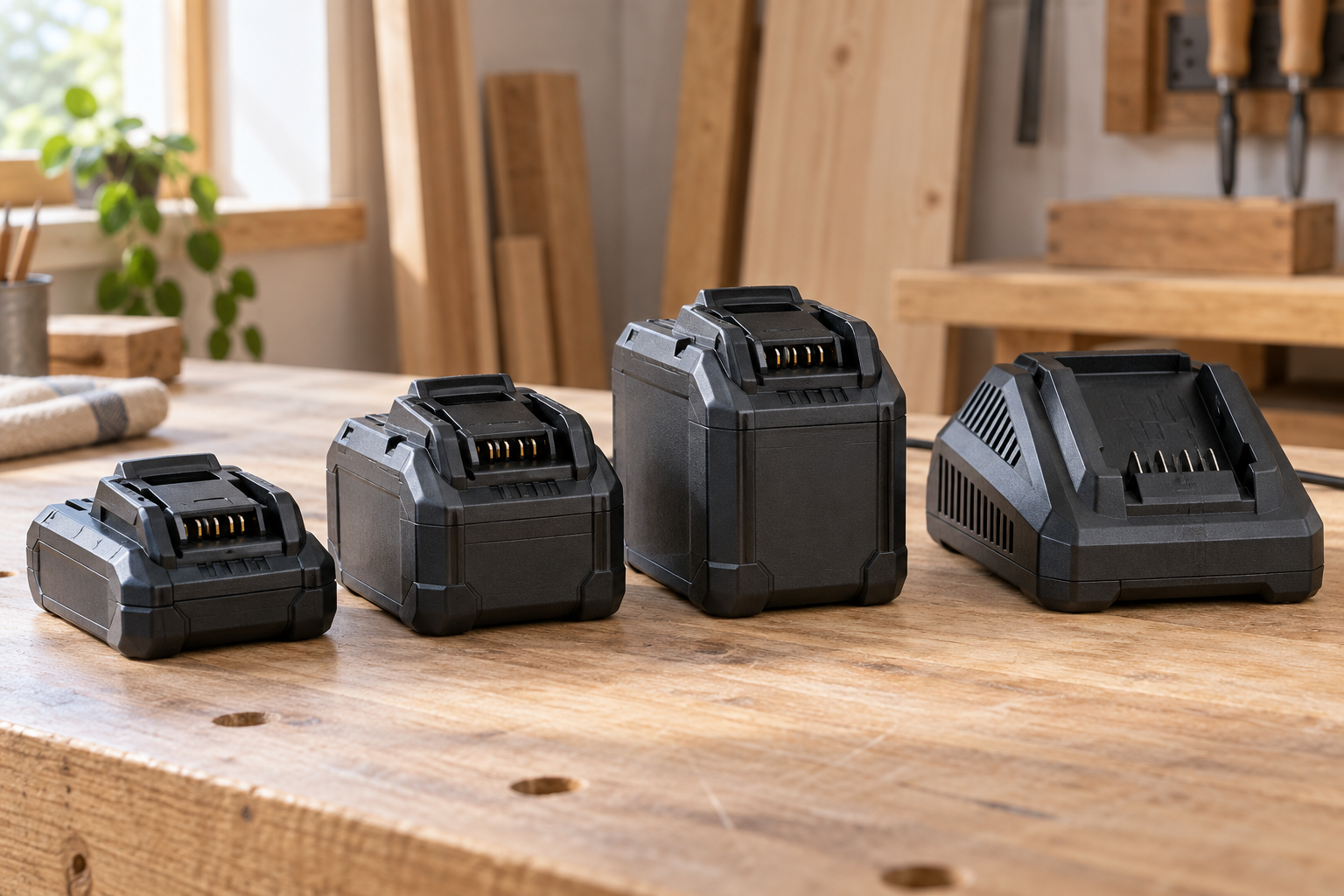
Milwaukee’s M12 battery range is split into two useful formats: CP, meaning Compact Pack, and XC, meaning Extended Capacity. Both run the same M12 tools, but they suit different jobs. CP batteries are smaller and lighter. XC batteries store more energy, usually deliver power with less voltage drop, and run tools for substantially longer.
The decision is not simply “small battery versus big battery.” On an impact driver, compact size can make the tool easier to handle. On a heated jacket, rotary hammer, or high-draw saw, an XC pack can prevent frequent battery changes and reduce performance drop as the battery discharges.
As an Amazon Associate we earn from qualifying purchases at no extra cost to you.


What CP and XC Mean
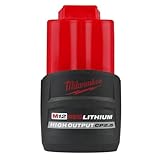
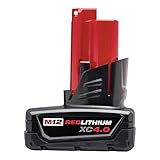
Milwaukee uses several capacities within each format. Common M12 CP batteries are 1.5Ah and 2.0Ah packs. Common XC versions are 3.0Ah and 4.0Ah, while some higher-capacity M12 packs use a larger 6.0Ah format. The exact capacity matters, but the physical design also matters: a 4.0Ah XC pack is typically taller and heavier than a 2.0Ah CP pack.
All M12 batteries provide a nominal 12 volts. Milwaukee’s “12V MAX” labeling refers to the fully charged voltage, not a different platform. A CP and XC battery are interchangeable with compatible M12 tools, but an older tool may not take advantage of the latest battery electronics or high-output features.
| Factor | M12 CP | M12 XC |
|---|---|---|
| Typical capacity | 1.5Ah to 2.0Ah | 3.0Ah to 6.0Ah |
| Size and weight | Smallest and lightest | Larger and heavier |
| Runtime | Shortest | About 1.5 to 3 times longer, depending on capacity |
| High-load behavior | More voltage sag and heat during sustained loads | Usually better under continuous, demanding use |
| Best use | Drivers, inspection lights, compact drills, overhead work | Saws, rotary tools, heated gear, extended work sessions |
Runtime and Power Differences
Capacity is measured in amp-hours. In simple terms, a 4.0Ah battery contains roughly twice the stored energy of a 2.0Ah battery. Real runtime is not perfectly proportional because tool load, battery temperature, material, and the tool’s electronic controls all affect consumption. Still, moving from 2.0Ah to 4.0Ah normally produces a major improvement.
For light fastening, a CP battery may drive dozens of screws or several small repairs before needing a charge. A 2.0Ah pack can be the better choice when the job consists of short bursts. The battery spends more time in your hand than in the charger, and the lighter tool is less tiring.
Under a steady load, the difference becomes clearer. Cutting thick material, grinding, drilling large holes, or running a rotary hammer draws high current. A small battery can heat up, trigger its protection circuit, or feel noticeably weaker near empty. An XC pack has more cells working together and generally maintains voltage better. That does not turn an M12 tool into an M18 tool, but it can make the tool feel more consistent.
Weight, Balance, and Access
CP batteries are valuable when the tool must fit into a confined space. They keep an M12 impact driver short at the base, which helps when working inside cabinets, between studs, or above shoulder height. The reduced weight also matters for electricians, HVAC technicians, and installers who use a tool repeatedly throughout the day.
XC batteries add weight below the grip. That can improve balance on some drills and lights, but it can make a compact tool feel bottom-heavy. The extra bulk may also prevent the tool from standing securely or fitting into a narrow opening. Before buying several large packs, check the battery compartment and clearance on your most-used tools.
Which Battery Fits Each Tool?
Choose a CP battery for compact drills, impact drivers, installation drivers, inspection lights, small inflators, and brief service calls. It is also a sensible choice for tools used intermittently, where you can swap in a fresh battery during natural pauses.
Choose an XC battery for M12 saws, rotary hammers, compact vacuums, high-output lights, heated jackets, heated gear, and tools used continuously. Heated clothing is a particularly good XC application because the battery may run for hours and changing packs can be inconvenient in cold weather.
For a compact M12 drill used to assemble furniture or install hardware, paying extra for the largest battery is usually unnecessary. The tool may become less comfortable, while the job still finishes before the CP pack is empty. For repeated drilling in masonry or cutting operations, the larger pack is easier to justify. You can compare current options through these M12 CP battery listings and M12 XC battery listings.
Cost, Charging, and Battery Life
XC batteries cost more, but the price difference is not the only consideration. A larger pack can reduce the number of batteries needed on a job, while two CP packs may be more convenient than one XC pack if you need a tool to remain light. If you already own several M12 batteries, match the purchase to your charging routine rather than buying capacity you will rarely use.
Charging time depends on the charger and battery size. A 6.0Ah pack takes longer to refill than a 2.0Ah pack, so an XC-only setup can create delays if you have just one charger and one battery. Two smaller packs can keep a tool running while the other charges. On the other hand, a rapid charger and multiple packs make high-capacity batteries practical for full-day work.
Do not store batteries fully depleted, leave them in extreme heat, or keep using one that becomes unusually hot, swells, smells, or repeatedly trips protection. Those are failure signs, not normal behavior. Let a hot pack cool before charging it, and use a charger designed for Milwaukee M12 batteries rather than an unverified substitute.
The Practical Buying Choice
For most occasional users, a 2.0Ah CP battery is the economical starting point. It keeps the tool compact and handles light drilling, driving, lighting, and repair work. Add an XC pack when runtime becomes the problem, when the tool is used under sustained load, or when changing batteries interrupts the job.
A mixed setup is often best: CP packs for drivers and overhead tools, XC packs for demanding tools and long sessions. If you are building an M12 collection from scratch, compare M12 battery and charger kits carefully. The cheapest kit may include a small CP pack, while a slightly more expensive kit may offer better long-term value if you already know you need extended runtime.
FAQ
Which Battery Fits Each Tool?
Related guides
- Longest Lasting Lawn Mower Battery: AGM vs Lithium vs Flooded Lifespan and Cost per Season
- Duralast Gold Lawn Mower Battery Review: U1 Fit, CCA and When to Pay for AGM
- Greenworks Pro 80V 21-Inch Mower Review: Runtime Math, Push vs Self-Propelled and Yard Fit
- Bosch High Pressure Washer Gun Replacement: Fittings, Adapters and What Fits Your Model