What's inside
As an Amazon Associate I earn from qualifying purchases. This post may contain affiliate links at no extra cost to you.
Milwaukee M12 and M18 are two separate cordless tool platforms, not small and large batteries for the same tools. M12 tools use 12-volt batteries; M18 tools use 18-volt batteries. A battery from one platform will not power a tool from the other. The practical choice comes down to the work you do, how much power and runtime it needs, and whether you want to carry two battery systems.
As an Amazon Associate we earn from qualifying purchases at no extra cost to you.



Start with the work, not the voltage
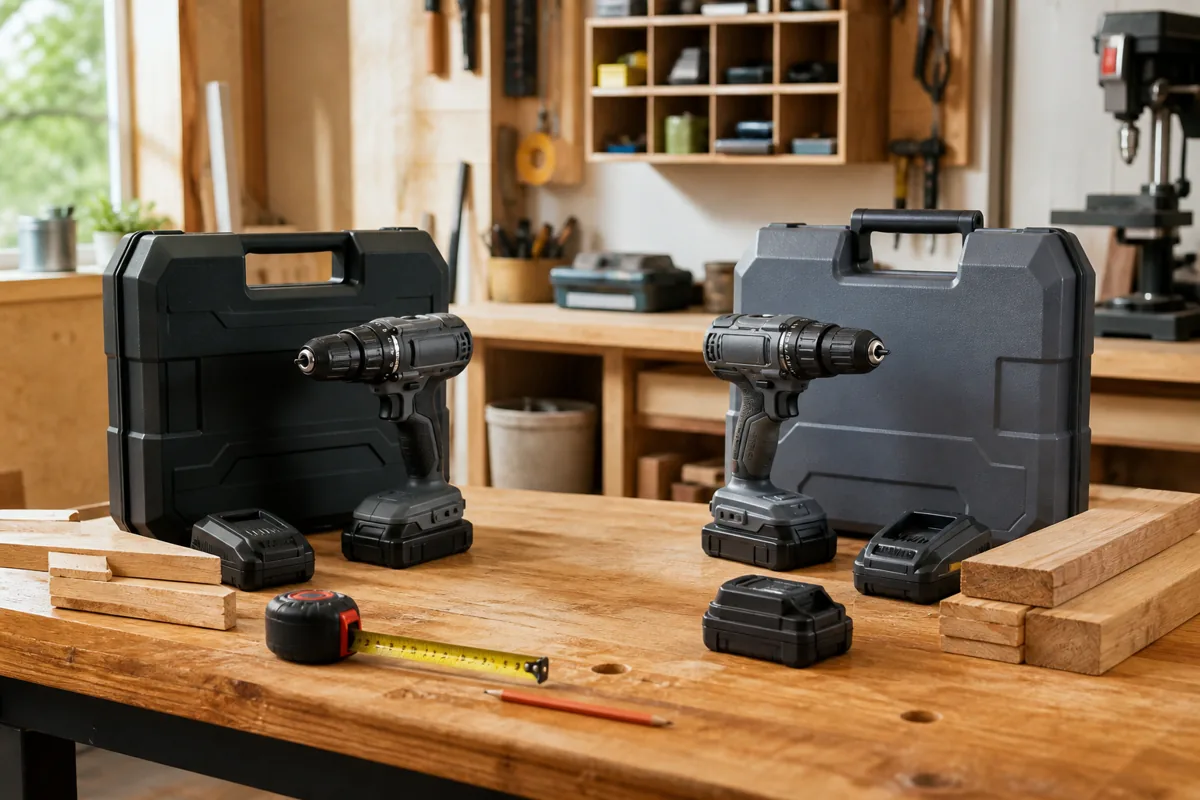
M12 is often the better fit for work where access, weight and control matter more than sustained output. Think cabinet installation, electrical service, light plumbing, trim work and repairs in cramped spaces. Compact drills, impact drivers, ratchets and inspection tools can be easier to handle overhead or inside a cabinet.
M18 makes more sense for tools that have to deliver higher power or run for long periods: circular saws, larger grinders, full-size rotary hammers, demanding outdoor equipment and repeated heavy drilling. It also offers a broader selection of tools for many construction and trade applications. That does not mean every M18 tool is automatically better; it means the platform gives you more room for jobs that strain a compact tool.
For occasional household repairs, M12 may be enough for years. If you regularly cut framing lumber, bore large holes or run a tool all day, starting with M18 can avoid buying a second platform later.
M12 vs M18 at a glance
| Factor | M12 | M18 |
|---|---|---|
| Battery platform | 12 volts; batteries fit M12 tools | 18 volts; batteries fit M18 tools |
| Best general fit | Compact work, light-to-medium tasks, tight access | Higher-demand work, longer runtime, larger tools |
| Handling | Typically smaller and lighter, especially with compact batteries | Typically bulkier; larger batteries add weight but can extend runtime |
| Tool selection | Strong in compact trade tools and everyday repair tools | Broader choice for heavy-duty and full-size applications |
| Common compromise | May bog down or need frequent battery changes in demanding work | More weight and cost than needed for light, occasional jobs |
Power and runtime: what the numbers do and don’t tell you
Voltage alone does not tell you how powerful a particular tool is. Motor design, tool size, battery capacity and the work material all matter. A compact M12 drill can be a sensible choice for pilot holes and small fasteners, but it is not a substitute for a full-size drill when repeatedly boring large holes through framing. Likewise, battery amp-hours indicate capacity, not a promise of a specific number of cuts or hours; load, temperature and battery condition change the result.
A useful test is to consider the hardest task you expect to do regularly, not the most demanding task you might do once. If a saw will make a few short cuts in plywood, a compact setup may be fine. If it will break down sheets or cut framing throughout the day, the smaller battery may run out quickly and the tool may work more slowly under load. For frequent cutting, compare M18 circular saws rather than choosing a platform based only on drill size.
Weight, access and fatigue
The lighter tool wins when you use it at arm’s length, overhead or in an awkward position for repeated fasteners. Battery size matters: a compact battery keeps a tool easier to maneuver, while a higher-capacity pack adds weight and can make a noticeable difference at the end of a long shift. A compact M18 setup may still be the right answer when you need the platform’s power, but it will not feel as small as a genuinely compact M12 tool.
For cabinet hardware, junction boxes or repairs in a vehicle, a larger tool can be frustrating even if it has ample power. Conversely, choosing an undersized tool for heavy work can mean slow progress, hot batteries and repeated stops. Match the tool to the space and the load; don’t buy maximum power for a task that rewards a small nose and good control.
Batteries, chargers and the cost of joining a platform
Budget for batteries and a charger, not just the bare tool. A low-cost tool body is poor value if you then need several batteries, and a kit can be a better entry point if it includes the pack sizes you will actually use. Check the included battery capacity and charger type before comparing prices. A starter pack may be adequate for occasional work; people running tools all day usually benefit from keeping a charged spare nearby.
M12 and M18 batteries are not interchangeable. Owning both platforms means two battery inventories and, usually, chargers for both. That can be worthwhile if M12 fills a real need for compact tools while M18 handles heavy work. It is less attractive if you are buying a second system just to run one tool once a year. If your work is mostly lighter fastening and repair, compare M12 drill kits and keep the platform simple.
A practical way to choose
Choose M12 if your regular jobs are light to medium duty, your workspace is cramped, and keeping the tool small matters. A homeowner who drills small holes, assembles furniture and handles occasional repairs may have no reason to pay for M18. For tradespeople, M12 can also make sense as a specialist system for compact tools alongside a separate M18 lineup.
Choose M18 if you regularly cut, grind, drill or hammer under sustained load, need a wider range of full-size tools, or want one platform for demanding cordless work. If you are uncertain, list your five most-used tools and the toughest job each performs. If most are compact drivers and hand tools, M12 is a reasonable start. If a saw or heavy drill is central to your work, choose M18 first.
Avoid these buying mistakes
Don’t assume that a higher-capacity battery will turn a compact tool into a heavy-duty one. It can extend runtime, but it cannot erase a tool’s size and design limits. Don’t buy the largest battery for every job, either: extra capacity can add unnecessary bulk. And before expanding either platform, check that the specific tool you need exists in that battery system and is suited to your material and duty cycle.
The cheaper option is fine when it comfortably handles the work you actually do. The costly mistake is buying too small for a tool that sees constant heavy use—or buying full-size equipment that is awkward and unnecessarily expensive for occasional light repairs.
Related guides
- Longest Lasting Lawn Mower Battery: AGM vs Lithium vs Flooded Lifespan and Cost per Season
- Duralast Gold Lawn Mower Battery Review: U1 Fit, CCA and When to Pay for AGM
- Greenworks Pro 80V 21-Inch Mower Review: Runtime Math, Push vs Self-Propelled and Yard Fit
- Bosch High Pressure Washer Gun Replacement: Fittings, Adapters and What Fits Your Model