What's inside
As an Amazon Associate I earn from qualifying purchases. This post may contain affiliate links at no extra cost to you.
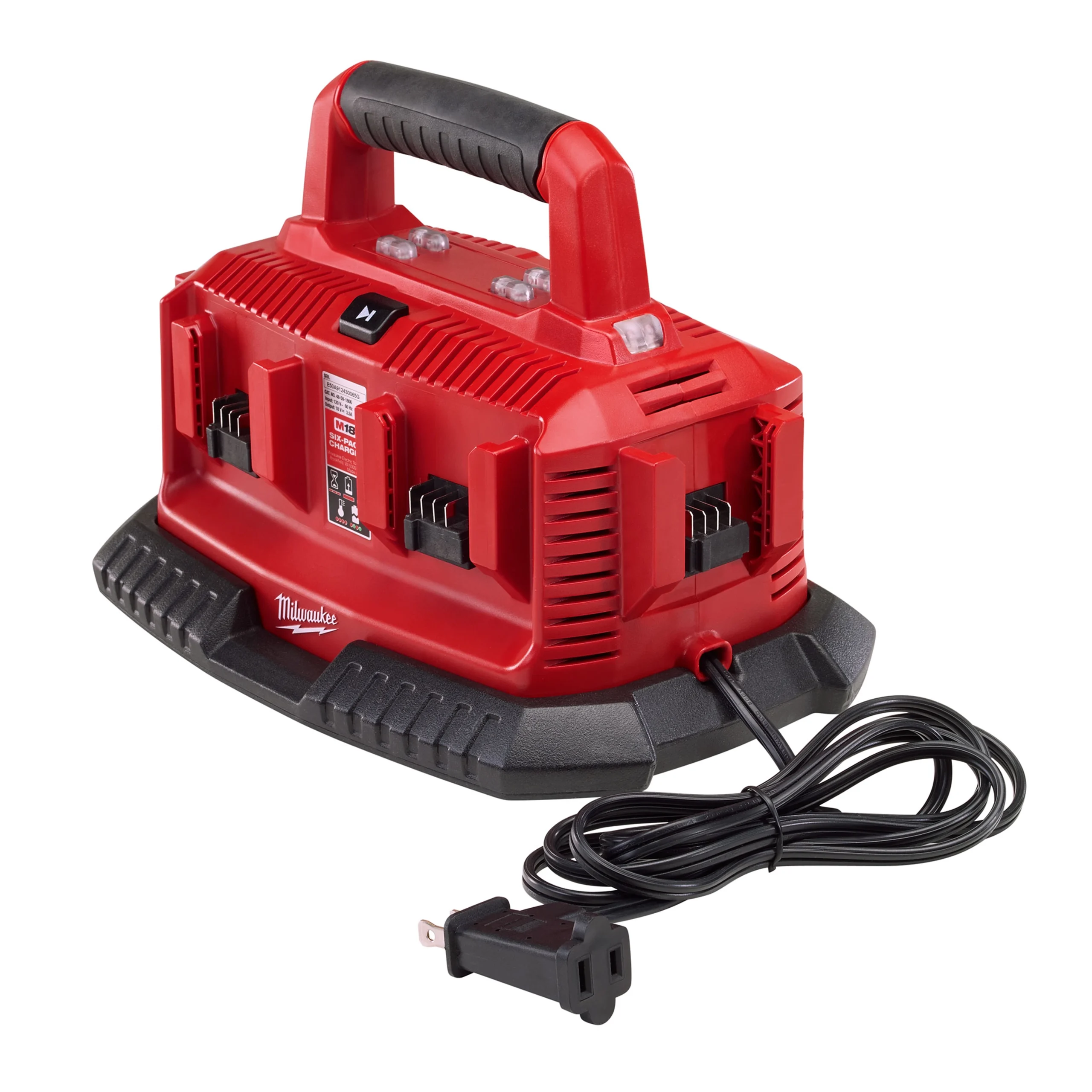
A charging hub is useful when several cordless tools share a workshop, but “hub” can mean two different things: a rack that organizes separate chargers, or a multi-port charger that charges several batteries from one power supply. The distinction matters. A rack saves bench space; it usually does not make batteries charge faster. A true multi-port unit can simplify charging, but its ports may share power or charge batteries in sequence.
As an Amazon Associate we earn from qualifying purchases at no extra cost to you.


Choose the right kind of charging setup
Start with your battery platform and count how many packs you need ready at once. Then check the charger’s output and whether it charges ports simultaneously. A three-port charger that rotates among packs is not equivalent to three independent chargers if you need all three batteries ready by morning.
For a few batteries, a wall-mounted shelf or charging station holding the chargers you already own may be the sensible buy. For a crew or a busy shop with frequent battery swaps, a compatible multi-port charger can reduce clutter and make charging easier to manage. Search by platform and voltage, not just by the word “hub”: cordless tool battery multi-port chargers.
Compare the main options
| Setup | Best for | Main trade-off |
|---|---|---|
| Several standard chargers | One or two users with mixed charging needs | More outlets and bench space; easy to add one charger at a time |
| Platform-specific multi-port charger | Several batteries from the same ecosystem | Can be bulky, costly, or sequential rather than fully simultaneous |
| Wall rack with separate chargers | Workshops that need organized, visible charging | Improves storage, not charge speed; chargers still need outlets |
| Portable charging case or station | Mobile crews and shared work areas | Convenient to move, but capacity and airflow may be limited |
Check platform, capacity, and charging time
Battery compatibility is the first filter. Chargers generally accept only batteries from their own manufacturer and specified voltage family; a physical fit is not enough to establish compatibility. Don’t assume an adapter makes an unsupported charging combination safe. If your shop runs two brands, separate chargers or two platform-specific stations are usually more practical than trying to force one hub to serve both.
Next, look at the charger’s output in amps and the battery’s amp-hour rating. As a rough planning estimate, divide the battery’s amp-hour rating by the charger’s output current, then allow extra time for the charging profile and final balancing. A 5 Ah pack on a 2 A charger might take around 2.5 hours or longer; actual times vary by battery, charger, temperature, and state of charge. Fast charging is useful when a pack must return to work quickly, but it can add cost and heat. For overnight charging, a slower compatible charger may be entirely adequate.
Read the port behavior carefully. Some multi-bay chargers charge one battery at a time, while others charge multiple packs concurrently with power shared between bays. For a workshop using several tools all day, prioritizing enough total charging capacity matters more than the number of slots. For occasional DIY use, sequential charging may be fine if packs can rotate through overnight.
Plan the layout and avoid common failures
Choose a stable spot near a suitable outlet, away from sawdust piles, direct sunlight, heaters, and wet work. Leave the clearance specified by the charger maker; enclosing chargers in a tight cabinet can trap heat and slow charging. Keep cords out of walkways and avoid stacking batteries where they can fall or be struck by stock. A purpose-built wall-mounted battery charging station can tidy a small shop, but check its dimensions against your actual chargers and packs before buying.
Heat is a common reason charging takes longer than expected. A hot battery just off a demanding cut may need to cool before the charger accepts it. Don’t try to defeat that protection: move the pack to a ventilated area and let it reach the manufacturer’s recommended temperature range. Cold batteries can also charge poorly. Damaged packs, cracked cases, swollen cells, or contacts with debris should not go onto a charger.
Another frequent mistake is buying a station based on the number of battery slots alone. Confirm that it holds your battery sizes securely and that the chargers remain accessible for status lights and removal. Check the electrical load too: several high-output chargers on one circuit can trip a breaker, especially if other shop equipment starts at the same time. Follow the charger ratings and your circuit limits rather than relying on a power strip’s socket count.
What to buy for your shop
If you already own working chargers and mainly want a cleaner bench, buy an organizer or rack designed for your battery platform—or build a simple shelf with enough air space. This is the cheaper option, and it avoids replacing chargers that already meet your needs. A charger wall rack is worth considering when floor and bench space are tight, provided it supports the combined weight and keeps chargers ventilated.
If several people share tools, or you regularly drain multiple batteries before lunch, look for a manufacturer-compatible multi-port charger with clear information about simultaneous charging, output, and supported battery types. A second standard charger can be a better-value alternative if it gives you more independent charging capacity for less money. Compare real charge times and the number of packs your work consumes in a shift—not just the number of bays.
For a mixed-brand workshop, keep the systems separate and label each charging area. That reduces the chance of grabbing the wrong pack or charger, while making it obvious which batteries are ready. The best setup is the one that fits your platform, electrical capacity, and daily battery turnover without adding gear you won’t use.
Related guides
- Longest Lasting Lawn Mower Battery: AGM vs Lithium vs Flooded Lifespan and Cost per Season
- Duralast Gold Lawn Mower Battery Review: U1 Fit, CCA and When to Pay for AGM
- Greenworks Pro 80V 21-Inch Mower Review: Runtime Math, Push vs Self-Propelled and Yard Fit
- Bosch High Pressure Washer Gun Replacement: Fittings, Adapters and What Fits Your Model