What's inside
As an Amazon Associate I earn from qualifying purchases. This post may contain affiliate links at no extra cost to you.
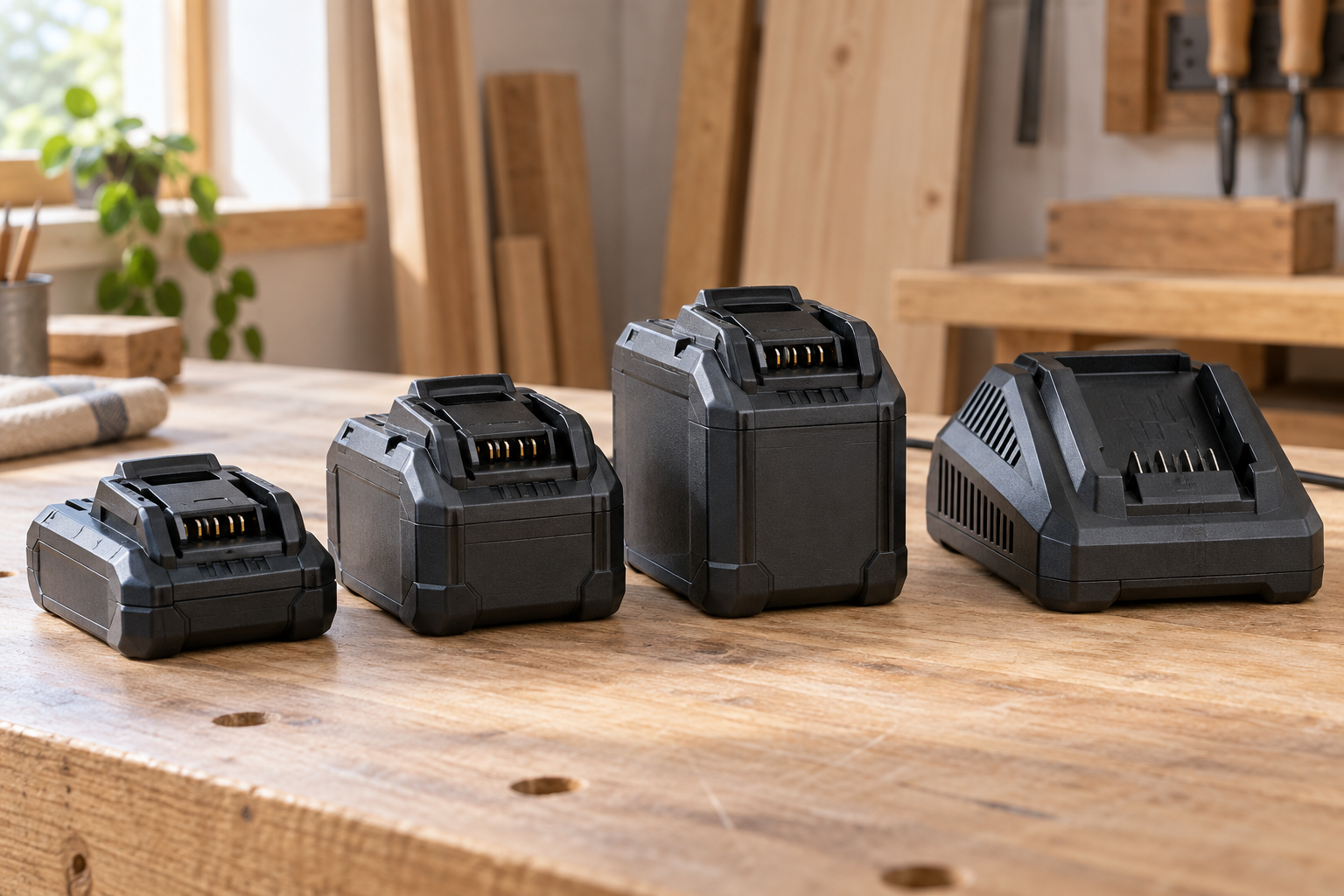
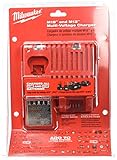
Milwaukee’s M18 Standard Charger and M18 Rapid Charger both charge the same M18 battery packs, but they suit different work patterns. The Standard Charger is slower and usually easier on a battery during routine charging. The Rapid Charger costs more and produces more heat, but it can put a 5.0Ah pack back into service in roughly an hour instead of closer to two.
The right choice depends less on the charger’s maximum speed than on how many batteries you own, how hard you use them, and whether you can charge between jobs. If you have two or three packs and work at a normal pace, the cheaper charger is often enough. If one battery has to keep a saw, grinder, or high-demand rotary hammer running all day, Rapid charging becomes more useful.
As an Amazon Associate we earn from qualifying purchases at no extra cost to you.



Charge time: what the numbers mean
Milwaukee’s standard M18 charger typically takes about 100 minutes to charge a 5.0Ah battery from empty. The M18 Rapid Charger cuts that to approximately 59 minutes under normal conditions. Actual times vary with pack capacity, battery temperature, age, and how deeply the battery was discharged.
| Factor | M18 Standard Charger | M18 Rapid Charger |
|---|---|---|
| Typical 5.0Ah charge time | About 100 minutes | About 59 minutes |
| Best use | Overnight, lunch-break, and general shop charging | Fast turnaround during demanding work |
| Heat during charging | Lower charging rate and generally less heat | Higher current and noticeably more heat |
| Battery compatibility | M18 battery packs | M18 battery packs, with charging controlled by the pack and charger |
| Cost trade-off | Lower purchase price | More expensive for faster recovery |
A 2.0Ah compact pack will finish much sooner than these figures, while a 8.0Ah or larger high-output pack will take considerably longer. Do not divide the advertised 5.0Ah time perfectly by capacity; charging slows near full, and the charger changes its output as the battery’s temperature and voltage rise.
Heat is the main trade-off
Fast charging pushes more current into the cells over a shorter period. That creates more heat in both the battery and charger. Milwaukee’s batteries include internal monitoring and protection, so the charger does not simply force current into an unprotected pack. It can reduce or pause charging when the battery is too hot or too cold.
That protection prevents obvious abuse, but it does not make heat irrelevant. Repeatedly charging a hot battery immediately after heavy cutting or grinding can extend the waiting time, because the pack may need to cool before accepting a full charge. High temperatures also accelerate long-term lithium-ion wear. The effect is gradual rather than an instant failure, but a battery that is charged hot several times a day is working under harsher conditions than one charged after cooling.
The Standard Charger’s lower charging rate is gentler in day-to-day use. It is not automatically a battery-preservation device—storage temperature, deep discharges, and workload matter too—but it generally adds less charging heat. If you normally charge batteries overnight, the slower rate offers little practical disadvantage.
How the chargers behave on a job
Rapid charging is most valuable when the battery is the bottleneck. A crew running one battery in a cordless cut-off tool or high-demand saw can use the Rapid Charger to recover a usable pack during a lunch break or while another task is underway. A nearly empty 5.0Ah pack may not be completely full after a short break, but even partial recovery can be useful.
For general carpentry, installation, drilling, and fastening, battery rotation usually matters more than charging speed. Two packs allow one to work while the other charges. Three or four packs make the charger’s speed less important still. In that situation, put the M18 Standard Charger on a shelf or truck and charge packs whenever the tool is not needed.
A Rapid Charger also does not turn a small battery into a large one. A 2.0Ah compact pack may charge quickly, but it still has limited runtime in a circular saw or grinder. For those tools, buying an appropriately sized M18 high-output battery may improve productivity more than upgrading the charger.
When the Standard Charger is the better buy
Choose the Standard Charger if you charge overnight, use tools intermittently, or already own enough batteries to rotate them. It is also the sensible choice for a homeowner who may go days between projects. The lower price can be put toward another battery, and an extra battery often provides more usable work time than a faster charger.
It is fine to leave a pack charging until full, but avoid treating any lithium-ion battery as a permanent storage device on the charger. Once charged, remove it and store batteries in a dry place away from direct sun and extreme heat. Let a hot pack cool before charging rather than forcing it onto the charger immediately.
When the Rapid Charger earns its cost
Buy the Rapid Charger when you regularly use several batteries per day, operate high-draw M18 tools, or work where battery swaps are limited. It is particularly useful for a one-person operation carrying a small battery inventory. The faster recovery can reduce idle time without requiring a large collection of packs.
Allow ventilation around the charger and do not cover it with clothing, sawdust, or a tool bag while it runs. If the charger or battery becomes unusually hot, smells scorched, shows physical damage, or repeatedly stops and restarts, unplug it and inspect the pack. Do not charge a swollen, cracked, wet, or dropped battery.
Which one should you buy?
For most occasional users, the Standard Charger is the better value. Its roughly 100-minute 5.0Ah charge time is acceptable when charging happens overnight or between work sessions. If downtime costs money or one battery must cycle through demanding tools all day, the Rapid Charger’s roughly 59-minute target is worth paying for.
Before buying, count your batteries and identify the tool that drains them fastest. If you have only one undersized pack, start with a suitable M18 battery starter kit or additional pack. If your battery rotation is already adequate, choose the charger based on whether saving about 40 minutes per 5.0Ah charge will genuinely change your workday.
FAQ
Which one should you buy?
Related guides
- Longest Lasting Lawn Mower Battery: AGM vs Lithium vs Flooded Lifespan and Cost per Season
- Duralast Gold Lawn Mower Battery Review: U1 Fit, CCA and When to Pay for AGM
- Greenworks Pro 80V 21-Inch Mower Review: Runtime Math, Push vs Self-Propelled and Yard Fit
- Bosch High Pressure Washer Gun Replacement: Fittings, Adapters and What Fits Your Model