What's inside
As an Amazon Associate I earn from qualifying purchases. This post may contain affiliate links at no extra cost to you.
Ridgid 18V and Craftsman V20 are both broad cordless platforms for homeowners and DIY users. The choice is less about voltage—the numbers are not directly comparable measures of power—and more about which tools you need, what kit is on sale, and whether you can get batteries and service when something fails.
As an Amazon Associate we earn from qualifying purchases at no extra cost to you.


Platform basics
Ridgid’s 18V line and Craftsman’s V20 line cover the usual starting tools: drills, impact drivers, saws, lights, and outdoor equipment. Their batteries are not interchangeable, and neither brand’s packs should be used on the other system without an adapter. Adapters can introduce fit, protection, or warranty complications, so they are a poor foundation for a new platform.
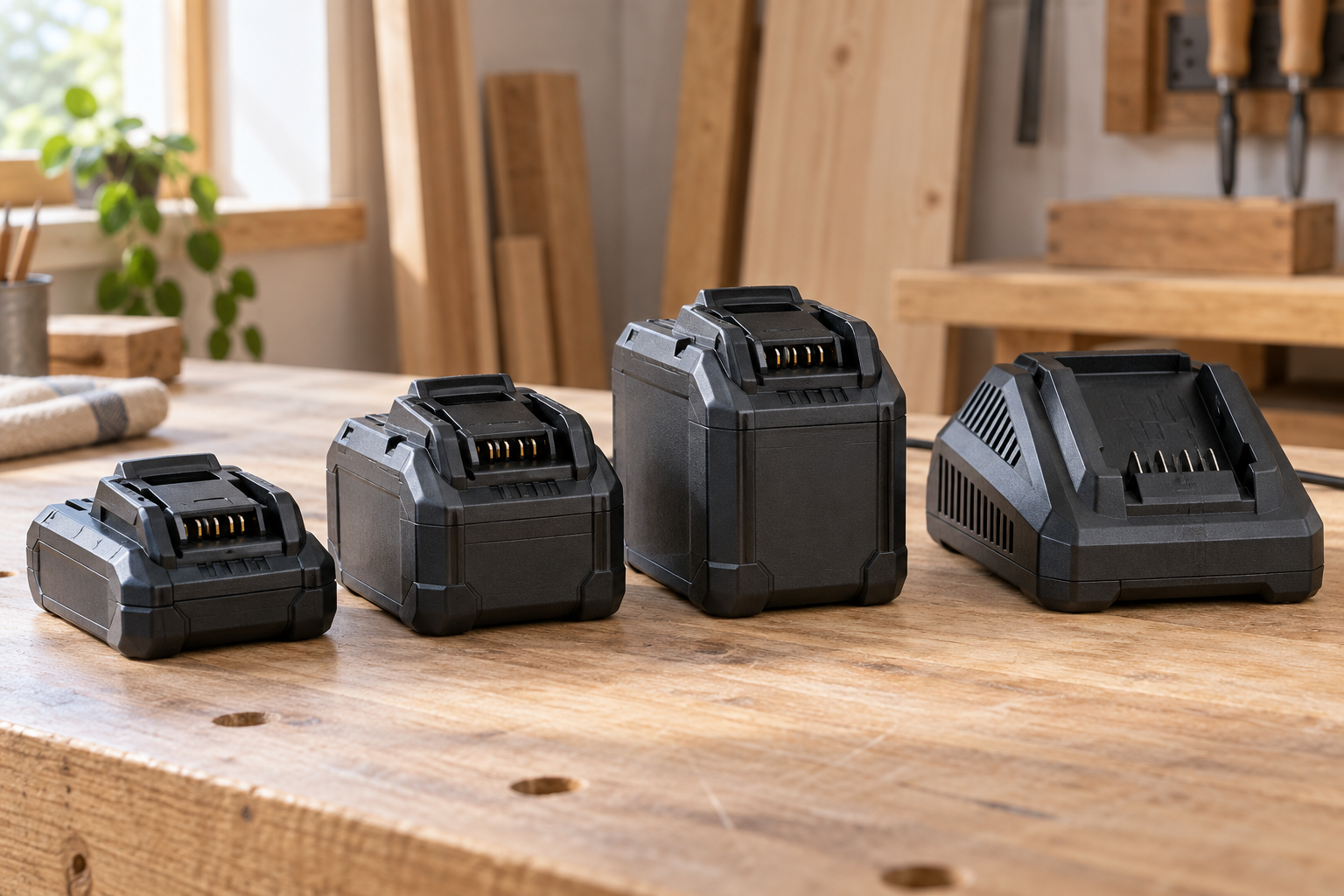
Both brands sell kits with compact batteries that keep a drill or driver light, and larger packs that make more sense for saws and other high-draw tools. Battery capacity is commonly stated in amp-hours (Ah). A 2Ah pack stores less energy than a 4Ah pack, but the bigger pack is also heavier and usually costs more. For occasional drilling, a small battery is often enough; repeated cutting or sanding benefits from spare capacity.
What to look for in a kit
| Factor | Ridgid 18V | Craftsman V20 |
|---|---|---|
| Starter kits | Often sold with a drill and impact driver, batteries, charger, and case or bag; check the exact bundle. | Also commonly bundled with a drill and impact driver, batteries, charger, and storage; kit contents vary by retailer. |
| Battery choice | Compact and higher-capacity packs are available, but bundle value depends on which sizes are included. | Pack sizes and kit contents vary; compare the included batteries rather than judging by tool count. |
| Platform fit | 18V Ridgid batteries fit compatible Ridgid 18V tools, not Craftsman V20 tools. | V20 batteries fit compatible Craftsman V20 tools, not Ridgid 18V tools. |
| Service and warranty | Registration and eligibility rules matter. Keep receipts and check the current terms for the specific tool and battery. | Coverage varies by product and current terms. Keep proof of purchase and verify battery coverage separately. |
Before buying, count the batteries and note their capacity, charger type, and included tools. A kit advertised as having several pieces may count a bag and battery among them. If you already own a compatible battery, a bare tool can be cheaper than paying for another charger and pack.
Battery support is part of the purchase
A battery is a consumable, not a lifetime component. Heat, long periods stored fully discharged, and repeated heavy loads can shorten its useful life. After use, let a hot pack cool before charging; store it dry and avoid leaving it in a hot vehicle. If a pack will sit for months, follow the maker’s storage guidance rather than leaving it on the charger indefinitely.
Most lithium-ion packs have protection electronics that can shut them down after an overload or deep discharge. A pack that will not run a tool may be overheated, depleted, or faulty; let it cool, use the compatible charger, and check the manual before assuming it is dead. Do not open a battery or try to revive it with improvised wiring. Damaged, swollen, or unusually hot packs should be taken out of service and disposed of through an appropriate battery recycling program.
For either platform, confirm that replacement batteries are available where you live and that the warranty applies to the particular pack. Read the terms before relying on a promised extended service plan: registration deadlines, eligible products, and required documentation can affect coverage. Keep the receipt and a record of the battery’s model and purchase date.
Performance and real-world use
For driving screws, drilling pilot holes, and routine household repairs, either platform’s basic drill-and-driver kit is likely to be sufficient. The limiting factors are often the bit, material, and technique, not the logo. Use a sharp, suitable bit and drill a pilot hole where the wood or fastener calls for one. For long structural screws or repeated work in dense material, expect a small pack to drain faster and the tool to get warm.
Saws and other high-draw tools make battery choice more noticeable. A compact pack may trigger a protection cutoff under sustained load, especially if it is already warm or near empty. Switching to a larger pack can help, but it adds weight and does not make a tool intended for light-duty use a substitute for a heavier-duty saw. Keep a second charged battery on hand if a job involves repeated cuts.
Neither platform has an advantage for every user. Compare the specific tool you will use most, its included battery size, and the cost of the next battery you are likely to need. A low-priced starter set is less attractive if its batteries are small and replacements are difficult or expensive to source.
Which platform makes sense?
Choose Ridgid 18V if its current kit has the right tools and battery sizes for your jobs, or if you already own compatible Ridgid packs. Check local service access and the exact warranty requirements before treating coverage as a deciding feature. A Ridgid 18V drill and impact-driver kit is a sensible entry point when you need both tools and at least two batteries.
Choose Craftsman V20 if the bundle is cheaper for comparable contents, you already have V20 batteries, or Craftsman’s available tools better match your list. For occasional home repairs, a less expensive V20 kit can be entirely adequate; paying extra for a platform you will not use heavily is hard to justify. Compare a Craftsman V20 drill and impact-driver kit by battery capacity and charger as well as price.
If you only need one tool, look at a bare tool for your existing platform instead of buying a full kit. If you are starting from zero, price the likely next purchase—a spare battery or the next tool on your list—before committing. That is the practical test: buy the system that gives you affordable, compatible support for the work you actually expect to do.
FAQ
Which platform makes sense?
Related guides
- Longest Lasting Lawn Mower Battery: AGM vs Lithium vs Flooded Lifespan and Cost per Season
- Duralast Gold Lawn Mower Battery Review: U1 Fit, CCA and When to Pay for AGM
- Greenworks Pro 80V 21-Inch Mower Review: Runtime Math, Push vs Self-Propelled and Yard Fit
- Bosch High Pressure Washer Gun Replacement: Fittings, Adapters and What Fits Your Model