What's inside
As an Amazon Associate I earn from qualifying purchases. This post may contain affiliate links at no extra cost to you.
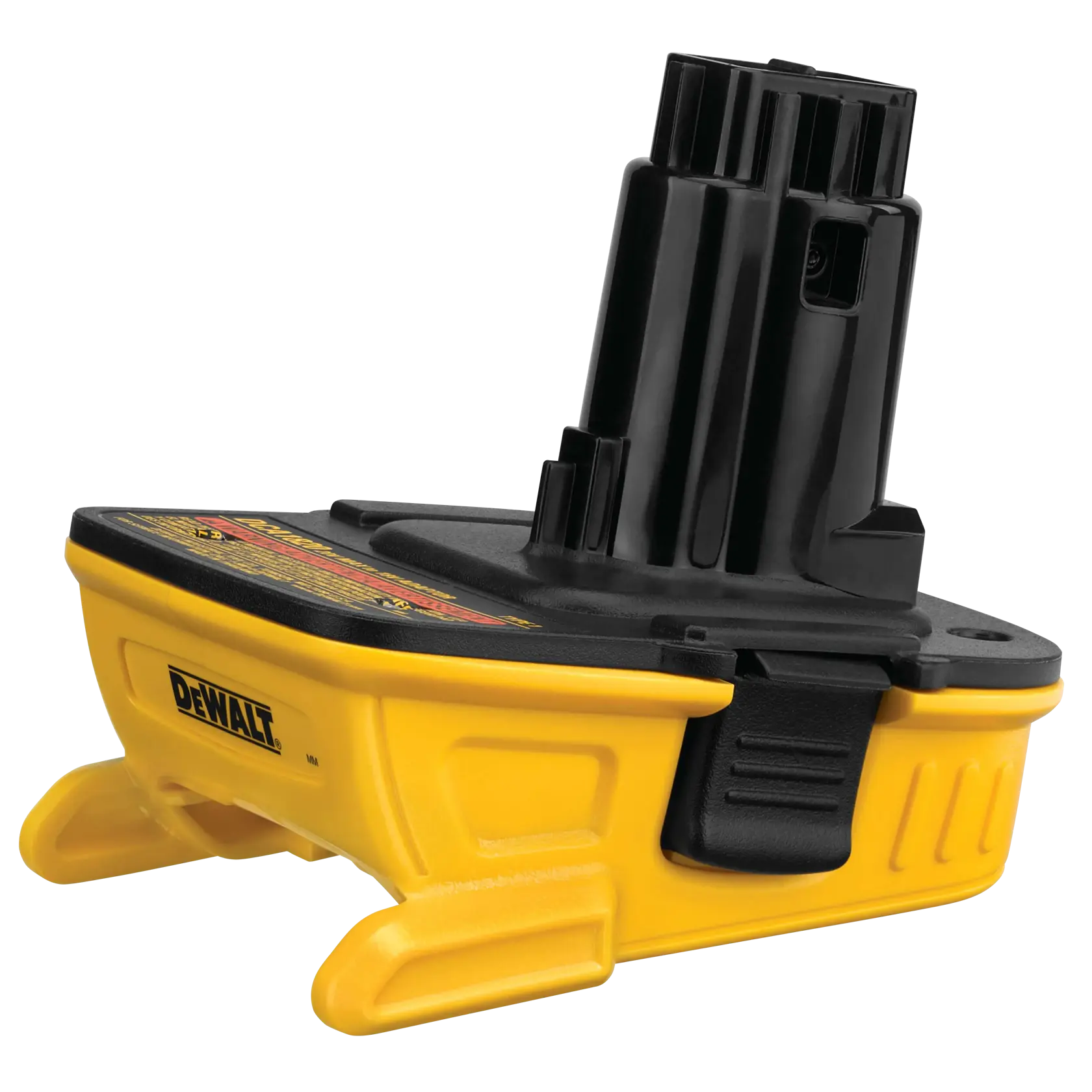
Battery adapters can make one brand’s battery fit another brand’s tool, but a physical fit is not the same as full electrical or electronic compatibility. In many cases, an adapter carries power through simple contacts and leaves the tool running. What it may not carry over are the communication signals that help a battery, charger, and tool manage temperature, current, and faults.
That distinction matters most when a tool draws heavy current, the battery is pushed hard, or the adapter is used for charging. For an occasional low-load job, a reputable adapter may be a practical workaround. For daily use, high-demand tools, or safety-critical protection, matching the tool and battery platform is the more dependable choice.
What an adapter actually does
A basic adapter connects positive and negative battery terminals to the corresponding tool contacts. Some also connect a temperature-sensing or identification terminal; others do not. Many adapters contain no active electronics at all. They change the connector shape, not the battery’s chemistry, voltage, or protection system.
Protection can be split across the battery, tool, and charger. A battery may monitor cell voltage and temperature and disconnect its output when a limit is reached. A tool may limit current or shut down when it overheats. A charger may check battery temperature and communicate with the pack before charging. An adapter cannot preserve signals it does not pass through, and a tool designed around a different battery system may not recognize a pack’s status correctly.
Protection features that may be lost
Under-voltage protection is a key concern. If the tool does not stop when cells are depleted, it may continue running until the battery’s own cutoff trips—or, with a poorly matched combination, until cells are driven too low. Repeated deep discharge can reduce pack life and create a safety risk. Do not assume a tool’s low-battery light means it is reading the attached battery correctly through an adapter.
Overcurrent and temperature protection are also system-dependent. The battery may still have its own cutoff, but that does not guarantee protection at every point in the tool-adapter-battery combination. A loose contact, undersized conductor, or poor fit can add resistance. Under load, resistance creates heat at the connection. Stop if the adapter or terminals become unusually hot, smell of heated plastic, discolor, or show melting.
Charging is a separate issue. Do not use a cross-brand adapter to charge one platform’s battery on another platform’s charger unless both manufacturers explicitly approve that combination. The charger’s voltage may appear suitable while its monitoring, charge termination, or temperature checks are not. Use the charger specified for the battery pack.
Adapter types and their trade-offs
| Setup | What it usually preserves | Main concern | Best fit |
|---|---|---|---|
| Passive adapter, battery to tool | Basic power connection; sometimes a sensor contact | Tool-side communication or shutdown behavior may not work as intended | Occasional, supervised use after checking compatibility |
| Adapter with electronic circuitry | May translate or manage selected signals | Features vary; circuitry does not prove full platform compatibility | Users who can verify the exact battery-tool pairing |
| Matching battery and tool platform | Designed battery, tool, and charger interaction | Higher upfront cost if you own packs from another system | Regular use, high loads, and charging within the system |
For a one-off job on a low-draw light or similar tool, a properly made adapter may cost less than buying a new battery ecosystem. If choosing that route, look for clear compatibility information, secure locking, well-finished contacts, and a stated current rating. Avoid adapters that make unsupported claims such as “all protections retained” without explaining how they handle temperature, voltage, and tool communication. A battery adapter listed for your exact tool and battery brands is a better starting point than a universal-looking connector with no documentation.
Check before buying or using one
Confirm the battery’s nominal voltage matches the tool’s required voltage. A connector adapter does not convert voltage. Also check the battery’s maximum current capability against the tool’s demands. A drill used for light fastening is a different load from a circular saw, grinder, or high-output blower. Peak current can be much higher than the steady draw, so a seller’s vague wattage claim is not enough to establish suitability.
Inspect whether the adapter has a low-voltage cutoff and whether it passes any temperature or communication contacts. Ask the maker for the battery and tool combinations tested, not just the connector types. If documentation is unavailable, treat the adapter as an unverified power connection. Never modify contacts to bypass a cutoff or defeat a temperature sensor.
For a high-demand tool you use often, the conservative choice is a battery designed for that platform. If the cost is the obstacle, compare the price of a compatible battery and charger with the adapter plus the risk of shorter battery life, tool shutdowns, or a damaged pack. A compatible battery-and-charger kit may make more sense when you need dependable performance or plan to expand that tool system.
Use an adapter cautiously
Start with a fully charged battery and a short, light test. Keep the first run brief, then check the adapter and contacts for heat. Secure the battery so it cannot wobble or detach, and do not leave the tool unattended. Stop immediately if the tool cuts out repeatedly, the battery becomes excessively hot, or the adapter shows damage. Repeated cutouts are not a reason to bypass protection; they can indicate overload, a poor connection, or incompatible control behavior.
Do not use an adapted pack where an unexpected shutdown could cause injury or damage, such as overhead cutting or work requiring controlled braking. For tools with electronic brakes, variable-speed controls, or heavy startup loads, verify that the manufacturer supports the combination. If you cannot confirm that the tool stops and the battery shuts down safely, use the matched battery system instead.
Make the decision by workload
An adapter can be a reasonable economy choice for occasional, low-load work when the exact pairing is documented and you accept that some platform features may not transfer. It is not a universal way to combine battery systems, and it should not be used for charging across brands. For frequent work, high-current tools, or jobs where protection behavior matters, a native battery and charger are worth the extra cost. The deciding question is not whether the battery snaps into place; it is whether the whole system still manages power, temperature, and faults as intended.
Related guides
- Longest Lasting Lawn Mower Battery: AGM vs Lithium vs Flooded Lifespan and Cost per Season
- Duralast Gold Lawn Mower Battery Review: U1 Fit, CCA and When to Pay for AGM
- Greenworks Pro 80V 21-Inch Mower Review: Runtime Math, Push vs Self-Propelled and Yard Fit
- Bosch High Pressure Washer Gun Replacement: Fittings, Adapters and What Fits Your Model