What's inside
As an Amazon Associate I earn from qualifying purchases. This post may contain affiliate links at no extra cost to you.
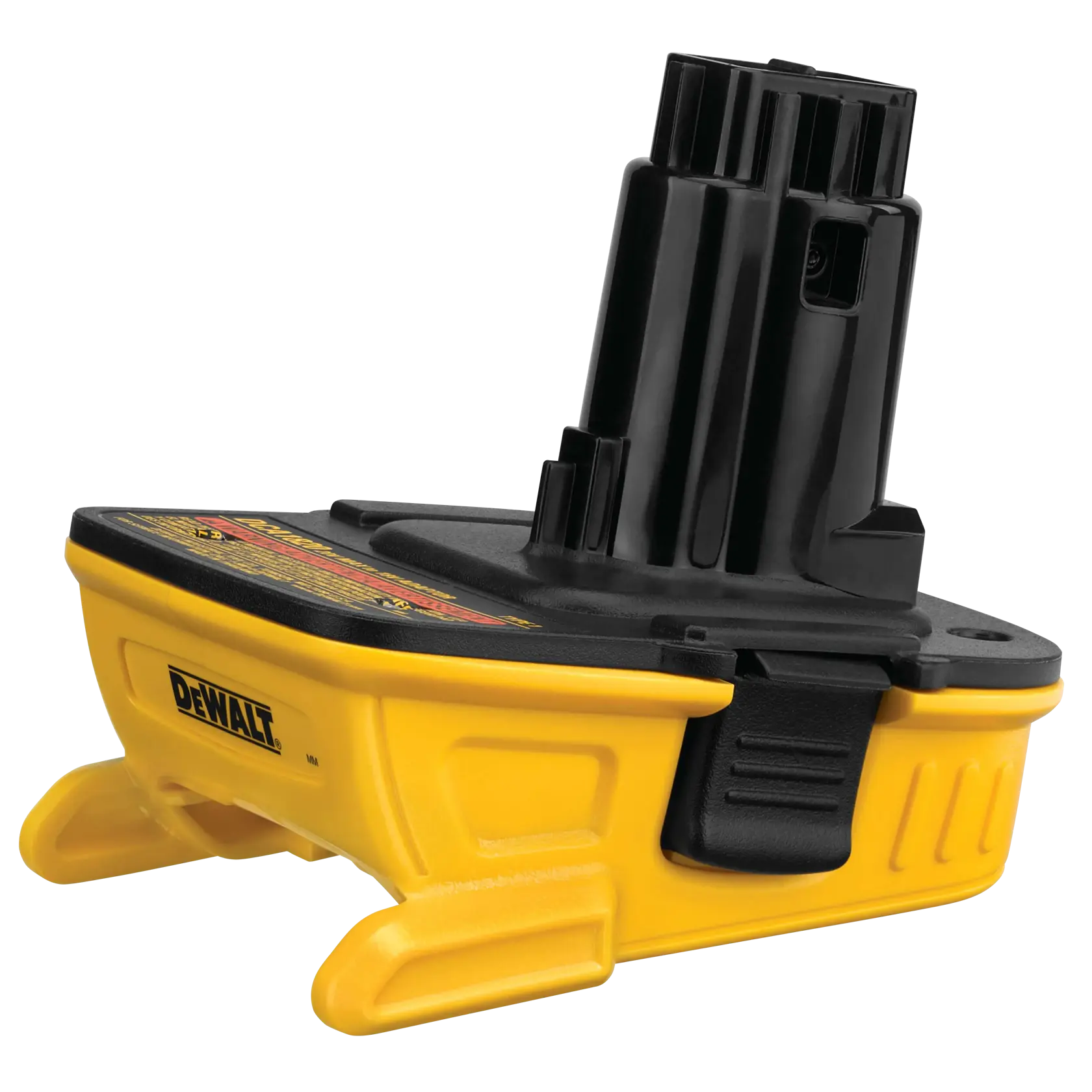
A battery adapter can make a tool from one brand run on a battery from another. That is useful when you already own several packs and need to finish a job. It does not make the two platforms equivalent, though. Adapters can affect fit, electrical protection, runtime, and warranty coverage—and a tool that runs normally at first may still shut down early or overheat under load.
The limits matter most with high-draw tools such as grinders, circular saws, and shop vacuums. For occasional, lighter work, an adapter can be a reasonable way to avoid buying a battery immediately. For daily use, the convenience may cost more in performance and reliability than it saves.
What an adapter changes
A cordless tool system includes more than a battery’s nominal voltage. The battery, tool, and charger may communicate about temperature, current, charge state, and faults. Some adapters simply connect the main power terminals. Others pass through some signals or add their own protection, but behavior varies by adapter and platform.
Even when both products are labeled 18V or 20V max, that does not guarantee identical operating voltage, current limits, or battery monitoring. “20V max” commonly describes a pack’s voltage at full charge; the same pack may be sold as 18V nominal. The label alone does not tell you whether the battery can supply the current a particular tool demands.
An adapter also adds another physical connection. Poorly fitting contacts can create resistance, heat, intermittent power, or a pack that works loose when a tool vibrates. Do not file, bend, or modify terminals to make a battery fit. Stop using an adapter that feels loose, gets unusually hot, smells of burning, or causes repeated cutouts.
Where performance can suffer
Current demand rises sharply when a motor starts or a cutting tool meets resistance. A battery that runs a drill smoothly may trigger its protection circuit in a saw, even if both tools appear to use the same voltage. The result may be a brief stall, repeated shutdowns, or less power under load. A weak pack makes this more likely because its voltage can sag sooner.
Runtime is also easy to misjudge. As a rough comparison, a 5Ah battery stores about 90 watt-hours at 18V nominal (18V × 5Ah). That is not a promise of a particular number of cuts: motor efficiency, workload, battery age, and protection limits all affect usable energy. An adapter does not increase capacity or make an incompatible pack deliver more current.
Fit and balance can change handling. An adapter may add height or shift weight away from the tool’s grip. That is minor on a drill used at waist level; it can make an overhead job tiring or awkward on a long day. Extra length can also prevent a tool from fitting in a case or working in a tight corner.
Adapter versus native battery
| Consideration | Battery adapter | Native battery and charger |
|---|---|---|
| Upfront cost | Usually lower if you already own compatible packs | Higher when it requires buying a pack and charger |
| Best fit | Occasional, lower-demand work after checking compatibility | Regular use, demanding tools, and a matched platform |
| Protection and monitoring | Depends on the adapter; some battery-tool signals may not pass through | Designed to work within the manufacturer’s system |
| Handling | Can add bulk, weight, or a loose connection point | Typically the intended fit and balance |
| Support and warranty | May complicate troubleshooting or warranty claims | Usually simpler to diagnose and support |
When the cheaper option is fine
An adapter can make sense for a light-duty tool you use occasionally, especially if you have a spare battery with the right voltage and enough capacity. Examples might include a small fan or a low-demand task where a pause or shorter runtime is acceptable. Verify that the adapter maker lists both the battery platform and the tool type as compatible; do not rely on a photo showing that the parts physically connect.
If you choose an adapter, use undamaged batteries, follow its instructions, and check the connection after a short test run. Avoid leaving a battery attached when the tool is stored. Never use an adapter to charge a battery on a charger not designed for that battery, and do not assume a tool’s low-voltage cutoff will protect a battery if the adapter bypasses battery monitoring.
For high-draw tools, frequent work, or jobs where a sudden stop could be hazardous, a matched battery is the more dependable choice. Consider a replacement battery for your tool’s platform rather than trying to solve a power problem with an adapter. Check the manufacturer’s compatibility chart before buying: packs within one brand can still differ by voltage, generation, or tool compatibility.
Check before you buy
Start with the exact battery and tool platform, not just the brand name. Look up voltage, battery generation, and any compatibility notes for the specific tool. Then check the adapter’s stated current rating and protection features. If those details are missing, treat its suitability for demanding tools as unknown—not as proof that it is safe.
Compare the adapter price with the cost of a native pack, and include likely trade-offs: extra weight, possible cutouts, and reduced confidence in battery monitoring. A battery-and-charger starter kit can be better value if you will add more tools from that platform. If you only need one occasional-use tool, a bare tool plus an adapter you have verified may cost less.
Finally, consider warranty terms and job consequences. An adapter may make fault diagnosis harder, and the tool or battery maker may exclude damage caused by third-party accessories. For a garage project, that risk may be acceptable. For daily trade work, where downtime costs money, staying within one battery platform is often the simpler and more predictable choice.
Related guides
- Longest Lasting Lawn Mower Battery: AGM vs Lithium vs Flooded Lifespan and Cost per Season
- Duralast Gold Lawn Mower Battery Review: U1 Fit, CCA and When to Pay for AGM
- Greenworks Pro 80V 21-Inch Mower Review: Runtime Math, Push vs Self-Propelled and Yard Fit
- Bosch High Pressure Washer Gun Replacement: Fittings, Adapters and What Fits Your Model