What's inside
As an Amazon Associate I earn from qualifying purchases. This post may contain affiliate links at no extra cost to you.
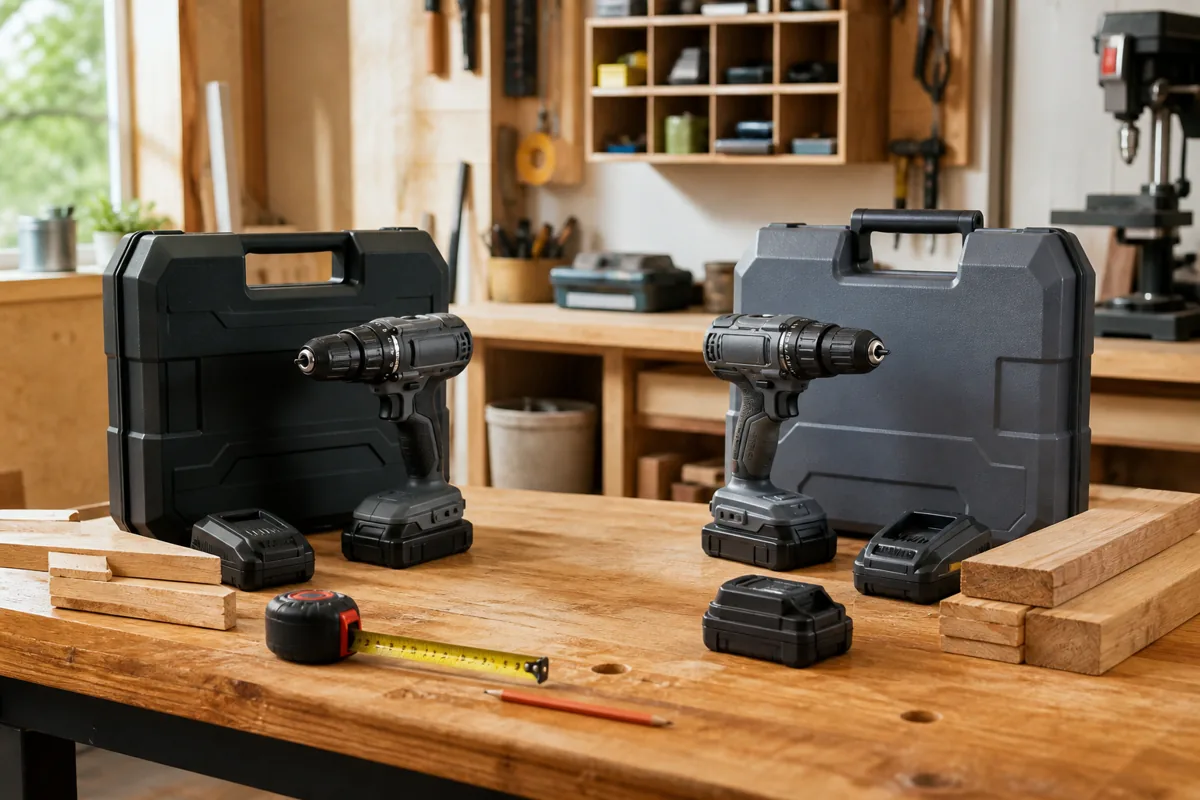
Milwaukee M12 and Bosch 12V are both compact cordless platforms suited to service calls, cabinet work, and repairs where a full-size drill is awkward. Neither is simply the “stronger” choice: the useful differences are tool selection, battery fit, charger setup, and how each platform handles the jobs you actually do.
As an Amazon Associate we earn from qualifying purchases at no extra cost to you.


Platform basics
Both systems use lithium-ion batteries and cover common service tools such as drills, impact drivers, lights, and ratchets. The 12V label does not tell you how long a tool will run or how much work it can do. Battery capacity, tool design, and load matter. Capacity is usually stated in amp-hours (Ah); a higher-Ah pack generally runs longer, but adds size and weight.
That trade-off is especially noticeable on a compact drill or ratchet. A slim pack is easier to fit between joists or inside a cabinet. A larger pack can reduce battery changes during a long day but may make the tool less comfortable overhead. Compare the complete tool-and-battery setup, not a bare tool’s dimensions.
At a glance
| Consideration | Milwaukee M12 | Bosch 12V |
|---|---|---|
| Best reason to choose it | Broad selection of compact service tools and a substantial platform for users already invested in M12 | Compact tools and a sensible fit for users who already own Bosch 12V batteries and chargers |
| Battery compatibility | M12 batteries fit M12 tools, not Milwaukee M18 tools | Bosch 12V batteries fit compatible Bosch 12V tools, not Bosch 18V tools |
| What to check before buying | Whether the exact tool is available in M12 and whether its shape suits the work | Regional tool availability, battery inclusion, and compatibility with your existing Bosch 12V packs |
| Typical compromise | Adding the system can mean buying batteries and a charger if you are starting from zero | The selection of a particular specialty tool may be narrower in your local market |
Tool ranges and kit contents change, so confirm the current product listing and battery compatibility before ordering. A kit’s included battery is not necessarily the size you will want for every task.
Choose the tool before the battery platform
Start with the job, then compare the two brands’ versions of the tool. For occasional drilling in wood, plastic, or light sheet metal, either platform can be adequate. For repeated fastening, use an impact driver when its pulsing action and compact head help, but do not use it as a substitute for controlled screw driving in delicate fittings. Set the clutch on a drill-driver when stripping a screw or crushing a workpiece is a real risk.
For electrical and mechanical service work, a cordless ratchet can save wrist effort in repetitive fastener removal. It is not a replacement for a hand ratchet’s feel: start fasteners by hand and finish them manually when torque matters. A compact ratchet can also damage small threads if you lean on the trigger. Look at head clearance and the position of the direction switch; those details may matter more than headline speed.
If you need a compact 12V drill-driver, compare chuck size, clutch settings, trigger control, and bare-tool weight with the battery you plan to use. For cramped access, consider a 12V right-angle drill rather than forcing a straight drill into an awkward position.
Batteries and charging
For short service visits, one compact battery may be enough. For a full shift of drilling or fastening, carry at least one charged spare so a flat pack does not stop the job. Runtime cannot be predicted reliably from Ah alone: driving long fasteners, drilling large holes, and using a tool continuously all drain a battery faster than intermittent light work.
Keep a charger where the packs can stay dry and ventilated. Charging a very cold or hot battery may be delayed by its protection system; let it return to room temperature rather than trying to force a charge. If a pack gets unusually hot, has a cracked case, or no longer holds charge, stop using it. Don’t mix batteries between brands with an adapter as a routine solution: adapters can affect fit, protection, and warranty coverage.
If you already own several M12 batteries, choosing another M12 tool is often the economical move even if Bosch has a comparable tool. The same applies to Bosch 12V owners. Starting fresh is different: compare the price of a useful starter kit, spare battery, and charger together, not just the advertised bare-tool price.
Which platform makes sense?
Choose Milwaukee M12 if its specific compact tools match your regular work and you value having more options within one 12V family. It is a practical choice for a service technician who wants to build around a drill, light, ratchet, or other frequently used specialty tools. Still, check each tool individually: a large battery can spoil the balance of an otherwise compact setup.
Choose Bosch 12V if you already own compatible batteries, find the right tools locally, or prefer the size and handling of its particular models. The cheaper option is fine when it covers your actual jobs. There is little benefit in paying more for a larger platform selection you will not use, or in replacing a working tool just to standardize brands.
Before buying, hold the tool if possible, check access to replacement batteries, and price a spare pack and charger. A platform earns its place through tools you use—not through the number of products in a catalogue.
FAQ
Which platform makes sense?
Related guides
- Longest Lasting Lawn Mower Battery: AGM vs Lithium vs Flooded Lifespan and Cost per Season
- Duralast Gold Lawn Mower Battery Review: U1 Fit, CCA and When to Pay for AGM
- Greenworks Pro 80V 21-Inch Mower Review: Runtime Math, Push vs Self-Propelled and Yard Fit
- Bosch High Pressure Washer Gun Replacement: Fittings, Adapters and What Fits Your Model