What's inside
As an Amazon Associate I earn from qualifying purchases. This post may contain affiliate links at no extra cost to you.
Battery connector design is easy to overlook when comparing cordless tool platforms. Most buyers compare voltage, amp-hours, price, and the number of tools available. Those matter, but the physical and electrical connection between a battery and a tool often determines how convenient, durable, and future-proof the platform will be.
A connector is more than the metal contacts you can see. It includes the battery’s rails or mounting post, locking mechanism, guide surfaces, temperature-sensing contacts, communication pins, and the way the battery transfers high current. A good design stays tight after years of vibration. A poor match, worn rail, or damaged contact can cause intermittent shutdowns even when the battery still holds a charge.
The Main Connector Designs
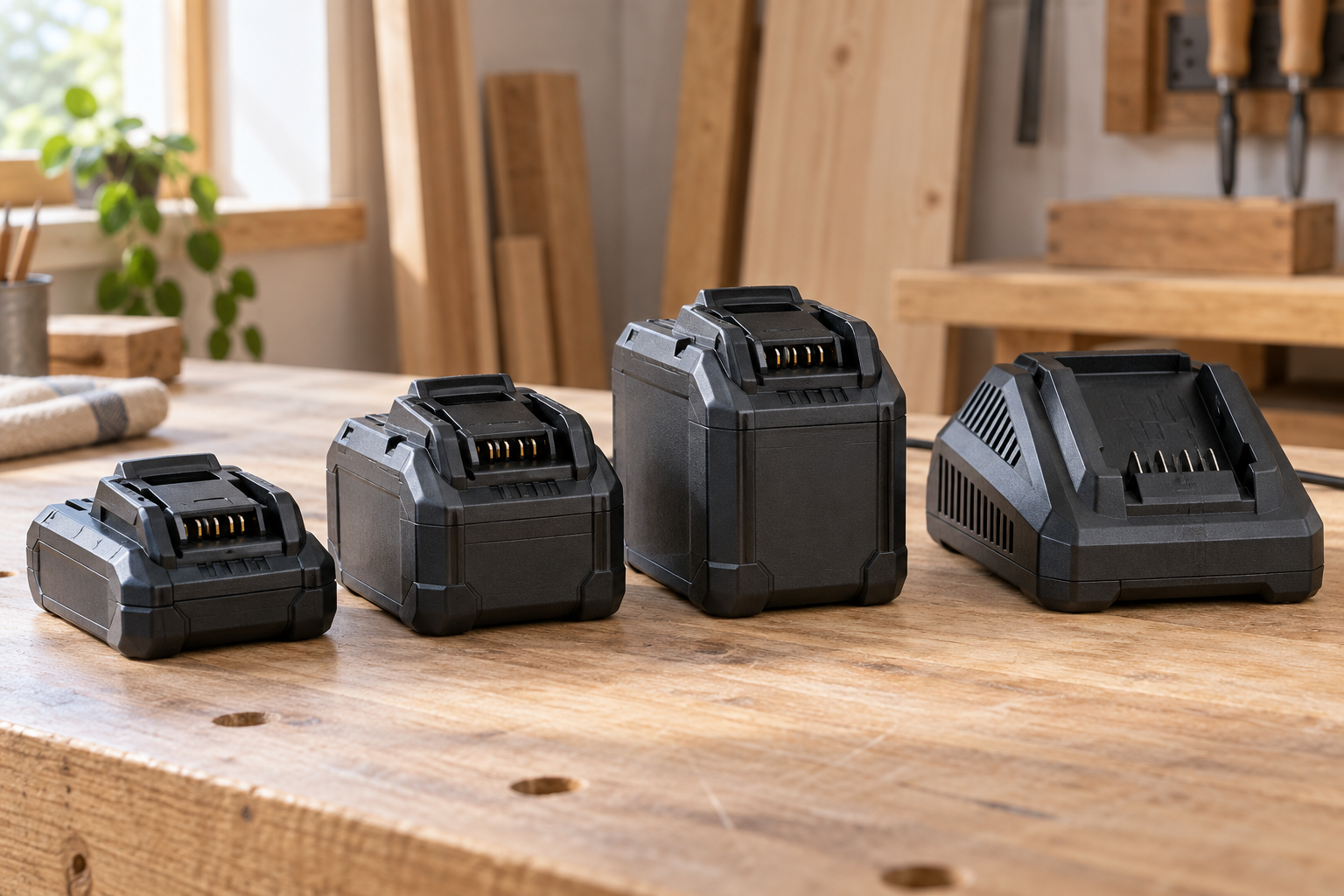
Most cordless platforms use one of three physical arrangements: slide-on batteries, stem-style batteries, or compact pod batteries. Slide-on packs are now the most common in professional and homeowner tool lines. They usually have broad plastic rails that guide the battery into the tool and a locking button or latch.
Stem-style packs insert into a socket in the handle or tool body. They can make a drill handle slimmer and may keep the battery close to the tool’s center of gravity. The disadvantages are less exposed space for cooling and a connector that can receive more stress if the tool is dropped while the battery is installed.
Pod-style batteries fit into a shallow compartment, often beneath a tool handle. These can keep compact tools comfortable, but the battery shape is less universal. A platform may offer several capacities while retaining the same interface, or it may require a different connector for larger packs.
| Connector arrangement | Strengths | Common drawbacks | Best fit |
|---|---|---|---|
| Slide-on rail | Fast changes, broad battery range, good mechanical support | Rails and latch can wear or collect debris | General-purpose and professional platforms |
| Stem-style | Compact grip and centered weight | More confined contacts; less convenient if dropped | Drills, compact drivers, and light tools |
| Pod-style | Short tool body and comfortable handling | Less interchangeable across tool families | Small saws, sanders, and compact hand tools |
Contacts and Electronics Matter More Than Appearance
A simple battery connector may have positive and negative power contacts plus a temperature-sensing terminal. More advanced platforms add communication contacts. The tool and battery can exchange information about temperature, current draw, remaining capacity, and fault conditions.
Electronic communication can protect the pack and tool. For example, a battery may shut down if its cells become too hot or if the tool demands excessive current. This is useful in high-load tools such as grinders and circular saws. It also means that a physically similar battery is not necessarily electrically compatible. Never assume that a pack will work because its voltage and rails appear to match.
Look closely at contact construction. Recessed contacts are less likely to be bent by a dropped battery. Spring-loaded contacts in the tool can maintain pressure as parts wear, but dirt or corrosion may make them stick. Wide power contacts are preferable for tools that draw heavy current. A small driver may work reliably with a modest contact area; a high-output saw needs a connector and bus bars designed for sustained load.
Mechanical Durability and Fit
Try installing and removing a battery several times before choosing a platform. The pack should slide smoothly without needing a hard slap. The release button should be reachable with one hand, but it should not release when the tool is set down or bumped against framing.
Check for side-to-side movement after the battery clicks in. A little clearance is normal, but noticeable rocking can produce contact arcing under load. Arcing creates heat and can pit the terminals. It may first appear as a tool that stops briefly when you twist your wrist, run a saw through wet lumber, or use a grinder at full load.
Dust and chips are another failure point. Rail systems with open grooves can collect sawdust, while recessed contacts can trap fine abrasive dust. This does not make one style automatically better. The important question is whether the battery and tool are easy to inspect and clean. Do not scrape contacts with a metal file while the battery is installed. Remove the pack, blow out loose debris, and use an appropriate electrical-contact cleaner when needed.
Voltage Is Not Compatibility
Nominal voltage describes the battery’s cell arrangement, not its connector or communication protocol. Two platforms marketed around the same nominal voltage can have completely different rails, contact layouts, and control electronics. Even batteries within one brand may be restricted to certain tool families.
Do not use unapproved adapters as a routine solution. An adapter may bypass temperature monitoring, current limits, or low-voltage protection. That can damage a tool, overheat cells, or create a fire risk. Third-party adapters are especially questionable when used with high-current tools. The cheaper route is fine for a low-load tool only if the adapter is specifically designed for that platform and retains the necessary protections; otherwise, buy the correct battery system.
How to Compare a Platform Before Buying
First, list the tools you will buy in the next three years, not just the first drill. Then inspect whether the platform offers batteries in at least two useful sizes. A compact 2.0- or 2.5-Ah pack can reduce fatigue in a drill or impact driver, while a 4.0- to 6.0-Ah pack may be more appropriate for a saw. Larger packs add weight and charging time, so buying the biggest battery for every tool is wasteful.
Next, compare the charger interface and charging speed. Some chargers accept only one pack type; others cover several voltage families. A fan-cooled rapid charger may be worthwhile for contractors using two batteries continuously, but a basic charger is perfectly adequate for weekend repairs. Expect a standard charger to take roughly 45 to 90 minutes for a medium-capacity pack, depending on the system and charger output.
For a first purchase, compare cordless tool starter kits by the connector, not only by the included tool count. A kit with two batteries and a sturdy slide-on system is often a better foundation than a larger kit using an awkward battery format.
Also check replacement cost. If a platform’s connector is proprietary and batteries are expensive, the savings on the bare tool may disappear after one replacement cycle. Search for replacement cordless tool batteries before committing.
When Connector Design Should Decide
Choose a robust slide-on platform when you need saws, grinders, blowers, or several tools used outdoors. Choose a compact stem or pod design when handling comfort matters more than maximum battery choice, such as for occasional drilling, fastening, or detail work.
If you own only one cordless tool, connector design is less important than the tool’s performance and the battery price. If you expect to build a collection, it becomes central. A secure latch, protected contacts, sensible battery sizes, and widely available chargers will save more frustration than a small difference in advertised voltage.
Related guides
- Longest Lasting Lawn Mower Battery: AGM vs Lithium vs Flooded Lifespan and Cost per Season
- Duralast Gold Lawn Mower Battery Review: U1 Fit, CCA and When to Pay for AGM
- Greenworks Pro 80V 21-Inch Mower Review: Runtime Math, Push vs Self-Propelled and Yard Fit
- Bosch High Pressure Washer Gun Replacement: Fittings, Adapters and What Fits Your Model