What's inside
As an Amazon Associate I earn from qualifying purchases. This post may contain affiliate links at no extra cost to you.
Choosing between Ridgid 18V and Ryobi ONE+ is less about which battery is “better” and more about how many useful tools you can buy for it. Both are 18-volt lithium-ion systems aimed at homeowners and DIYers. Ryobi has the broader range of cordless tools and accessories, while Ridgid offers a smaller lineup with a stronger emphasis on jobsite-style tools and a lifetime service agreement on eligible products. That agreement has conditions, so check registration requirements before treating it as a warranty advantage.
As an Amazon Associate we earn from qualifying purchases at no extra cost to you.


Tool range: Ryobi has more ways to use the battery
Ryobi ONE+ is the clear choice if your priority is variety. Its lineup spans core tools such as drills, impact drivers, saws and lights, plus less common household and outdoor options. Depending on availability, the system can cover tasks like inflating, cleaning, yard work and seasonal maintenance. That breadth matters if you want to run several different jobs from one battery shelf.
Ridgid 18V covers the main cordless construction and home-repair categories, including drills, drivers, saws, lights and other workshop tools. It is a practical platform for someone building a compact set for renovation or general DIY. But if a particular specialty tool is central to your plans, verify that Ridgid actually offers it before buying into the system.
For example, someone who needs a drill, circular saw and work light can make either platform work. Someone who wants to add several less-common tools is more likely to find a suitable ONE+ option. Browse the Ryobi ONE+ cordless tool range by category rather than assuming every tool shown online is available as a bare tool.
At a glance
| Factor | Ridgid 18V | Ryobi ONE+ |
|---|---|---|
| Best fit | DIYers focused on core workshop and renovation tools | DIYers who want the widest range of household and specialty tools |
| Platform breadth | Solid main-tool selection | Broader selection, especially beyond standard construction tools |
| Battery compatibility | 18V batteries fit compatible Ridgid 18V tools | ONE+ batteries fit compatible ONE+ tools across the system |
| Warranty consideration | Lifetime service agreement may be available on qualifying, registered products; terms apply | Warranty varies by product; check the tool’s current terms |
| Good reason to choose it | You value Ridgid’s service coverage and its tool lineup suits your work | You want more options for expanding one battery system |
Battery compatibility and buying into the system
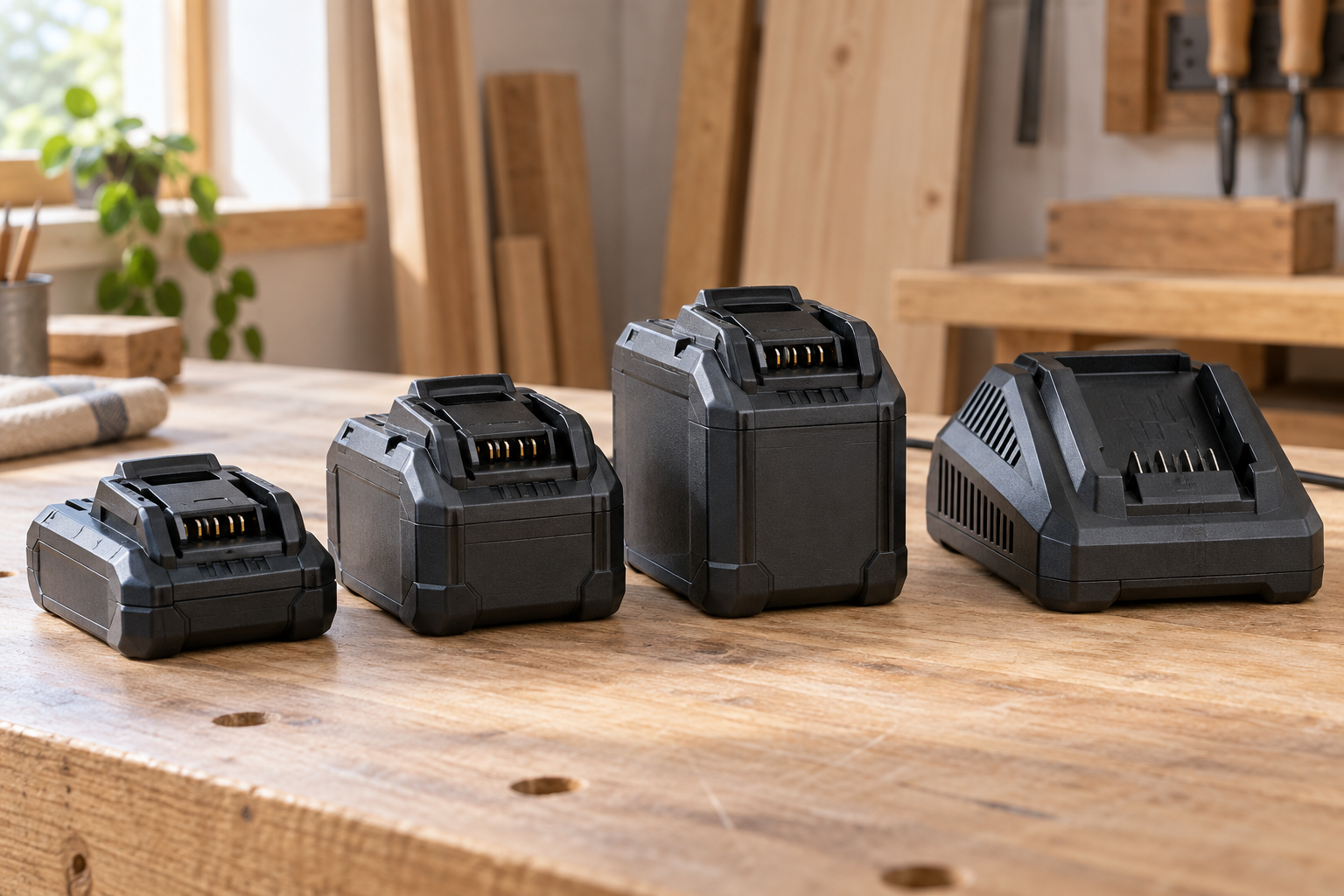
Both platforms use a shared 18V battery system, but that does not make batteries interchangeable between brands. A Ridgid pack will not power a Ryobi tool, or vice versa. Within each brand, check the tool’s compatibility notes and the battery generation or connection type before buying, particularly with older tools or unusual specialty products.
Battery capacity is commonly listed in amp-hours (Ah). A 2Ah pack can be lighter and easier to handle in a drill overhead; a 4Ah or larger pack usually runs longer but adds weight. Runtime is not a fixed number: cutting thick lumber, driving large fasteners or running a high-draw tool can drain a pack much faster than light drilling. For a first kit, two batteries are more useful than one oversized pack if you expect to work continuously: one can charge while the other is in use.
Do not judge a tool’s performance by voltage alone. Both platforms are 18V, but motor design, tool gearing, battery condition and workload affect speed and runtime. A battery that overheats or shuts off under heavy use may be telling you the tool is being pushed too hard, the pack is worn, or the work needs a more capable tool—not that every battery in the platform is defective.
Price, warranty and the real cost of expansion
Ryobi often makes it easy to enter the system through kits and frequent retail promotions. That can make it a sensible budget choice, especially if you need a few tools for occasional repairs. Compare what is included: a low kit price may come with small batteries, while a bare tool may look cheap until you add a charger and pack.
Ridgid can be attractive if its tools fit your needs and you value the lifetime service agreement. Do not assume every purchase qualifies automatically. Eligibility, registration deadlines, proof of purchase and coverage terms matter, and batteries may have different coverage rules from tools. Keep receipts and register products as instructed. A service agreement is useful only if you follow its requirements and the tool you want is covered.
Before buying a kit, price the whole setup: tool, charger, at least one battery, and a second battery if downtime would interrupt the job. Then compare the cost of adding your next two or three tools. That approach often reveals more than comparing one drill kit’s sale price.
Which platform should you choose?
Choose Ryobi ONE+ if you want the most room to expand into different DIY jobs. Its wider catalog is the stronger advantage for a homeowner building a general-purpose collection, and the cheaper option is perfectly adequate for occasional drilling, fastening and light cutting. Start with a Ryobi ONE+ drill kit if you do not already own batteries, then add tools only as a real need comes up.
Choose Ridgid 18V if its available tools cover your work and the service agreement is a meaningful part of your decision. It can be a sound platform for core repairs and workshop projects, but the narrower selection may force you to use another brand for a specialty task. Check the specific Ridgid 18V tool selection before committing.
For either brand, buy the tool that suits the job rather than the biggest battery or most aggressive kit. A homeowner making a few cuts a month does not need to pay extra for a heavy-duty setup. For repeated cutting, long fastening sessions or several hours of work, spare batteries and a charger that can keep pace matter more than a small difference in the platform’s headline specifications.
FAQ
Which platform should you choose?
Related guides
- Longest Lasting Lawn Mower Battery: AGM vs Lithium vs Flooded Lifespan and Cost per Season
- Duralast Gold Lawn Mower Battery Review: U1 Fit, CCA and When to Pay for AGM
- Greenworks Pro 80V 21-Inch Mower Review: Runtime Math, Push vs Self-Propelled and Yard Fit
- Bosch High Pressure Washer Gun Replacement: Fittings, Adapters and What Fits Your Model