What's inside
As an Amazon Associate I earn from qualifying purchases. This post may contain affiliate links at no extra cost to you.
A compact battery can make a cordless tool easier to handle, but a small pack also limits runtime and sometimes power. The best platform depends on the tools you need, the weight you can tolerate, and whether you can buy compact packs separately. Compare the whole system—not just the bare tool—including charger speed, battery prices, and the availability of smaller packs.
As an Amazon Associate we earn from qualifying purchases at no extra cost to you.


What “compact battery” means
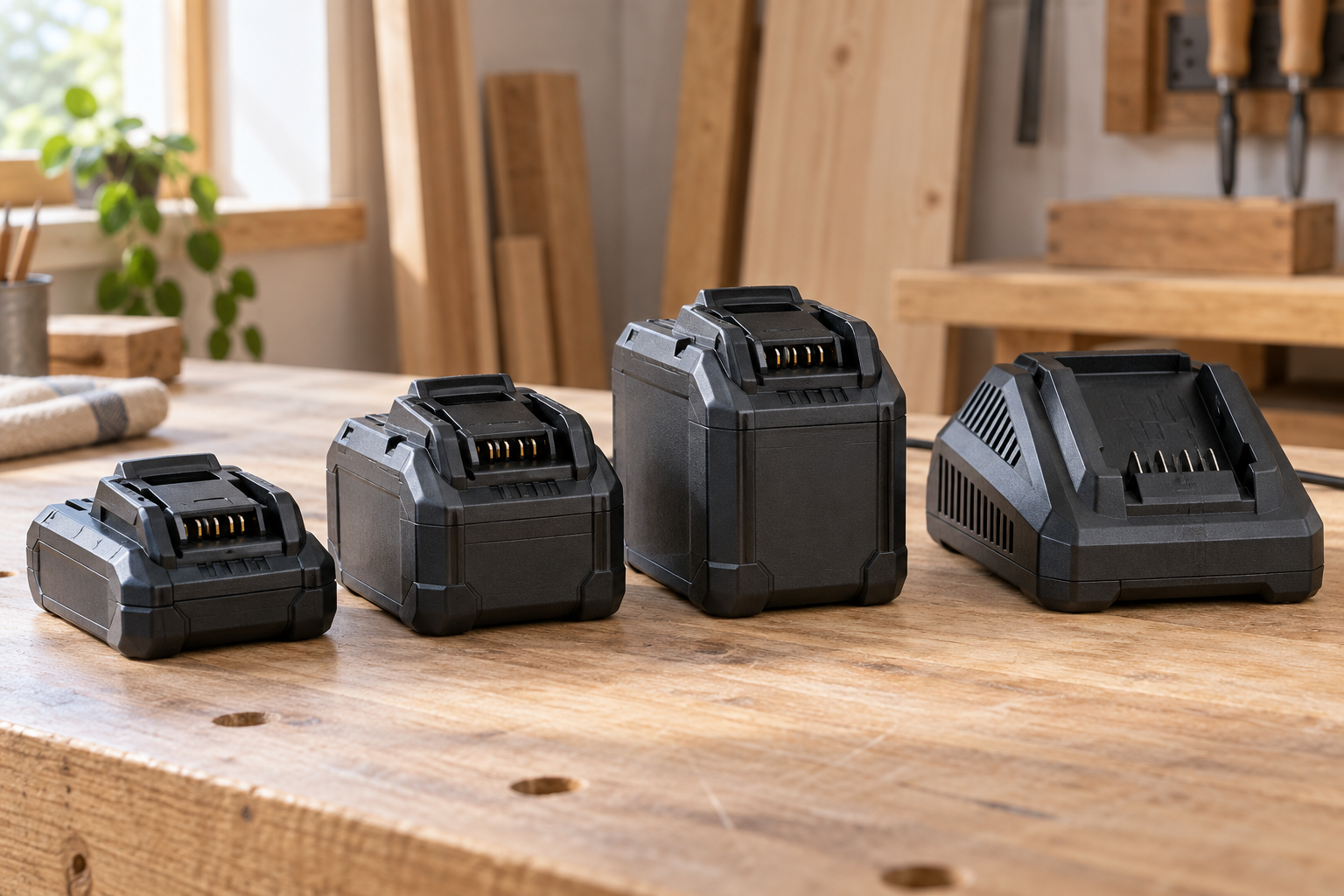
Most tool batteries are labeled by voltage and amp-hours (Ah). Amp-hours describe capacity, not tool power by themselves: a 2.0Ah pack generally stores about half the energy of a 4.0Ah pack at the same voltage. In practice, compact packs often weigh less and take up less space, making them useful for overhead work, tight cabinets, and driving screws. The trade-off is more frequent charging and, on demanding tools, possible slowdowns or extra heat.
Battery naming can be confusing. A manufacturer may sell packs marketed as “compact” at different capacities, and newer cell designs can make a higher-capacity pack smaller than an older one. Compare the actual dimensions, weight, compatibility, and capacity listed for the pack rather than relying on the label alone. Also check whether a tool accepts every battery in its voltage family: some high-output tools require specific pack types to reach their full performance.
How the main platform types compare
These broad categories are more useful for choosing an ecosystem than a simple brand ranking. Exact runtimes vary with the tool, material, battery condition, and workload.
| Platform type | Compact-pack strengths | Main trade-off | Good fit |
|---|---|---|---|
| 12V systems | Small, light packs and tools; comfortable for repetitive fastening and overhead work | Fewer options for heavy-duty tools; shorter runtime under sustained load | Assembly, trim, small repairs, and a compact drill-driver |
| 18V/20V-class systems | Broad tool selection, including compact packs alongside larger work packs | Compact packs add less runtime than large packs, and the tool body may still be bulky | One platform for home projects and regular jobsite use |
| Higher-voltage or multi-pack systems | Designed for demanding equipment, often with substantial power available | More battery weight, higher cost, and less advantage for light tasks | Heavy cutting, outdoor equipment, or long periods at high load |
Choose by the work, not the battery label
For cabinet hardware, electrical trim-out, and frequent screw driving, a 12V platform is often the sensible starting point. A compact drill or impact driver is easier to control in a cramped space, and its smaller packs keep the tool balanced. If you mostly drill small pilot holes or drive short screws, paying extra for a high-capacity battery is unlikely to improve the job.
For a mixed collection—drill, circular saw, grinder, and perhaps a work light—an 18V/20V-class platform is usually more flexible. Choose one that offers both compact and larger batteries. Use the small pack for a drill or impact driver and a larger pack for a saw or grinder, where sustained current draw can drain a compact battery quickly. A compact pack may run a saw through a few short cuts, but it is a poor choice for repeated ripping or long cuts in thick stock.
If your work centers on demanding outdoor tools or sustained heavy cutting, compare the manufacturer’s battery recommendations for each tool. A small pack may physically fit but trigger an overload, run hot, or need frequent swaps. For a chainsaw, high-output blower, or large circular saw, a larger compatible pack can be worth the added weight. Don’t buy a heavier system for occasional light drilling, though; extra capacity sitting on a shelf adds cost without making that task easier.
Check the ecosystem before buying in
Start with the tools you expect to buy in the next few years. Browse the platform’s lineup for a drill-driver, impact driver, saw, and any specialty tool you actually need. A long catalog is useful only if it contains the right tools at prices you can accept. Check whether the compact batteries are sold on their own, in starter kits, or only bundled with a tool; a cheap bare tool is less of a bargain if the battery and charger cost much more than expected.
Also inspect charger specifications. A basic charger may take several hours to refill a depleted pack, while a faster charger can cut the wait—but may cost more and take up more space. If you work through the day, two batteries can matter more than a premium charger: use one while the other charges. Follow the manufacturer’s instructions for charging temperature and storage, and avoid leaving packs in a hot vehicle for long periods.
When starting from zero, compare 12V drill kits with compact batteries against a compact drill kit from an 18V/20V-class line. Check the included battery capacity and charger in each listing; kit contents can differ even when the tools appear similar. If you already own batteries, staying within that compatible platform is usually cheaper than adding a second charger and battery family.
Common mistakes and failure modes
The first mistake is choosing the smallest pack for every tool. Compact batteries are handy, but a high-draw tool can empty one quickly or reduce performance as the pack heats up. The second is buying a large pack for every light-duty tool: extra weight at the handle or above your head is noticeable, and you may not need the extra runtime. Keep at least one larger pack for demanding tools and compact packs for fastening and overhead jobs.
Another trap is assuming batteries are interchangeable across every product carrying the same brand. Voltage families, connector designs, and high-output requirements can differ. Verify compatibility on the tool and battery pages before ordering. Avoid third-party adapters unless you understand the risks: an adapter may bypass protection features, affect warranty coverage, or let a battery operate in a tool it was not designed to power.
For a compact-first setup, compare impact-driver kits with compact batteries alongside drill kits. An impact driver handles many screw-driving tasks with less wrist reaction than a drill, but it is loud and is not a substitute for a drill when you need clean holes. If a smaller pack costs substantially more per amp-hour, buy it for better balance—not because it is the best value for runtime.
A practical starting setup
For occasional home repairs, buy a kit with a drill-driver, charger, and at least one compact battery; add a second battery only if you often work away from an outlet. For regular mixed work, a drill-driver and impact driver kit with a compact pack plus a larger pack is more versatile. Add specialty tools as needed rather than paying upfront for a bundle full of equipment you may never use.
Before choosing, hold the tool with its battery attached if possible. Balance can matter more than a small difference in bare-tool weight, especially when drilling overhead or driving dozens of fasteners. The right platform is the one that pairs manageable compact tools for light work with a compatible larger battery for tasks that genuinely need more runtime or sustained output.
Related guides
- Longest Lasting Lawn Mower Battery: AGM vs Lithium vs Flooded Lifespan and Cost per Season
- Duralast Gold Lawn Mower Battery Review: U1 Fit, CCA and When to Pay for AGM
- Greenworks Pro 80V 21-Inch Mower Review: Runtime Math, Push vs Self-Propelled and Yard Fit
- Bosch High Pressure Washer Gun Replacement: Fittings, Adapters and What Fits Your Model