What's inside
As an Amazon Associate I earn from qualifying purchases. This post may contain affiliate links at no extra cost to you.
Winter does not usually kill a cordless tool battery in one dramatic event. More often, cold weather cuts runtime, slows charging, stiffens the tool, and exposes batteries that were already poorly stored. A little preparation keeps a battery platform working when temperatures drop below freezing.
What cold weather does to cordless batteries
Most modern cordless tools use lithium-ion battery packs. Cold temperatures increase the battery’s internal resistance, so the pack cannot deliver current as easily. The practical result is less runtime and reduced power under heavy loads. A saw may bog down sooner, an impact driver may deliver fewer fasteners, and a battery gauge can drop quickly even when usable capacity remains.
Cold itself is generally less damaging than heat, but charging a lithium-ion pack below 32°F (0°C) can cause permanent damage. Lithium plating can form inside the cells, reducing capacity and creating a safety risk. Many branded chargers and battery-management systems block charging when the pack is too cold, but do not assume every cheap replacement pack has the same protection.
Temperature also affects the rest of the system. Grease thickens, plastic becomes more brittle, and moisture can condense inside a warm battery or tool when it is brought into a cold or damp environment. A battery that works on a 50°F morning may perform very differently at 10°F.
Prepare batteries before leaving for the jobsite
Charge packs indoors, where the battery and charger are between about 50°F and 86°F (10°C to 30°C). Do not leave the charger running overnight in an unheated garage if temperatures may fall below freezing. Once charged, let the pack sit for a few minutes, then inspect it.
Do not use a battery with a cracked case, swollen housing, leaking material, burnt terminals, or a pack that becomes unusually hot. Wipe dirt and moisture from the contacts with a clean, dry cloth. Corroded contacts increase resistance and can create heat under load. Never scrape terminals with a metal tool or spray them with a general-purpose lubricant.
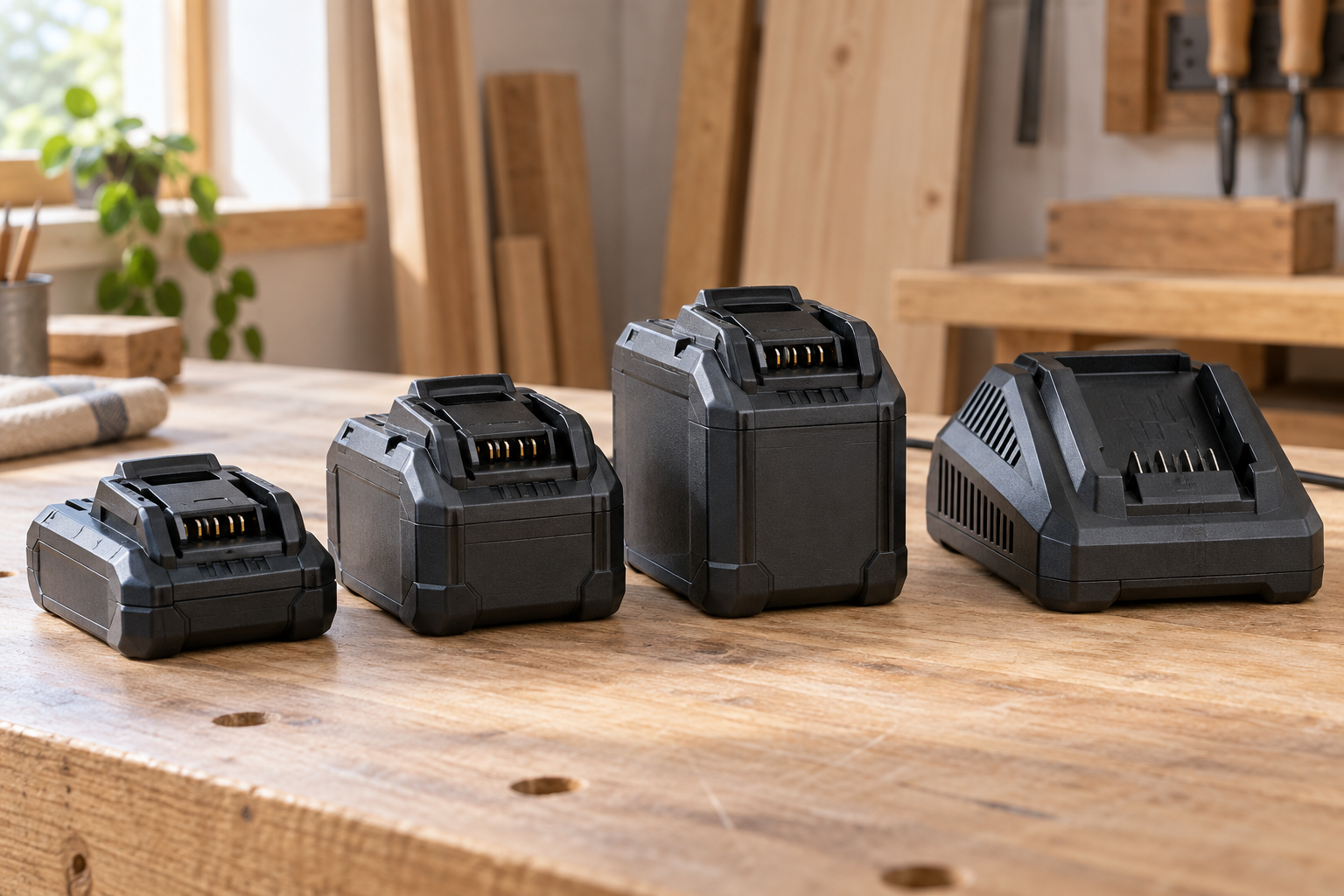
For a full day of winter work, carry more capacity than you would in mild weather. A battery can deliver roughly 20% to 40% less practical runtime in freezing conditions, depending on the pack, tool, load, and exact temperature. Two smaller packs may be more convenient than one large pack because they allow a warm spare to rotate into service.
If you need additional capacity, compare compatible cordless tool battery packs from the same manufacturer and voltage platform. The cheaper option is fine when it is a genuine pack from the tool brand and your work is light. For high-current saws, grinders, and outdoor work, a reputable high-output pack is worth considering.
Transport and storage on site
Keep spare batteries insulated from the weather, but do not seal ice-cold packs in an airtight container immediately after bringing them indoors. A tool bag or padded case is useful for preventing drops and keeping snow off the pack. In a truck, store batteries inside the cab rather than overnight in an exposed bed. Do not place them directly against a heater, on a dashboard in bright sun, or near an engine compartment.
A simple insulated lunch bag can slow temperature loss during a short trip. It is not a battery warmer, and it should not contain a heating pad unless the manufacturer specifically approves that setup. Excessive heat is also harmful: do not try to warm a pack above normal room temperature, place it on a radiator, or use a heat gun.
Keep packs off wet ground and remove snow before inserting them into tools. Water entering the battery interface can freeze and obstruct the connection, while repeated freeze-thaw cycles can promote corrosion. If a pack is visibly wet, disconnect it and let it dry naturally before use.
Charge cold batteries safely
Bring a cold battery into a dry area and allow it to warm naturally before charging. Small packs may need 30 to 60 minutes; a large pack that is well below freezing may need several hours. The outside case can feel warm while the cells inside are still cold, so rushing the process is not worth the risk.
Use the manufacturer’s charger whenever possible. Chargers differ in temperature sensing, charging speed, and communication with the battery-management system. A universal charger may be acceptable for a well-known compatible platform, but verify voltage, connector type, and charging instructions before using it. Never charge a battery that is frozen, wet, swollen, or damaged.
| Battery condition | What to do | Why it matters |
|---|---|---|
| Above 32°F (0°C), dry, undamaged | Charge normally with the correct charger | Normal charging conditions |
| Below 32°F (0°C) | Warm indoors before charging | Charging cold lithium-ion cells can cause permanent damage |
| Wet or covered with condensation | Disconnect and dry naturally | Reduces short-circuit and corrosion risk |
| Swollen, cracked, leaking, or unusually hot | Stop using it and arrange proper battery recycling | Indicates possible cell or pack failure |
Choose charging equipment for the job
A standard charger is usually enough for a homeowner or occasional user. Faster chargers reduce downtime, but they can add heat and may require a suitable power source. In a cold-weather setup, a second standard charger and another battery can be a better value than buying the fastest charger available.
For crews working from a truck or remote site, a manufacturer-approved automotive charger or inverter setup can be practical. Check the charger’s input requirements and the vehicle’s inverter rating. A charger that draws 300 watts should not be paired with a small inverter that is only rated for 150 watts. Avoid improvised wiring and cigarette-lighter adapters that are not designed for the load.
If you need a backup charging option, shop for replacement chargers for your battery platform, not generic chargers selected only by voltage. For remote work, a portable power station with a pure-sine inverter can run many tool chargers, though the battery station itself adds weight and cost.
Use and store batteries after the shift
Start with a warm battery and rotate packs instead of repeatedly draining one pack until the tool stops. Avoid forcing a cold pack through sustained maximum-load work when a larger pack or a slower cutting speed would do the job. If the tool suddenly loses power, remove the battery and let it warm; do not repeatedly pull the trigger to overcome a protection shutdown.
At the end of the day, remove batteries from tools and inspect them for moisture, impact damage, and unusual heat. Let cold packs warm and dry in a ventilated indoor area before charging. For storage longer than a few weeks, leave lithium-ion batteries around 30% to 50% charged unless the manufacturer specifies otherwise. Store them in a cool, dry place—not in a hot vehicle or an unheated shed—and check them every few months.
Keep the battery ecosystem consistent. Mixing chargers, packs, and adapters across brands can create fit and communication problems even when the printed voltage appears similar. In winter, the safest setup is the least complicated one: genuine compatible batteries, the correct charger, dry storage, and enough spare capacity to avoid charging a freezing pack in a hurry.
Related guides
- Longest Lasting Lawn Mower Battery: AGM vs Lithium vs Flooded Lifespan and Cost per Season
- Duralast Gold Lawn Mower Battery Review: U1 Fit, CCA and When to Pay for AGM
- Greenworks Pro 80V 21-Inch Mower Review: Runtime Math, Push vs Self-Propelled and Yard Fit
- Bosch High Pressure Washer Gun Replacement: Fittings, Adapters and What Fits Your Model