What's inside
As an Amazon Associate I earn from qualifying purchases. This post may contain affiliate links at no extra cost to you.
The right battery for a cordless rotary hammer depends on the tool’s voltage platform, the size of the holes you drill, and how long you need to work between charges. A larger battery can improve runtime, but it also adds weight and may not make an undersized hammer suitable for demanding concrete work. Start with compatibility, then weigh capacity, power, and handling against the job.
Check platform compatibility first
Use a battery explicitly approved for your rotary hammer. Match the brand and battery platform, and check the tool manual for compatible voltage and battery types. A battery that physically fits is not necessarily approved: some brands have multiple platforms, and adapters may compromise fit, electrical communication, or warranty coverage.
Voltage is not a measure of runtime. A 36-volt tool is designed for a different system than an 18-volt tool; do not try to substitute one for the other. Within a compatible platform, batteries with different amp-hour (Ah) ratings generally share the same nominal voltage. Ah indicates stored capacity, not how hard the tool hits.
For a tool that takes two batteries, follow the manufacturer’s instructions about using matched batteries. Mixing capacities, ages, or charge levels can lead to uneven discharge and more interruptions.
Choose capacity for the work session
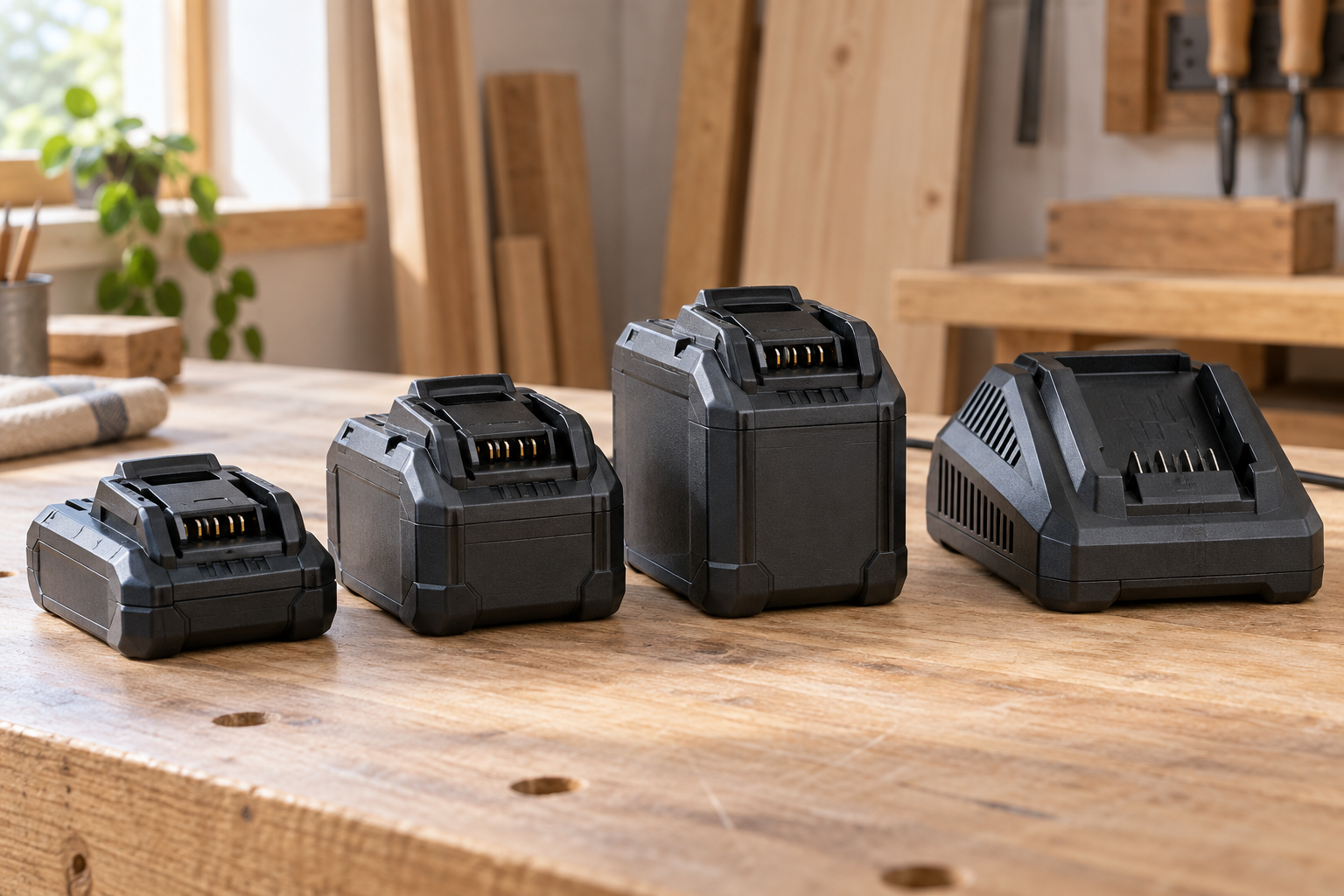
A 2.0 Ah pack is light and can be a sensible choice for occasional anchors, short drilling sessions, or overhead work. A 4.0 or 5.0 Ah pack is a practical middle ground for repeated holes. For longer drilling runs, a compatible 6.0 Ah-or-larger pack can reduce battery changes, provided the added weight is manageable and the tool supports it.
These figures are starting points, not a promise of a certain number of holes. Runtime varies with concrete hardness, hole diameter and depth, bit condition, hammer settings, and how firmly you push. A 3/8-inch hole for a light-duty fastener takes less from a battery than repeated 1/2-inch holes several inches deep. Drilling into dense aggregate or reinforced concrete can slow progress and increase power draw.
If you are comparing packs, check the maker’s runtime information for your tool and intended application. A higher Ah rating usually means more stored energy, but it can also mean more size, weight, and cost. For occasional work, a smaller pack and a spare may be a better-value setup than one large pack.
Compare common battery sizes
| Pack capacity | Typical use | Main trade-off |
|---|---|---|
| 2.0 Ah | Short jobs, light anchors, overhead drilling | Low weight, but more frequent charging or swaps |
| 4.0–5.0 Ah | General-purpose drilling and renovation work | Balanced runtime and handling |
| 6.0 Ah or more | Long sessions or repeated larger holes | More runtime, but added bulk and weight |
Pack construction matters too. Some platforms offer high-output batteries intended to deliver more current under heavy load. They may help a compatible rotary hammer maintain performance when drilling larger holes, but they are not a substitute for selecting a tool with enough impact energy for the job. Compare the manufacturer’s specifications rather than assuming that a premium label guarantees a noticeable improvement.
Balance battery weight against control
A rotary hammer is already a heavy tool, and a large pack can make it tiring to hold away from your body or above shoulder height. Try the tool with the battery attached if possible. For overhead anchors, a compact pack may be worth the extra battery changes. For floor-level work, the runtime of a larger pack may matter more than its weight.
Do not force a battery choice to compensate for a tool that is struggling. If the hammer stalls, drills very slowly, or gets unusually hot, stop and check the bit, drilling mode, material, and tool limits. A dull or unsuitable bit, excessive pressure, or a hole beyond the tool’s rated capacity can cause poor performance and drain packs quickly. Let the hammer do the work, clear dust from deeper holes, and give the tool time to cool.
Buy a battery and charger that fit the ecosystem
If you already own compatible cordless tools, a battery in the same platform can be a sensible purchase: it may serve multiple tools and reduce the need for another charger. If you are starting from scratch, compare the cost of a tool-and-battery kit with a bare tool plus separate packs. Kits can be cheaper, but check the included battery capacity; an entry-level pack may be small for sustained hammer drilling.
A rapid charger can shorten downtime, but faster charging is only useful if your work schedule benefits from it. Follow the battery maker’s temperature guidance. Charging a pack that is too hot or too cold may be delayed by its protection system, and forcing it or using an unapproved charger can damage the pack. Keep vents clear and store batteries dry, away from extreme heat.
For a compatible platform, compare rotary hammer battery packs by voltage, Ah, and manufacturer-rated output. If you need a second pack, a 4.0 Ah battery is often a useful starting point for general work; choose smaller for light overhead tasks or larger for longer sessions. Check the exact platform before ordering.
Avoid common battery-buying mistakes
Do not buy by Ah alone. Confirm the battery works with the tool, then compare weight, output rating, and cost. Avoid unknown packs or chargers that claim broad compatibility without clear safety and platform information. A low purchase price is poor value if the pack overheats, fails to communicate with the tool, or cannot be charged safely.
Also account for battery age and storage. Lithium-ion packs lose capacity over time, especially when stored fully charged in hot conditions. If a battery has a cracked case, damaged contacts, swelling, or unusual heat, stop using it. For a light-duty job, one smaller genuine pack may be entirely adequate; for a day of drilling, plan on a spare or a charging break rather than expecting one battery to cover every condition.
Related guides
- Longest Lasting Lawn Mower Battery: AGM vs Lithium vs Flooded Lifespan and Cost per Season
- Duralast Gold Lawn Mower Battery Review: U1 Fit, CCA and When to Pay for AGM
- Greenworks Pro 80V 21-Inch Mower Review: Runtime Math, Push vs Self-Propelled and Yard Fit
- Bosch High Pressure Washer Gun Replacement: Fittings, Adapters and What Fits Your Model