What's inside
As an Amazon Associate I earn from qualifying purchases. This post may contain affiliate links at no extra cost to you.
For most Makita 18V LXT users, the choice is straightforward: the 3.0Ah pack is lighter and easier to handle, while the 5.0Ah pack runs longer and is a better fit for tools that draw substantial current. The 5.0Ah battery stores about 67% more energy on paper, but it also adds weight and bulk. Whether that extra capacity matters depends more on the tool and the job than on the numbers alone.
As an Amazon Associate we earn from qualifying purchases at no extra cost to you.


Capacity and runtime
A 3.0Ah battery holds roughly 54 watt-hours at the LXT platform’s nominal 18 volts; a 5.0Ah pack holds roughly 90 watt-hours. That is a 36Wh difference, or about two-thirds more stored energy in the larger pack. In similar conditions, it can therefore power a tool substantially longer—but do not expect every job to run exactly 67% longer. Battery age, temperature, tool load, material, and the pack’s condition all affect actual runtime.
Light-duty work makes the difference less important. Driving occasional screws or trimming a few boards may use only a small fraction of a 3.0Ah pack. For a full day of drilling, cutting, or repeated fastening, the 5.0Ah pack means fewer battery swaps and less time waiting for a charger.
High-draw tools can also make capacity matter more. A circular saw cutting thick lumber, an angle grinder under load, or a blower running at high speed can drain a small pack quickly. The 5.0Ah pack is usually the more practical choice for those jobs, though a larger battery does not make an underpowered tool more capable.
Weight and handling
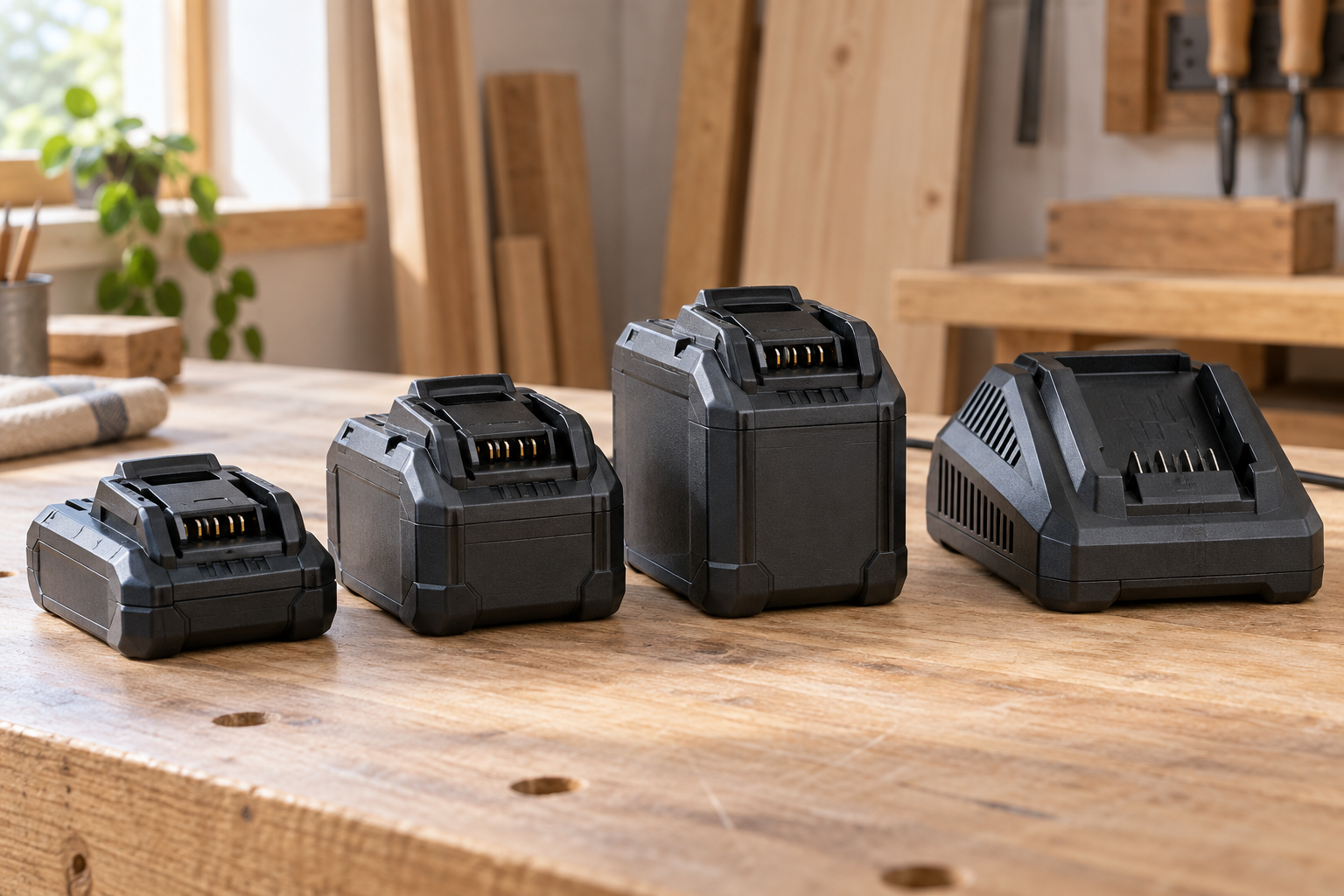
The 3.0Ah battery is notably lighter than the common 5.0Ah LXT pack, though the precise difference depends on the battery generation and the specific packs being compared. Check the product listing or weigh your own packs if every ounce matters. The smaller battery also takes up less space behind the tool handle.
That matters most when working overhead, holding a drill at arm’s length, or using a compact impact driver for repeated fastening. A heavier pack may not sound like much on a scale, but the load is held away from your body and repeated hundreds of times. For cabinet installation, fixture work, and ladder tasks, the lighter pack can reduce fatigue and make the tool easier to position.
On a saw or blower, the balance can work the other way. A larger battery may make a tool feel better balanced, and the extra weight is less noticeable when the tool is supported or used intermittently. Try the combination in your hand if possible: battery weight alone does not tell you how the tool will feel.
Quick comparison
| Factor | 3.0Ah LXT | 5.0Ah LXT |
|---|---|---|
| Nominal stored energy | About 54Wh | About 90Wh |
| Runtime potential | Lower; enough for light or short jobs | Higher; better for long sessions and demanding tools |
| Weight and bulk | Lighter, more compact | Heavier and larger |
| Best fit | Overhead work, compact tools, occasional use | Saws, grinders, blowers, extended work |
| Main compromise | More swaps or downtime on heavy jobs | More weight in hand; higher purchase cost |
Charging and cost
A larger pack takes longer to recharge under the same charger conditions because it contains more energy. The actual time depends on the charger, battery temperature, and whether the pack needs to cool before charging; consult Makita’s figures for your exact battery and charger. If you own only one pack and need to work continuously, a second battery can be more useful than choosing a single larger one. You can keep working while the other pack charges, provided you have enough packs for the job.
Compare prices per watt-hour, but do not buy capacity you will rarely use. A Makita 18V LXT 3.0Ah battery is a sensible lower-cost choice for light drilling, installation, and occasional repairs. If a pack is discounted, check that it is compatible with your LXT tools and comes from a reputable seller; suspiciously cheap batteries may be counterfeit or used.
For longer workdays, a Makita 18V LXT 5.0Ah battery costs more upfront but can cut interruptions. The savings are mainly time and convenience, not a guarantee of a lower cost per job. If your 3.0Ah pack already lasts through the work you do, upgrading just because the larger number looks better is hard to justify.
Which one for your tools
Choose 3.0Ah for compact drills and impact drivers used in short bursts, especially when you spend a lot of time working overhead or carrying the tool. It is also a reasonable backup pack for homeowners who use LXT tools occasionally. The main failure mode is running short halfway through a task: for example, repeated hole-saw work or driving many large fasteners may exhaust it much sooner than light screw driving.
Choose 5.0Ah for sustained cutting, grinding, blowing, or other work that keeps a motor running under load. It is also useful when battery changes are inconvenient, such as work on a ladder or a remote jobsite. The tradeoff is simple: more time between swaps, but more weight every time you pick up the tool. Keeping a 3.0Ah pack for overhead tasks and a 5.0Ah pack for high-draw tools is often a more practical setup than insisting on one battery size for everything.
Care and performance
Neither capacity is immune to poor battery care. Cold packs can deliver less power and runtime, while hot packs may need to cool before charging. Avoid leaving batteries in a hot vehicle or storing them fully depleted for long periods. If a pack suddenly loses runtime, inspect it for damage and compare it with another battery in the same tool; a worn pack, dirty contacts, or a demanding task may be the cause.
For buying decisions, judge the battery by the tool and the work pattern. If lighter handling matters more than uninterrupted runtime, the 3.0Ah is fine. If battery changes are the bottleneck, the 5.0Ah earns its extra weight and cost.
Related guides
- Longest Lasting Lawn Mower Battery: AGM vs Lithium vs Flooded Lifespan and Cost per Season
- Duralast Gold Lawn Mower Battery Review: U1 Fit, CCA and When to Pay for AGM
- Greenworks Pro 80V 21-Inch Mower Review: Runtime Math, Push vs Self-Propelled and Yard Fit
- Bosch High Pressure Washer Gun Replacement: Fittings, Adapters and What Fits Your Model